Most realistic space games for PC
Gaming Articles
Flying a spaceship in real life is nothing like steering a fighter jet through an asteroid field. You can't simply hit the brakes in orbit, fuel is always limited, and even a small mistake during a maneuver can send your spacecraft far from its destination. Realistic space games turn these challenges into rewarding gameplay, letting you experience the technical side of exploring the universe. Some focus on building rockets and calculating orbital trajectories, while others recreate historic missions or simulate entire planetary systems. In this guide, we'll explore what makes a space simulator realistic, compare different types of simulations, and review the best options for PC in 2026.
What makes realistic space games different?
The biggest difference between a realistic space simulator and a conventional sci-fi game is how movement works. In an arcade-style adventure, spaceships may stop almost instantly, turn sharply, or fly through space as though they were moving through air. A physics-focused simulation takes a different approach, introducing inertia, gravity, fuel consumption, and other factors that influence real spacecraft.
In space, a vehicle doesn't automatically stop when its engines shut down. It continues moving unless another force changes its velocity. This makes every maneuver important because the amount and direction of thrust determine the spacecraft's future trajectory. Even a minor correction can affect where it ends up hours or days later, particularly during long-distance missions.
Reaching orbit also requires more than simply gaining altitude. A rocket must develop sufficient horizontal velocity to keep falling around a planet rather than returning directly to its surface. Landing on another world introduces additional complications, including braking maneuvers, atmospheric resistance, and limited fuel reserves. These mechanics create an unusual kind of challenge: instead of memorizing enemy attack patterns, you're learning how physical systems behave.
However, realism doesn't mean every game must reproduce the universe with perfect scientific accuracy. Most simulations simplify certain processes to balance technical depth with accessibility. Kerbal Space Program makes rocket engineering approachable through a modular construction system, while Orbiter emphasizes orbital navigation and realistic flight procedures.
Other projects focus on astronomical observation rather than spacecraft controls. SpaceEngine allows users to explore an enormous virtual universe, while Universe Sandbox makes it possible to experiment with planetary systems and gravitational interactions. These experiences demonstrate that realistic space games can be educational without relying on traditional missions, enemies, or combat.
Ultimately, the right level of realism depends on what interests you most. Some players want a convincing cockpit filled with switches and checklists, while others prefer designing spacecraft, conducting scientific experiments, or exploring distant galaxies. A great simulator makes its underlying systems understandable, even when mastering them takes time.
What types of space simulators are available on PC?
Space simulation is a broad category that includes several distinct approaches to gameplay. Two games might both feature planets and spacecraft while offering completely different experiences. Some require a detailed understanding of physics, whereas others prioritize exploration or engineering creativity.
The main types of space simulators include:
Orbital flight simulators. These focus on spacecraft navigation, trajectory calculations, docking, and landing procedures. Orbiter and Reentry are notable examples;
Rocket engineering simulators. Players design vehicles, test propulsion systems, and solve problems related to mass, fuel, and stability. Kerbal Space Program and Juno: New Origins fit this category;
Astronomical sandboxes. These allow users to observe celestial bodies, model gravitational interactions, and experiment with planetary systems. SpaceEngine and Universe Sandbox approach these activities differently;
Space operations simulators. These recreate practical activities such as equipment management, spacecraft maintenance, and salvage operations. Hardspace: Shipbreaker offers a particularly unusual interpretation of the genre.
Some projects combine several categories. Elite Dangerous, for example, blends spacecraft piloting with exploration, trading, mining, and combat across a vast representation of the Milky Way. Its flight model includes deliberate gameplay simplifications, but managing equipment, fuel, navigation, and docking creates a convincing sense of operating a spaceship.
It's also worth remembering that technical complexity isn't always the same as authenticity. A game may feature hundreds of cockpit controls without accurately reproducing orbital mechanics. Conversely, a relatively simple simulator can teach important scientific principles through consistent and understandable systems.
For beginners, an accessible engineering sandbox is often a good starting point. Learning the basics of thrust, gravity, and orbital movement makes more demanding simulators significantly less intimidating. Once you understand why a spacecraft behaves a certain way, successfully completing a difficult maneuver becomes much more satisfying.
How we selected the best realistic space simulators
For this selection, we focused on games where technical systems or scientific concepts play a substantial role in gameplay. Beautiful planets and detailed spaceship models certainly improve immersion, but visual quality alone doesn't make a simulation realistic. The most important factor is whether the mechanics behave consistently and encourage players to understand their consequences.
We considered physical accuracy, the depth of vehicle or equipment controls, available gameplay activities, accessibility for beginners, and overall value. We also examined how effectively each game represents its chosen subject. A spacecraft engineering sandbox should reward sensible construction decisions, while an orbital simulator should provide meaningful navigation challenges.
Another important consideration was the learning curve. Some games include detailed tutorials and interactive guidance, making complex topics easier to understand. Others expect players to study manuals, experiment with equipment, and gradually master specialized terminology. Both approaches can be rewarding, but they appeal to different audiences.
Our editorial ratings use a ten-point scale and reflect each game's strengths within its category. They aren't copied from Steam reviews or professional review aggregators. The ranking includes dedicated technical simulators alongside games that combine credible systems with conventional entertainment, making it easier to find an experience that matches your interests.
Best realistic space games and simulators
These eight titles offer different ways to experience the technical side of space exploration. Whether you want to construct an interplanetary rocket, operate historic spacecraft, or experiment with planetary physics, each game provides a distinctive approach to simulation.
Kerbal Space Program — build and launch your own rockets
Platforms: PC, PlayStation 4, Xbox One.
Editorial rating: 9.6/10.
Availability: Paid; single-player; installation required.
Kerbal Space Program puts you in charge of an ambitious aerospace program operated by the charming Kerbals. Despite its playful presentation, the game introduces important concepts from real rocket engineering and orbital mechanics. You design spacecraft using engines, fuel tanks, control systems, and structural components before launching them to discover whether your calculations were good enough.
Every mission involves a series of engineering decisions. A rocket might run out of fuel before reaching orbit, become unstable during ascent, or miss its intended landing site. These failures are part of the experience because they help you understand how mass distribution, propulsion, and trajectory planning affect a vehicle's performance. Gradually, you'll learn to create more efficient designs and prepare for increasingly ambitious expeditions.
As your skills improve, you can deploy satellites, construct orbital stations, perform docking maneuvers, and attempt interplanetary journeys. Although Kerbal Space Program simplifies certain physical processes, the relationship between engineering decisions and mission outcomes remains highly educational. It's an excellent choice for players who enjoy experimenting, solving technical problems, and watching their ideas succeed after several spectacular failures.
Orbiter — master authentic orbital flight
Platforms: PC (Windows).
Editorial rating: 9.7/10.
Availability: Free, open-source simulator.
Orbiter is one of the strongest choices for anyone who wants to understand how spacecraft actually move through the Solar System. Its simulation is based on Newtonian mechanics and emphasizes orbital navigation, engine burns, docking procedures, and interplanetary trajectories. Instead of following a conventional campaign, you select a spacecraft and work toward your own mission objectives.
Even a relatively simple flight to another orbital platform can require careful planning. You'll need to understand relative motion, align orbital planes, and calculate the timing of maneuvers. Orbiter doesn't automatically transform complicated navigation into a straightforward waypoint system, which makes it considerably more demanding than most conventional space games.
The simulator also supports community-created additions that introduce extra spacecraft, scenarios, and equipment. Its presentation is more technical than cinematic, and new players should expect to spend time learning navigation instruments and specialized terminology. However, that learning curve is also its greatest strength. Successfully completing a difficult rendezvous or interplanetary transfer provides a genuine sense of achievement.
Reentry — experience historic NASA spacecraft
Platforms: PC (Windows).
Editorial rating: 9.4/10.
Availability: Paid; installation required.
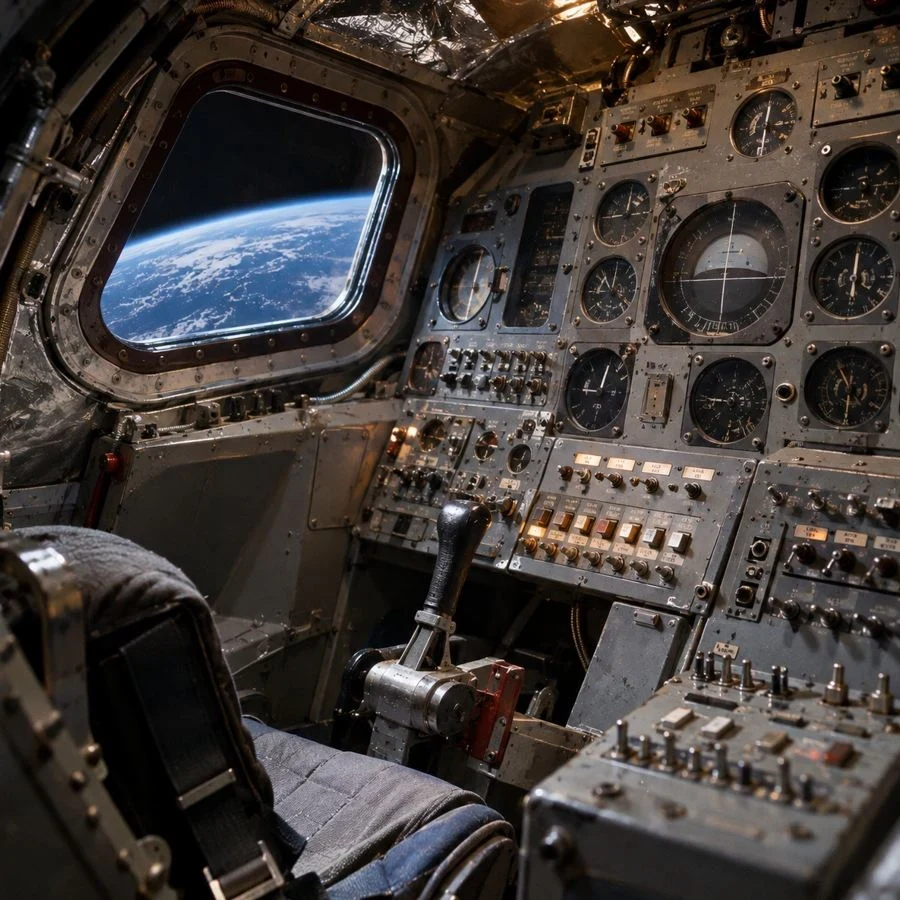
Reentry — A Space Flight Simulator recreates the procedures and technical challenges associated with early American human spaceflight. Its missions draw inspiration from the Mercury, Gemini, and Apollo programs, placing players inside spacecraft equipped with detailed controls and operational systems. Rather than simply selecting a destination, you'll need to prepare the vehicle, configure instruments, and follow procedures that reflect the complexity of historical missions.
The cockpit is central to the experience. Understanding which switches to activate, how different systems interact, and when to perform specific actions becomes an essential part of gameplay. Navigation, communications, electrical systems, and mission checklists all contribute to the feeling that you're operating a complicated machine rather than controlling a fictional spaceship.
Reentry includes tutorials and educational materials to help players learn its systems, although mastering them still requires patience. The game is particularly rewarding for anyone interested in the history of space exploration because it demonstrates just how many technical challenges early astronauts and mission controllers had to overcome. Completing a successful mission feels impressive precisely because so many individual steps must go right.
Juno: New Origins — design spacecraft with engineering freedom
Platforms: PC (Windows, macOS, Linux).
Editorial rating: 9.2/10.
Availability: Paid; single-player; installation required.
Juno: New Origins focuses on creating vehicles and experimenting with their engineering characteristics. Its flexible construction tools allow players to customize individual parts, adjust dimensions, and design everything from conventional rockets to unusual aircraft and ambitious spacecraft. Instead of relying entirely on predefined components, you can experiment with different shapes and configurations to discover how they influence performance.
The game encourages an iterative approach to engineering. You might build an experimental launch vehicle, test it, identify a weakness, and return to the editor with a better design. Missions and exploration objectives provide practical reasons to improve your creations, while the physics systems make successful flights dependent on more than visual appearance.
One particularly interesting feature is visual programming, which allows players to automate vehicle behavior through logic-based systems. This adds another layer of complexity for those who want to create automated flight sequences or specialized control procedures. Juno: New Origins is especially appealing to gamers who enjoy technical creativity and prefer solving engineering problems over following a traditional storyline.
SpaceEngine — explore a scientifically inspired universe
Platforms: PC (Windows).
Editorial rating: 9.5/10.
Availability: Paid on Steam; installation required.
SpaceEngine is less a traditional game and more an interactive way to explore the universe. It combines astronomical observations with procedural generation to create an enormous environment containing stars, planets, moons, galaxies, and other celestial objects. You can travel from familiar locations in our Solar System to remote cosmic regions, observing the universe from perspectives that would be impossible to experience in real life.
The greatest attraction is the sense of scale. You can examine the surface of a planet, move into orbit, leave its star system, and continue toward distant galaxies. This freedom makes SpaceEngine particularly interesting for astronomy enthusiasts who want to visualize the relationship between celestial objects and appreciate the vast distances separating them.
Its realistic-looking environments are supported by scientific concepts, but not every object represents a confirmed astronomical discovery. Many distant planets and their characteristics are generated procedurally, so the software shouldn't be treated as a complete scientific database. Nevertheless, SpaceEngine provides a remarkable opportunity to explore a convincing virtual cosmos without conventional missions, combat, or progression systems.
Universe Sandbox — experiment with gravity and planetary systems
Platforms: PC (Windows, macOS, Linux).
Editorial rating: 9.4/10.
Availability: Paid; installation required.
Universe Sandbox turns the laws of physics into an interactive playground. Instead of simply observing planets, you can modify their properties, introduce new celestial objects, and watch how gravitational interactions affect the surrounding system. Changing a planet's mass or velocity can dramatically alter its orbit, while adding another massive object may disrupt an otherwise stable planetary arrangement.
The software makes complex concepts easier to visualize because you can experiment directly with the conditions. For example, you might introduce a second star into a planetary system and observe the resulting orbital changes. You can also investigate collisions, planetary heating, and certain climate-related processes, creating scenarios that would be impossible to test in reality.
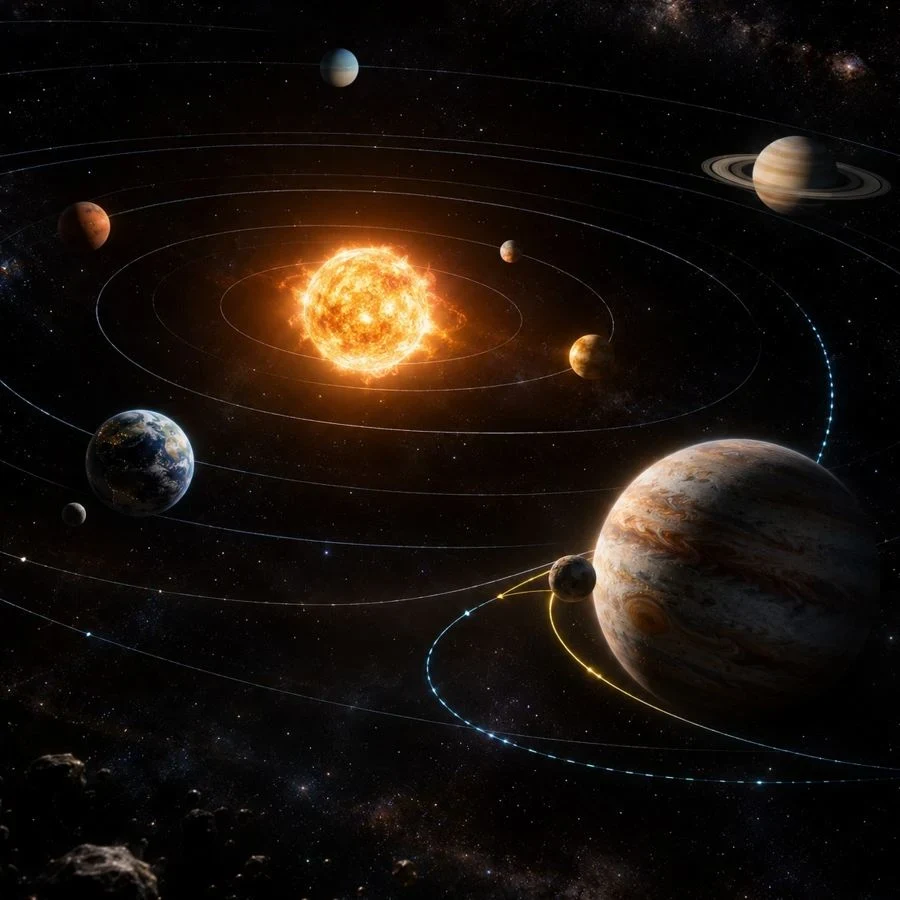
Although Universe Sandbox uses approximations and simplified models, its interactive approach makes scientific experimentation genuinely entertaining. There are no traditional missions to grind or opponents to defeat. Instead, you create your own questions and explore the consequences of changing physical parameters. It's particularly suitable for players who enjoy astronomy, gravity simulations, and discovering how seemingly small changes can transform an entire system.
Elite Dangerous — pilot a spacecraft across the Milky Way
Platforms: PC; legacy versions on PlayStation 4 and Xbox One.
Editorial rating: 9.1/10.
Availability: Paid; online connection required.
Elite Dangerous offers a different interpretation of realistic space simulation by combining detailed spaceship operation with open-ended exploration and career progression. You begin as a pilot in a vast representation of the Milky Way and can pursue different activities, including trading, mining, transporting cargo, discovering star systems, and participating in combat. Rather than following one mandatory career path, you decide how to develop your place in the galaxy.
Operating your spacecraft involves considerably more than pointing toward a destination. You'll manage power distribution, fuel reserves, navigation systems, and equipment configurations while learning how different vessels behave. Docking with a station or approaching a planetary surface can be challenging, especially before you become comfortable with the controls. Exploration also involves scanning celestial bodies and planning routes through unfamiliar regions.
The game's flight model isn't equivalent to a dedicated orbital mechanics simulator, since its developers have adapted movement and combat for entertaining gameplay. However, the combination of detailed cockpit systems, careful navigation, and enormous travel distances creates a convincing feeling of space exploration. Elite Dangerous is an excellent option for players who want technical depth without giving up the freedom of a large-scale sci-fi adventure.
Hardspace: Shipbreaker — work as a salvage engineer in zero gravity
Platforms: PC, PlayStation 5, Xbox Series X|S.
Editorial rating: 9.0/10.
Availability: Paid; single-player; installation required.
Hardspace: Shipbreaker explores a very different side of working in space. Instead of piloting an exploration vessel or launching rockets, you play as a salvage engineer employed by the LYNX corporation. Your job is to dismantle old spacecraft, recover valuable materials, and gradually pay off an enormous debt. The equipment includes specialized cutting tools and devices for moving heavy objects in a zero-gravity environment.
Every spacecraft becomes an engineering puzzle that rewards observation and preparation. You'll examine the structure, identify valuable components, and determine which parts should be removed first. A careless cut might damage equipment, trigger a fuel explosion, or cause dangerous depressurization. Because materials must be separated and processed correctly, rushing through a job can be considerably less profitable than following a careful plan.
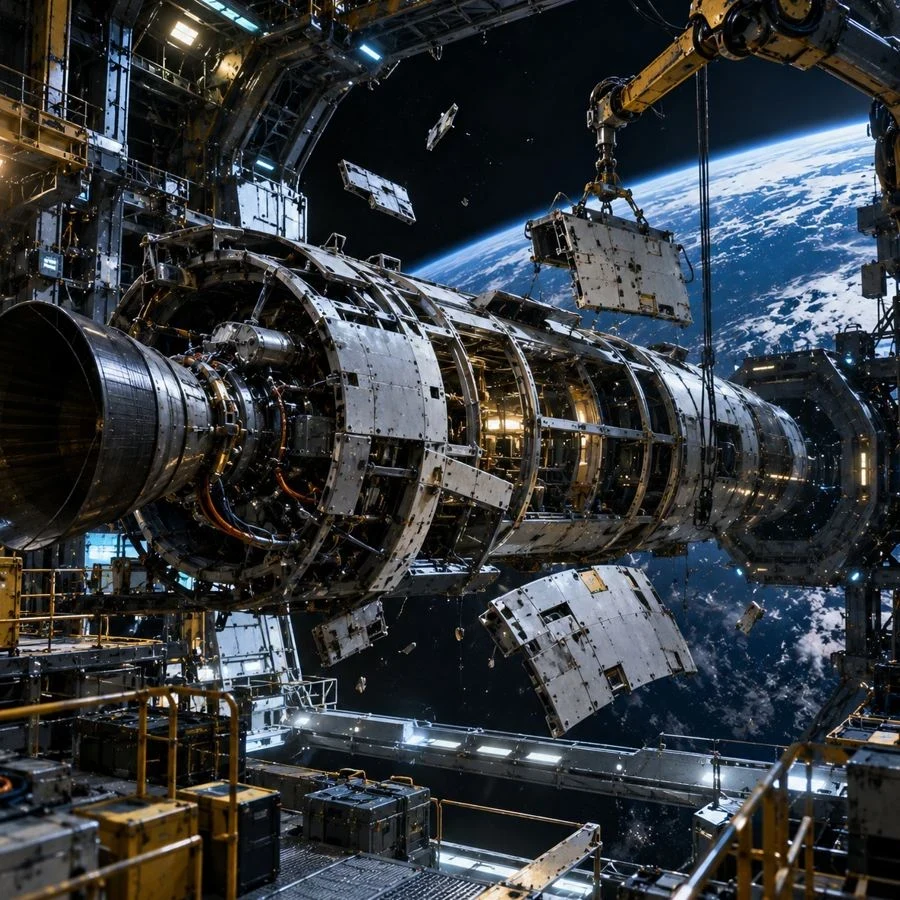
Although its physics are adapted for gameplay, Hardspace: Shipbreaker offers an engaging interpretation of industrial work in space. The satisfaction comes from learning how complicated machines are assembled and finding safe, efficient ways to take them apart. It's a refreshing alternative to traditional space adventures, particularly for players who enjoy practical challenges, physics-based interactions, and systematic problem-solving.
WarForGalaxy - build your own galactic empire
If you'd rather command an entire interstellar civilization than calculate individual engine burns, WarForGalaxy offers a different kind of space challenge. This free, cross-platform 4X strategy game lets you explore star systems, develop planetary colonies, research technologies, and assemble powerful fleets for galactic warfare.
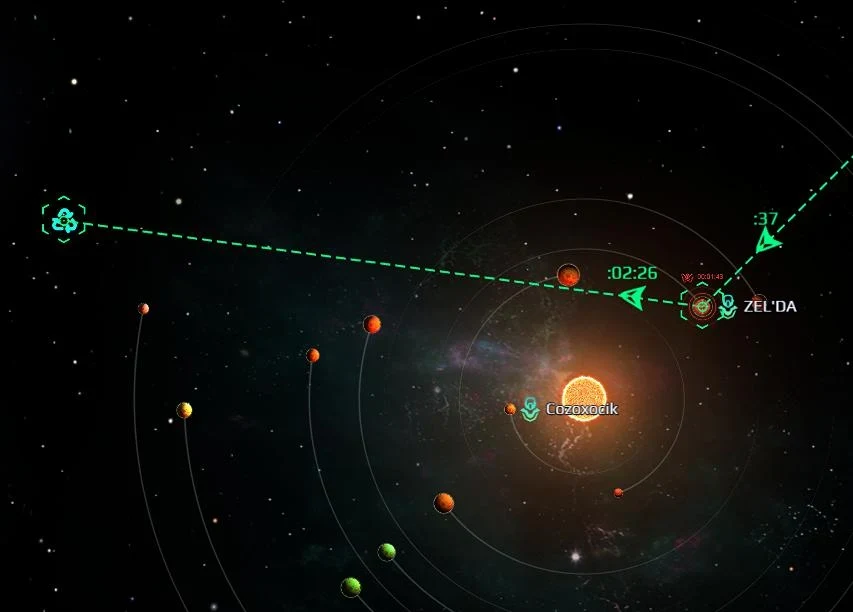
Form alliances or compete with players around the world, while the AI assistant Hermes helps with everyday strategic decisions. You can start playing directly in your PC browser without downloading a client and continue building your empire on mobile. Your next great space adventure begins with a single colony.