Why does everything spin in space
Space & Astronomy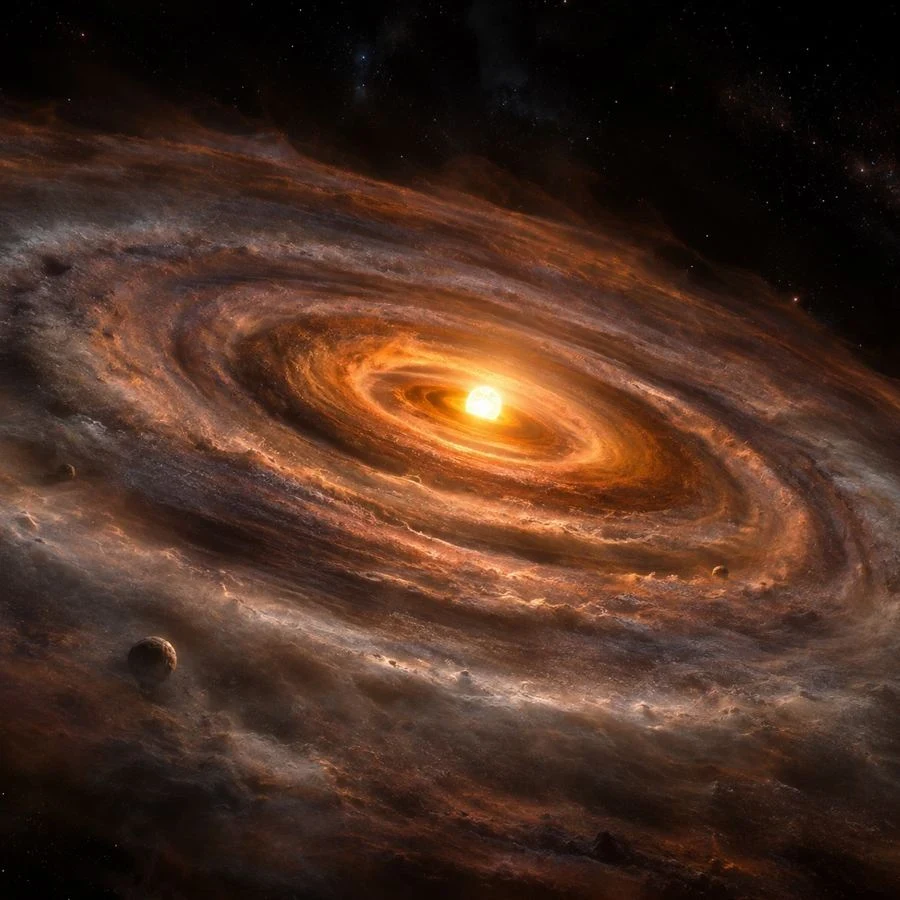
Planets rotate around their axes, stars spin, and enormous galaxies contain billions of objects moving around their centers. From the smallest asteroids to some of the largest structures in the universe, rotation seems to be everywhere. But why does everything spin in space, what started this movement, and why can it continue for billions of years without stopping? The answers involve gravity, angular momentum, and the history of how celestial objects formed. In this article, we'll explore the physics behind cosmic rotation, discover what determines its speed, and examine a fascinating but unproven theory suggesting that the universe itself might rotate.
How does the physics of space work
One of the main reasons celestial objects keep rotating is the conservation of angular momentum. This fundamental principle states that the total angular momentum of a system remains constant unless an external torque changes it. In simple terms, once an object starts spinning, it doesn't need a continuous force to maintain that rotation. This is quite different from everyday experience, where friction and air resistance gradually slow down spinning objects.
A familiar example is a figure skater performing a spin. With their arms extended, the skater rotates relatively slowly. When they pull their arms closer to their body, their moment of inertia decreases, causing their rotational speed to increase. A similar process occurs on an astronomical scale when large clouds of gas and dust contract under gravity. As material becomes concentrated closer to the rotation axis, its angular velocity can increase dramatically.
This principle played an important role in the formation of our Solar System approximately 4.6 billion years ago. A vast cloud of gas and dust gradually collapsed under its own gravitational attraction. The cloud already contained moving material with some net angular momentum, and contraction amplified its rotation. Most of the matter accumulated into the young Sun, while the surrounding material formed a flattened disk where planets, moons, and smaller objects eventually developed.
However, gravity doesn't automatically make every stationary object start spinning. Initial angular momentum, collisions, uneven flows of matter, or gravitational torques are needed to create or change rotation. It's also important to distinguish spinning around an object's own axis from orbiting another body. Earth does both: it rotates approximately once per day while completing one revolution around the Sun each year. These movements follow related physical laws but aren't the same thing.
Space contains very little matter compared with Earth's atmosphere, so rotating planets and stars experience relatively little ordinary friction. Nevertheless, they aren't completely isolated. Magnetic fields, tidal interactions, collisions, and the transfer of matter can gradually change their rotation. Understanding these processes helps astronomers reconstruct how planetary systems formed and evolved.
Does everything rotate in space
Rotation is extremely common throughout the universe, but saying that absolutely everything spins would be an exaggeration. There's no physical law requiring every object to rotate around its own axis, and different celestial bodies can have very different rotational properties. Some spin rapidly, others rotate slowly, and certain objects experience complicated tumbling motions rather than steady rotation around one direction.
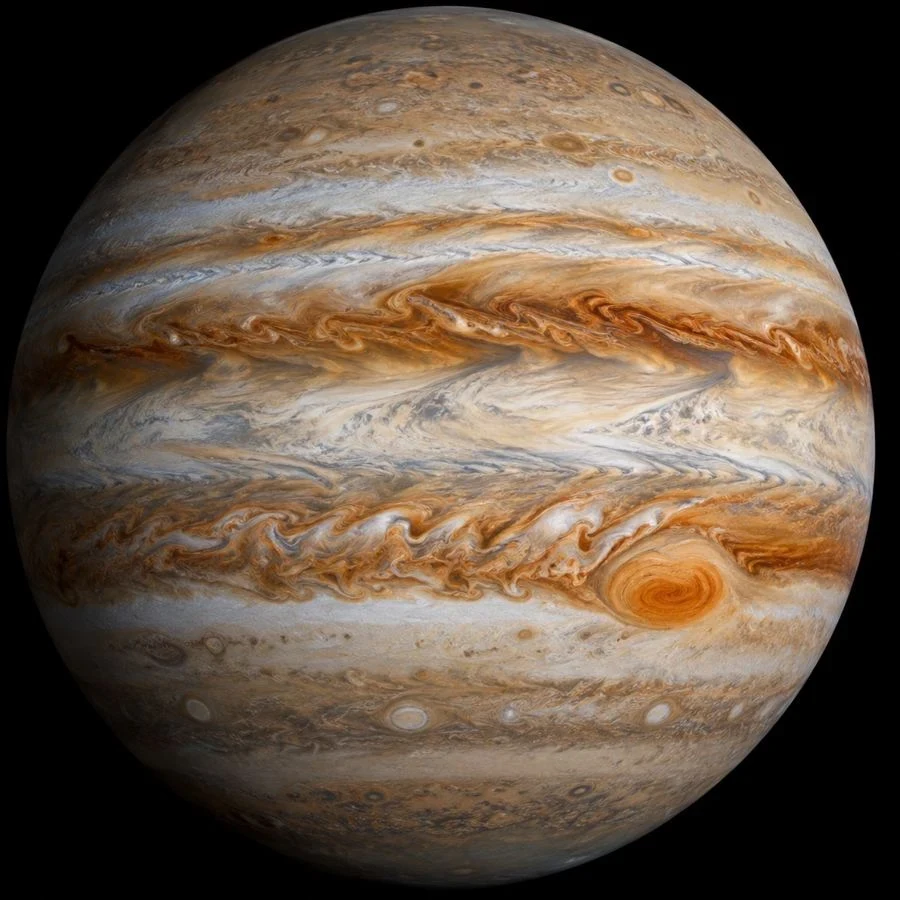
The planets of our Solar System demonstrate this variety particularly well. Earth completes one rotation relative to distant stars in approximately 23 hours and 56 minutes, while Jupiter takes only about 9.9 hours. Venus is dramatically different, rotating once in approximately 243 Earth days and in the opposite direction to most planets. Uranus has an unusually large axial tilt, making it appear to rotate almost on its side. These differences reflect each planet's formation history and the interactions it experienced.
The Moon presents another interesting case. It keeps almost the same hemisphere facing Earth because its rotational period matches its orbital period. This phenomenon is called tidal locking. Although the Moon may appear motionless from our perspective, it still completes one rotation around its axis during each orbit.
Stars also rotate, but their movement isn't always uniform. The Sun consists of plasma rather than solid material, so its equatorial regions rotate faster than areas closer to the poles. Some young stars spin rapidly, while older stars may lose angular momentum through magnetized stellar winds. The exact behavior depends on the star's mass, age, magnetic activity, and internal structure.
Galaxies provide an even larger example. Spiral galaxies contain stars and gas clouds traveling around their centers, but they don't rotate like solid disks. Different regions can have different orbital speeds, and the distribution of visible and dark matter influences their motion. Elliptical galaxies may have more complicated stellar trajectories and relatively little organized rotation.
Small objects can behave unpredictably too. An asteroid that experiences an uneven collision might start tumbling around multiple axes instead of maintaining a stable spin. Consequently, rotation is widespread but not universal in the same form. The universe contains an enormous variety of moving objects rather than a collection of identical spinning spheres.
What affects the speed of rotation
The rotational speed of an astronomical object depends on its original angular momentum, how its mass is distributed, and the forces acting on it over time. Although some changes occur during dramatic events such as collisions, others develop gradually over millions or billions of years. Even an apparently stable planet can slowly change its rotation as energy and angular momentum move between interacting bodies.
Changes in size are particularly important. When a rotating cloud contracts, its moment of inertia decreases and its spin can accelerate if angular momentum is conserved. The opposite can happen when matter expands outward. Young stars experience this process while forming, although magnetic fields and surrounding disks can remove angular momentum and prevent unlimited acceleration.
Collisions are another major factor. During planetary formation, large objects frequently struck one another, changing their rotational speeds and axial orientations. A sufficiently energetic impact can dramatically alter a planet's spin, while smaller impacts can change an asteroid's rotation. These interactions help explain why neighboring worlds don't necessarily rotate in the same direction or at similar speeds.
Gravitational tides can also transfer angular momentum. Earth's interaction with the Moon gradually slows our planet's rotation, while the Moon slowly moves farther away. Tidal forces have already synchronized the Moon's spin with its orbit. Similar processes occur in other planetary systems, especially when planets or moons orbit close to much larger objects.
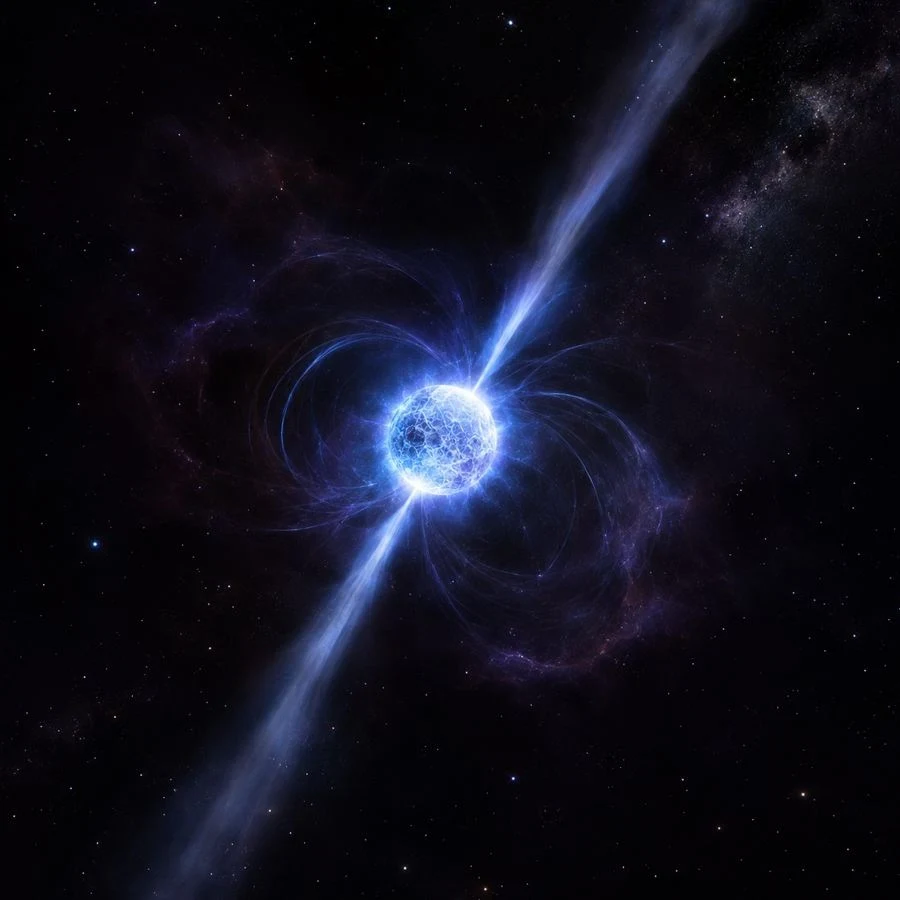
At the opposite extreme, neutron stars demonstrate how fast rotation can become. When the core of a massive star collapses into an incredibly compact object, conservation of angular momentum can produce extraordinary spin rates. Some pulsars rotate hundreds of times per second. Their regular emissions help astronomers study the properties of matter under extreme conditions.
There is therefore no universal rotation speed for objects in space. Every planet, star, and asteroid carries information about its formation, collisions, internal structure, and gravitational history. Measuring that rotation is one way scientists piece together the evolution of celestial systems.
Could everything eventually stop spinning
An individual astronomical object can theoretically stop rotating relative to a chosen reference frame, but stopping all rotation throughout the universe is an entirely different question. To change the spin of a planet or asteroid, angular momentum must be transferred through an interaction such as a collision, tidal force, or exchange of matter. Rotation doesn't simply disappear because an object has been spinning for a long time.
Imagine a slowly rotating asteroid. If another object strikes it in the appropriate direction, the collision could reduce its angular velocity almost to zero. A later impact might start it spinning again, perhaps in the opposite direction. Massive planets are considerably harder to affect because changing their enormous angular momentum requires much greater interactions.
Tidal locking is sometimes mistaken for a complete stop, but a tidally locked moon continues rotating in synchronization with its orbital movement. Likewise, a planet could stop spinning around its own axis while continuing to orbit its star. These are two distinct forms of motion.
If Earth suddenly stopped rotating while its atmosphere and oceans retained their existing motion, the consequences would be catastrophic. Near the equator, the surface currently travels at roughly 1,670 kilometers per hour because of planetary rotation. A hypothetical instantaneous stop would produce extreme relative movement of air and water, devastating surface conditions. Fortunately, there is no realistic mechanism expected to produce such an event.
Could the entire universe become motionless? Modern physics doesn't provide a universal reference frame defining absolute rest. Objects can be stationary relative to one observer while moving relative to another, and the expansion of the universe isn't equivalent to the rotation of a planet. Although individual rotations can change or cease, the idea that everything in existence might simultaneously stop has no established physical mechanism.
How could scientists test Popławski's theory
Theoretical physicist Nikodem Popławski has proposed an unusual cosmological model suggesting that our universe might have originated inside a black hole in another universe. His research uses Einstein–Cartan gravity, an extension of general relativity that includes a property of spacetime called torsion, associated with the intrinsic spin of matter.
According to this hypothesis, torsion could become important at extremely high densities, preventing matter inside a collapsing black hole from reaching a singularity. Instead, gravitational collapse might produce a bounce followed by the expansion of a new region of spacetime. If the parent black hole were rotating, some versions of the model suggest that the resulting universe could inherit a preferred direction.
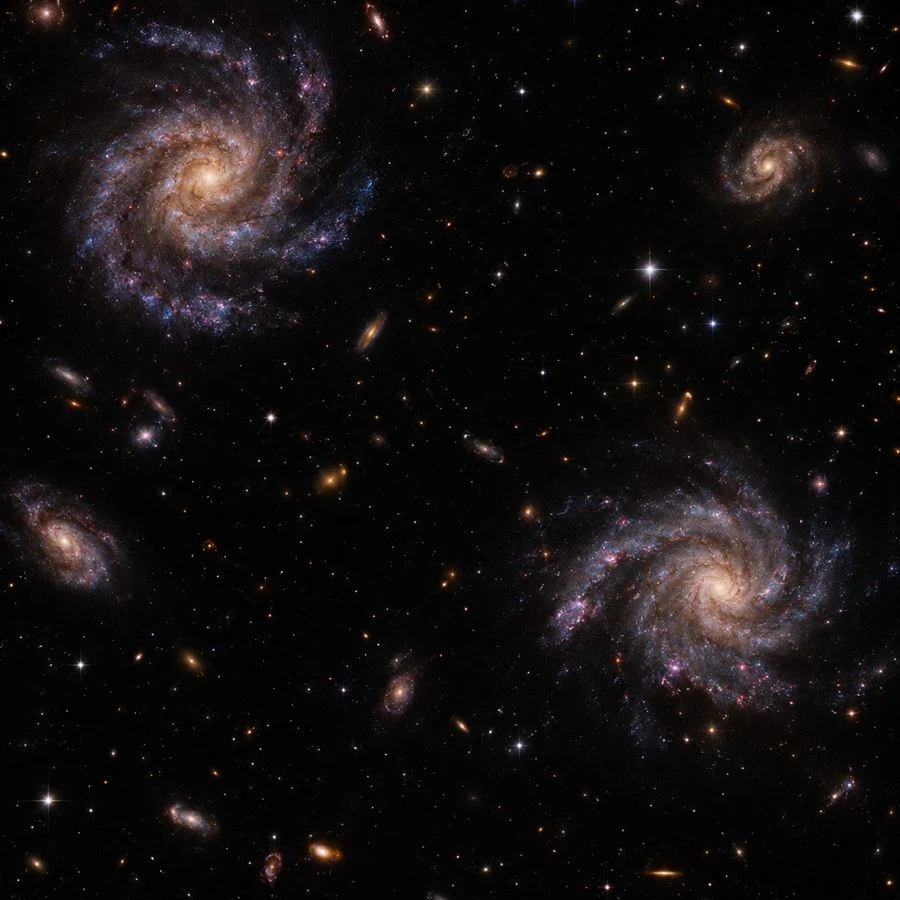
One possible way to investigate such ideas is to examine the apparent rotation of distant galaxies. In 2025, researcher Lior Shamir published an analysis of 263 spiral galaxies observed by the James Webb Space Telescope as part of the JADES survey. The study classified 158 galaxies as having one apparent spiral orientation and 105 as having the opposite orientation, identifying an imbalance that may deserve further investigation.
However, this result doesn't prove that the entire universe rotates. Galaxy samples can be influenced by observational selection, image-processing methods, and the movement of our own galaxy. Furthermore, identifying a galaxy's apparent spiral orientation isn't always sufficient to determine its true three-dimensional angular momentum. Independent observations across much larger regions of the sky would be needed to establish whether a genuine cosmological pattern exists.
Another important test involves the cosmic microwave background, the radiation left over from the early universe. Certain models of global rotation predict distinctive temperature or polarization patterns. Measurements from the Planck mission have already placed very strict limits on large-scale anisotropy and strongly constrain models involving significant cosmic rotation.
Scientists can also investigate whether alternative cosmological models produce testable predictions about the expansion history of the universe. Popławski's work offers an interesting theoretical framework, but it hasn't been established as an explanation for dark energy or the origin of our universe.
For now, the distinction is essential: scientists understand many reasons why planets, stars, and galaxies rotate, but the idea that the entire universe spins around a common axis remains speculative. Future galaxy surveys, more precise cosmological observations, and improved theoretical models may help determine whether any evidence supports such an extraordinary possibility.
Explore the galaxy with WarForGalaxy
The universe is filled with rotating planets, distant stars, and mysterious systems waiting to be explored. If you enjoy space science and strategic challenges, WarForGalaxy gives you the opportunity to build your own interstellar civilization and compete for galactic influence.
WarForGalaxy is a free cross-platform multiplayer 4X space strategy game where you can explore planets, develop colonies, manage resources, research technologies, and assemble powerful military fleets. Begin with a small settlement, expand your territory, and turn your growing civilization into a formidable empire.
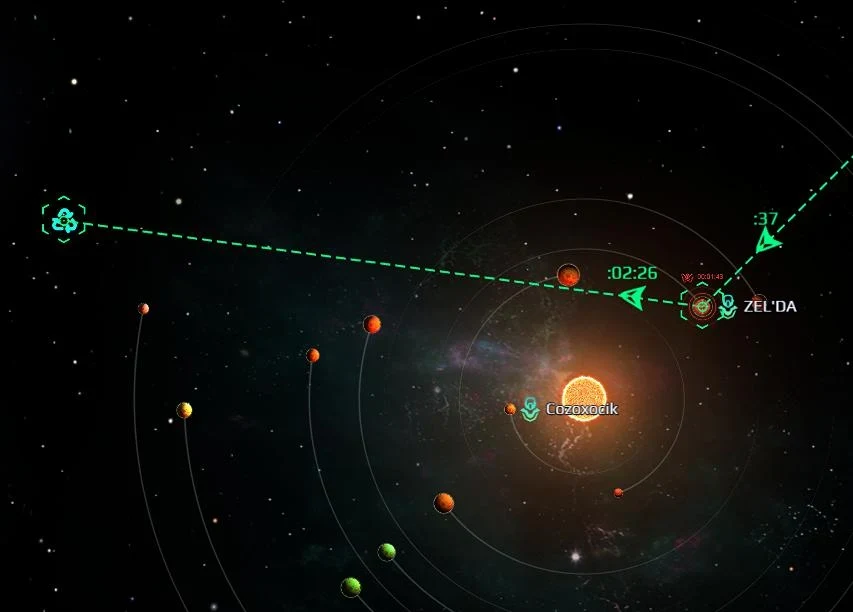
The game connects players from around the world, making alliances, diplomacy, and large-scale galactic wars an important part of the experience. You can cooperate with other commanders, coordinate military operations, and compete for valuable planetary systems. Hermes, an AI assistant, also helps with strategic analysis and selected routine empire-management tasks.
You can play on computers and smartphones, with browser-based access on PC that doesn't require installing a separate client. Ready to take command? Play WarForGalaxy for free, explore new worlds, build your fleets, and lead your civilization toward galactic domination.