Why is the sky blue if space is black
Space & Astronomy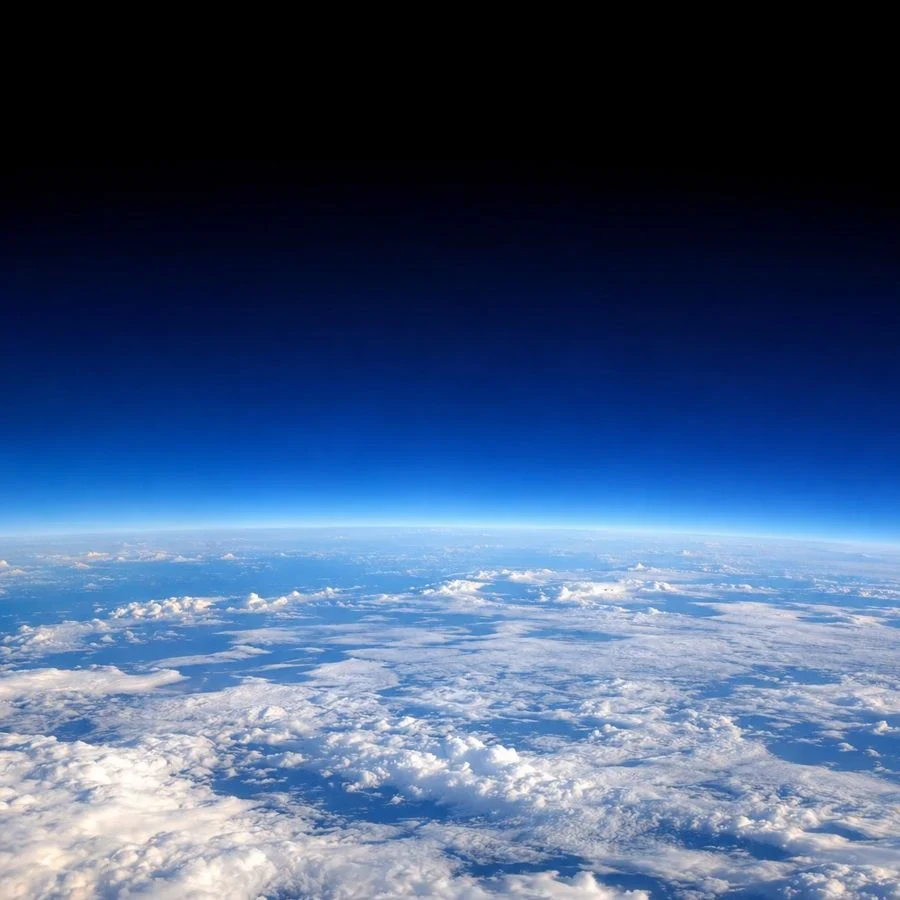
On a clear day, Earth's sky looks bright blue, yet just beyond our atmosphere lies the seemingly endless darkness of space. The Sun illuminates both environments, so why do they look completely different? And why does the same sky turn orange or red when evening approaches? The explanation involves sunlight, atmospheric gases, and the way our eyes interpret different wavelengths of light. In this article, we'll explore why Earth's sky is blue while outer space appears black, how animals perceive the sky, what makes sunsets red, and why the skies of other planets can look surprisingly different.
The physics of light and the atmosphere
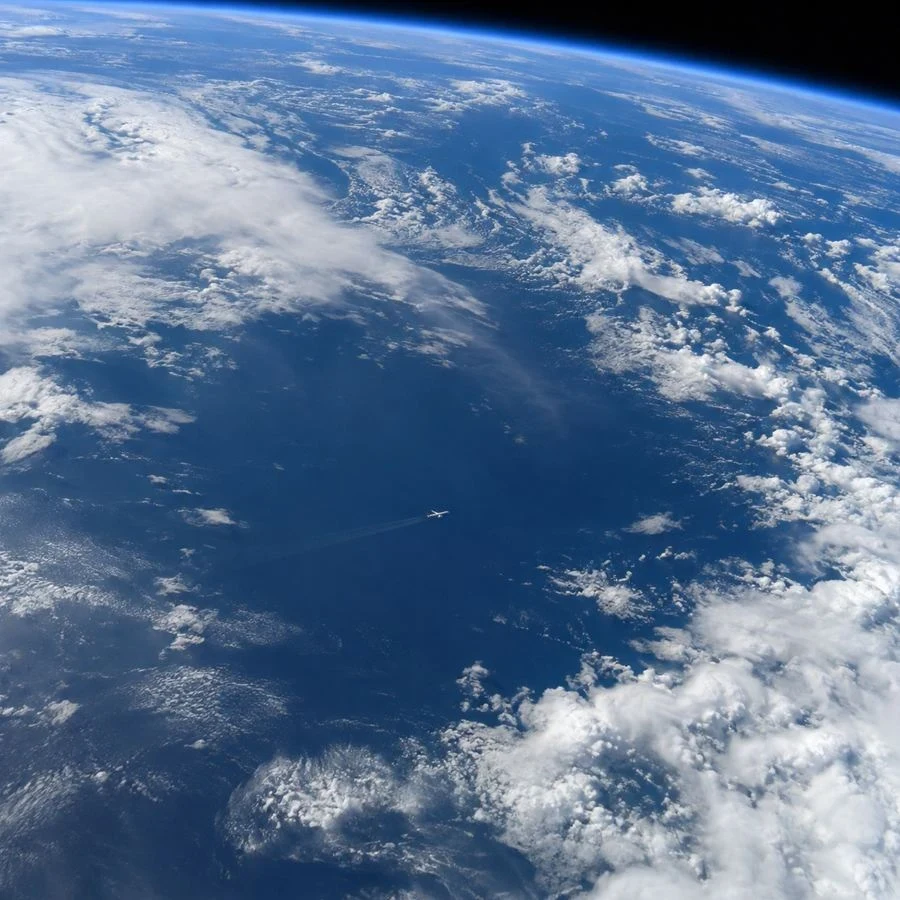
The main reason Earth's sky appears blue is a phenomenon called Rayleigh scattering. Our planet is surrounded by an atmosphere composed primarily of nitrogen and oxygen. When sunlight travels through this layer of gas, it interacts with countless tiny molecules, causing some of the incoming radiation to scatter in different directions. As a result, we receive sunlight not only directly from the Sun but also from nearly every direction across the sky.
Although air usually looks transparent, even small interactions become noticeable when sunlight passes through kilometers of atmosphere. The effect depends strongly on wavelength. Blue and violet light have shorter wavelengths than orange and red light, and atmospheric molecules scatter these shorter wavelengths much more efficiently. This creates the familiar blue appearance of a clear daytime sky.
According to the simplified Rayleigh scattering model, scattering intensity is inversely proportional to the fourth power of wavelength. For example, light with a wavelength of 450 nanometers is scattered approximately four times more efficiently than light at 650 nanometers. This difference is enough to give the scattered light reaching our eyes a distinctly bluish appearance.
The atmosphere also explains why the sky changes color depending on where we're looking. Overhead, the blue may appear relatively deep and saturated, while near the horizon it often becomes pale or almost white. The longer path through the air introduces additional scattering, including interactions with dust, aerosols, and moisture. At high altitudes, where there's less atmosphere above the observer, the sky can appear darker and more intensely blue.
But why is outer space black if sunlight continues traveling through it? The answer is that interplanetary space contains extremely little matter. Sunlight can travel through a vacuum without difficulty, but there aren't enough particles to scatter much of that light toward an observer. Consequently, the space between illuminated objects remains dark rather than glowing blue.

The Moon provides a perfect example. Its surface can be brightly illuminated by direct sunlight, casting sharp shadows across the landscape, while the sky above remains black. The Moon doesn't have a substantial atmosphere capable of producing the scattered daylight familiar on Earth. The same contrast appears in photographs of spacecraft, where bright metallic surfaces stand against a nearly black background.
This doesn't mean the universe contains no light between stars. Radiation from distant galaxies, stars, and other sources continues traveling through space. However, without a sufficiently dense scattering medium, there's no bright atmospheric glow covering the sky. The wider question of why the entire night sky isn't bright despite the enormous number of stars also involves the finite age and expansion history of the observable universe.
How do sunlight and human vision work
Sunlight appears white, but it contains a continuous spectrum of visible wavelengths, ranging from violet and blue through green and yellow to orange and red. When these wavelengths reach our eyes together in suitable proportions, we perceive them as white light. As sunlight passes through Earth's atmosphere, scattering changes the relative amounts of different wavelengths arriving from each direction, producing the colors we observe overhead.
An interesting question follows: if violet light has a shorter wavelength than blue light and scatters even more strongly, why doesn't the sky look violet? Several factors contribute to the answer. The Sun's energy output varies across the visible spectrum, some shorter wavelengths are absorbed by atmospheric gases, and human vision is less sensitive to the violet end of the spectrum than to much of the blue-green region.
Our eyes contain three main types of cone cells that respond to overlapping ranges of wavelengths. Rather than detecting each color independently, the brain combines signals from these receptors to construct our perception of color. The scattered daylight contains a mixture of wavelengths, and the way our visual system processes that mixture makes the sky appear blue rather than violet.
This also explains why the sky doesn't always have the same shade. On a clear afternoon, it may look intensely blue, while humid or hazy weather can make it appear washed out. Larger airborne particles scatter visible wavelengths differently from individual gas molecules, changing both the brightness and color of the light reaching us.
Clouds demonstrate this difference particularly well. They consist of water droplets and ice crystals that scatter visible light across a broad range of wavelengths. Thick sunlit clouds therefore usually appear white, while their shaded lower regions may look gray because less light reaches the observer. The sky's appearance is the result of several optical processes working together, not a single fixed color applied to the atmosphere.
How do animals see the sky
Humans aren't the only creatures that use the sky to understand their surroundings. Different animals possess visual systems adapted to navigation, hunting, finding food, and recognizing other members of their species. These adaptations mean that the same sky can provide information that humans cannot perceive directly.
Many birds have four types of cone cells involved in color vision, compared with the three normally found in humans. Some species can detect ultraviolet wavelengths, allowing them to distinguish patterns outside our visible spectrum. However, this doesn't mean birds necessarily see the entire sky as purple. Their perception involves additional sensory information that cannot be accurately reproduced using ordinary human colors.
Bees and certain other insects have another remarkable ability: they can detect patterns of polarized light in the sky. Scattering gives skylight a characteristic polarization pattern related to the Sun's position. Humans generally cannot distinguish this pattern without special equipment, but insects can use it as a natural compass to help navigate toward food sources and return to familiar locations.
Other animals prioritize different visual abilities. Nocturnal species may be particularly sensitive to weak illumination, allowing them to function when the sky is dark. Their color discrimination can differ from ours, depending on the structure of their eyes and the conditions in which they evolved.
For these creatures, the sky isn't simply a colorful background. It can serve as a detailed navigation system containing directional and spectral information that remains invisible to human observers.
Why is the sunset red
During the day, Earth's sky is usually blue, but as the Sun approaches the horizon, warm shades of yellow, orange, and red begin to dominate. The Sun itself hasn't suddenly changed color. Instead, sunlight travels through a much longer section of the atmosphere before reaching our eyes.
When the Sun is high overhead, its light follows a relatively short atmospheric path. Near sunrise or sunset, the same light enters at a shallow angle and must travel through a considerably greater amount of air. During this journey, short blue wavelengths are scattered out of the direct beam more strongly, leaving a greater proportion of orange and red light reaching the observer from the Sun's direction.
This process also explains why the sky doesn't become uniformly red. Blue light continues scattering throughout the atmosphere, so one region may glow orange while another remains blue or develops soft violet tones. The exact appearance depends on the Sun's position, atmospheric conditions, and the direction in which we look.
Dust, smoke, and other aerosols can make sunsets particularly dramatic by changing how sunlight is scattered and absorbed. Volcanic particles and certain atmospheric haze conditions sometimes produce unusually colorful skies. However, greater pollution doesn't automatically create a more beautiful sunset. Dense smoke or heavy haze can simply block light and reduce visibility.
Clouds also contribute to the spectacle. High-altitude clouds may catch warm sunlight after the Sun has disappeared below the observer's horizon, creating bright pink, orange, and crimson formations. Lower clouds may already be in shadow, producing striking contrasts across the same sky.
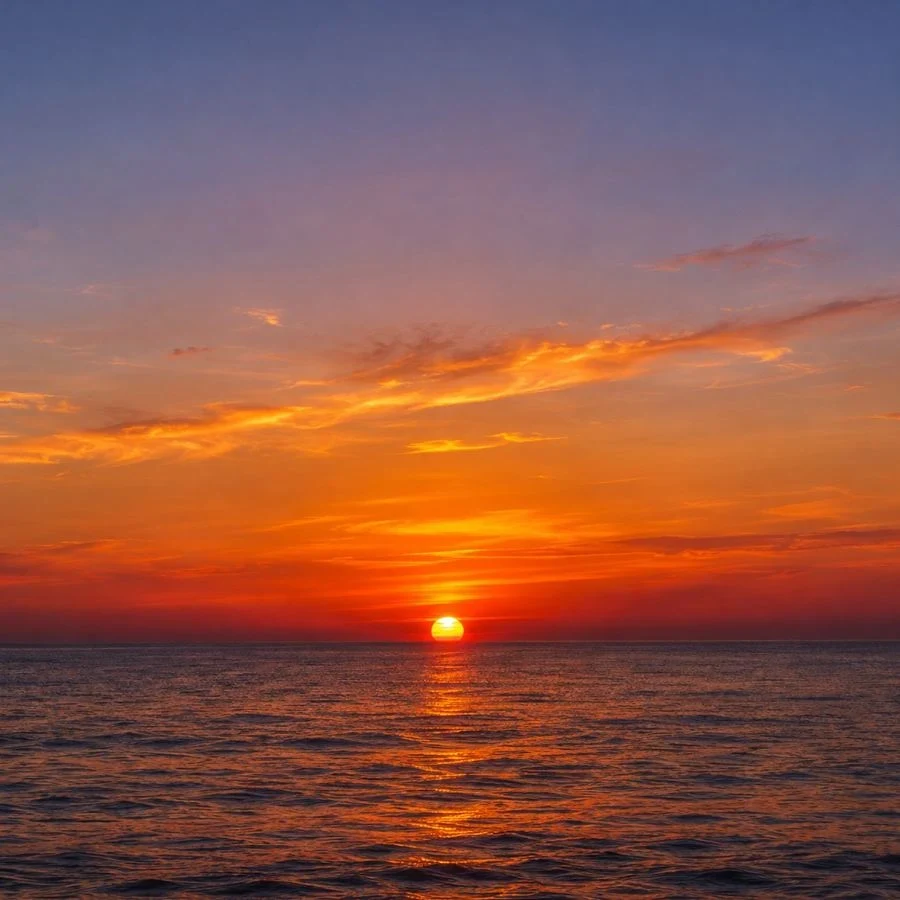
Sunrises follow the same physical principles, although differences in weather, humidity, and airborne particles can make morning and evening colors look different. As twilight progresses, the upper atmosphere continues receiving sunlight after the ground enters shadow, allowing the sky to transition gradually from warm colors to deeper blue and eventually black.
The red sunset and blue daytime sky are therefore two expressions of the same basic process: sunlight interacting with Earth's atmosphere under different viewing and lighting conditions.
What does the sky look like on other planets
Earth isn't the only world surrounded by an atmosphere, but different planets have very different atmospheric compositions, densities, and suspended particles. These characteristics determine how sunlight scatters and what colors an observer might see from the surface. Some skies appear dusty orange, others are hidden beneath thick clouds, and worlds with almost no atmosphere can have black skies even in broad daylight.
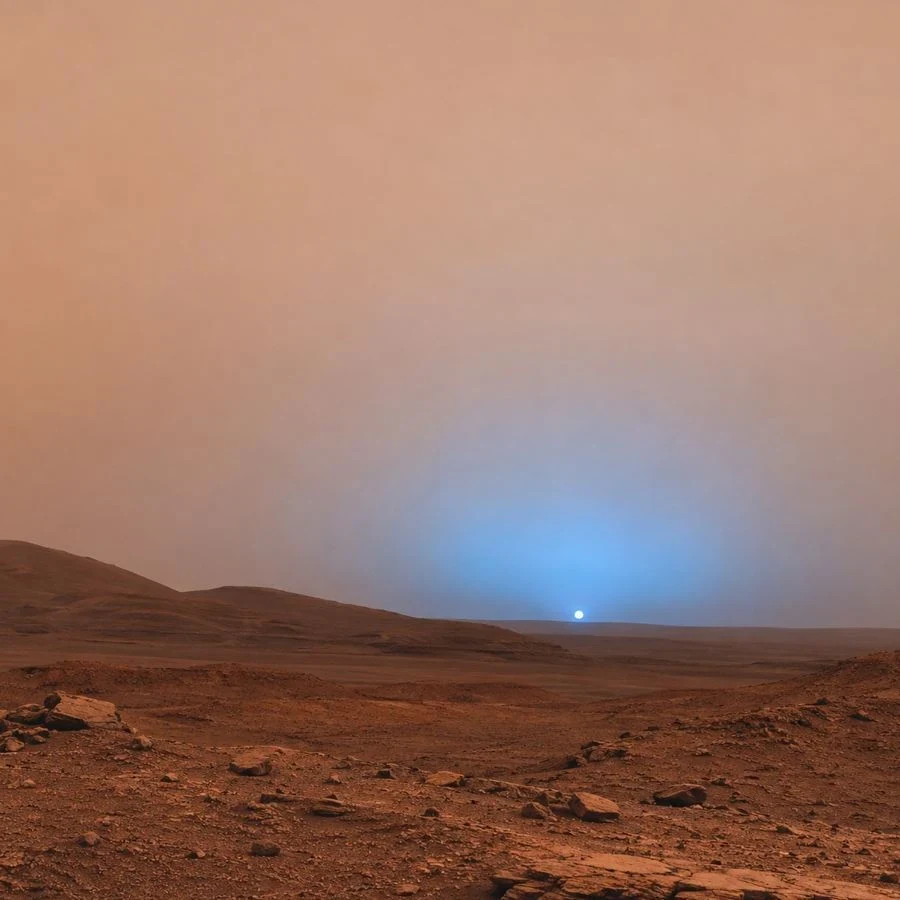
Mars provides one of the most fascinating examples. Its atmosphere is much thinner than Earth's and consists mainly of carbon dioxide. Fine mineral dust suspended in the air strongly influences how sunlight travels through it, giving the daytime sky a reddish, yellowish, or butterscotch appearance under many conditions.
Near sunset, however, the sky around the Martian Sun can become bluish. Fine dust particles scatter light in a way that allows blue wavelengths to remain more concentrated near the direction of the setting Sun. NASA's Curiosity and Perseverance rovers have captured this unusual phenomenon, revealing a striking contrast with familiar sunsets on Earth. The exact colors depend on atmospheric dust and photographic calibration.
Venus presents an entirely different environment. Its extremely dense carbon dioxide atmosphere is covered by thick clouds containing sulfuric acid droplets. Sunlight passing through these layers becomes strongly diffused, creating illumination very different from a clear afternoon on Earth. Images returned by the Soviet Venera landers show an unusual yellowish atmospheric environment, although camera calibration and image processing must be considered when interpreting the precise colors.
Titan, Saturn's largest moon, offers another fascinating comparison. Although it isn't a planet, it possesses a dense atmosphere with nitrogen, methane, and complex organic aerosols. These compounds create a thick orange haze that makes the surface difficult to observe from space using ordinary visible light. From the ground, the atmosphere produces a dim, hazy environment unlike Earth's bright blue sky.
Mercury and the Moon represent the opposite extreme. Both have extremely tenuous exospheres rather than substantial atmospheres capable of scattering visible sunlight across the sky. As a result, their skies remain black even when nearby terrain is illuminated by the Sun.
It's also worth remembering that not every planetary photograph uses natural colors. Spacecraft often observe invisible wavelengths or combine special filters to reveal atmospheric and surface features. These scientifically useful images may look very different from what a human observer would experience.
Ultimately, the color of a planet's sky depends on the interaction between sunlight, atmospheric composition, suspended particles, and the observer's visual system. Earth's blue sky is a product of its particular conditions, while the blackness of outer space shows what happens when there is almost no surrounding material to scatter light.
Explore extraordinary planets with WarForGalaxy
Every planet has its own environment, atmosphere, and challenges. If you enjoy discovering unusual worlds and making decisions that shape entire civilizations, WarForGalaxy offers an opportunity to build your own empire across the stars.
WarForGalaxy is a free cross-platform multiplayer 4X space strategy game focused on exploration, expansion, resource management, and galactic warfare. Start with a small planetary colony, construct infrastructure, research advanced technologies, and develop military fleets as your civilization grows into a powerful interstellar force.
The multiplayer galaxy connects players from around the world, allowing you to establish alliances, coordinate military operations, defend valuable planets, and compete for control of new territories. Whether you're building a strong economy or preparing a large-scale offensive, every strategic decision contributes to your empire's future.
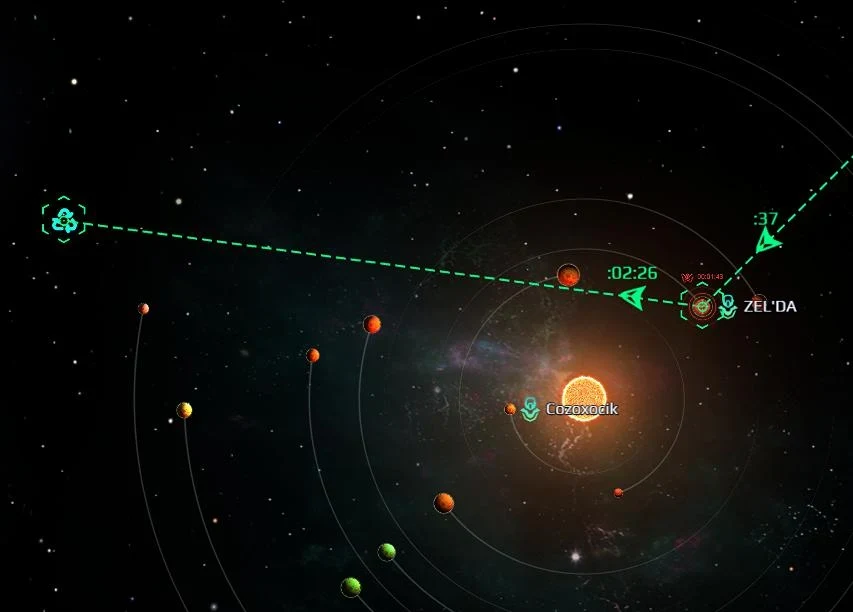
The game also features Hermes, an AI assistant designed to support strategic analysis and selected routine management tasks. WarForGalaxy is available on computers and smartphones, and you can play directly in your PC browser without installing a separate game client.
Ready to explore new worlds? Play WarForGalaxy for free, establish your first colony, build powerful fleets, and begin your journey toward galactic domination.