Why can't you see airplanes from space
Space & Astronomy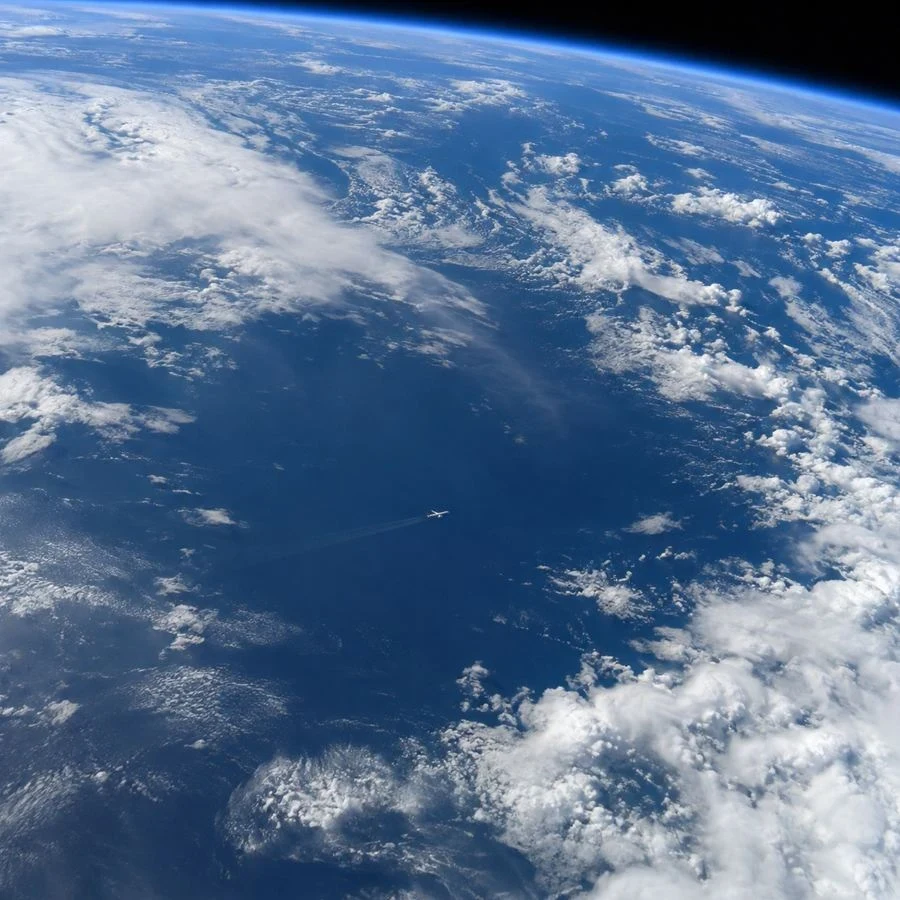
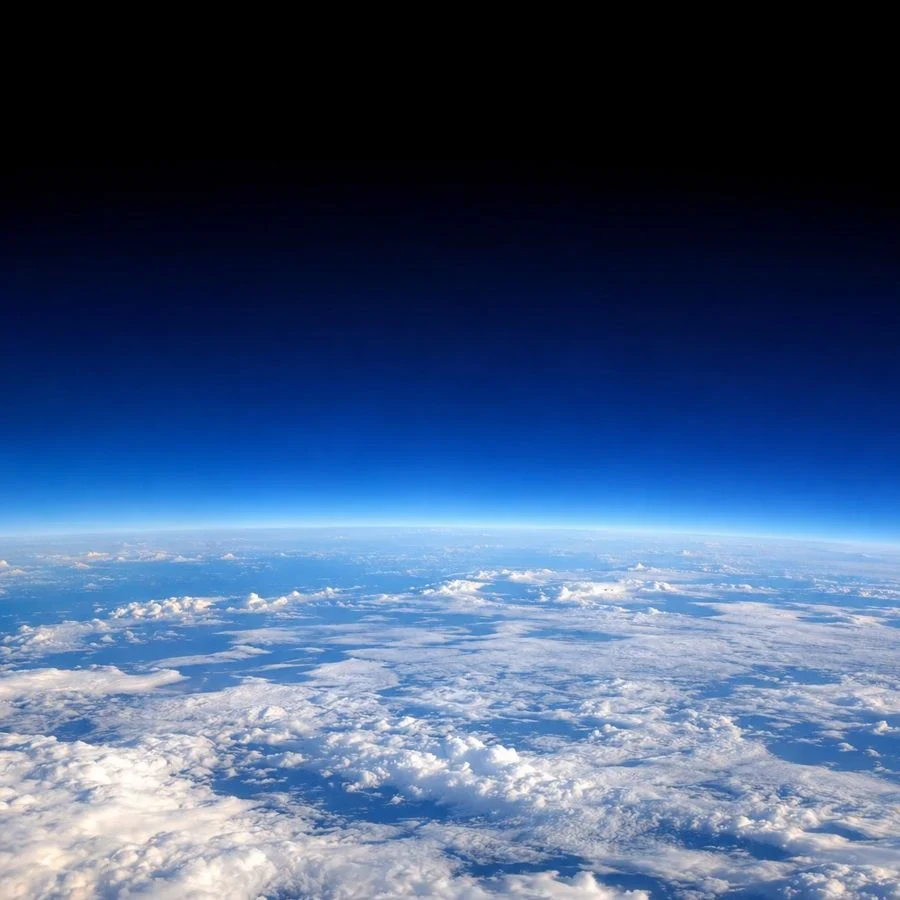
Photographs of Earth taken from orbit reveal enormous cities, mountain ranges, rivers, and spectacular cloud formations. Yet something seems to be missing: thousands of airplanes fly through our atmosphere every day, but they almost never appear in ordinary space photographs. So why can't you see airplanes from space, even with modern cameras? The explanation involves enormous distances, the limits of human vision, and the way orbital photography works. In this article, we'll explore what astronauts can actually see from the International Space Station, which everyday objects disappear from view, and how large something must be to become recognizable from orbit.
Understanding the scale of space
The main reason airplanes are difficult to spot from space is the enormous difference between their physical size and their distance from the observer. A large passenger aircraft might have a wingspan of 60 to 80 meters, which seems impressive when you're standing beside it at an airport. However, compared with the vast surface of Earth, even the biggest commercial airliner becomes an extremely small object.
The International Space Station typically orbits approximately 400 kilometers above Earth, while commercial aircraft usually fly at altitudes of around 9 to 12 kilometers. This means an airplane passing directly beneath the station could still be roughly 390 kilometers away. If the aircraft is positioned farther toward the horizon, the viewing distance becomes considerably greater, making detection even more difficult.
Astronomers describe an object's apparent size using angular measurements. A 60-meter airplane viewed from approximately 390 kilometers occupies an angle of about 32 arcseconds, slightly more than half an arcminute. Under favorable conditions, the human eye can resolve details separated by roughly one arcminute, although actual performance depends on contrast and lighting. Consequently, an airplane at that distance is generally too small to recognize by its shape without optical magnification.
Size isn't the only challenge. Earth's surface contains forests, buildings, roads, clouds, and countless natural patterns that make small objects difficult to distinguish. A white airplane above bright cloud cover may blend into the background, while a darker aircraft over the ocean can be nearly impossible to identify. Sunlight reflecting from an aircraft might occasionally make it easier to detect, but that requires favorable illumination and viewing geometry.
Aircraft also move rapidly, and the observer is moving too. Unlike a large airport runway or mountain range, an airplane occupies a tiny part of the field of view for a limited time. Finding it is therefore much harder than spotting a stationary feature covering several kilometers.
Can ISS astronauts see airplanes
Astronauts aboard the International Space Station have an extraordinary view of Earth through several observation windows, including the Cupola module. From orbit, they can recognize coastlines, islands, desert formations, and enormous weather systems. However, identifying an individual airplane with the naked eye is exceptionally difficult, even when the sky below is clear.
This doesn't mean photographing an aircraft from space is impossible. Astronauts use professional digital cameras equipped with different lenses, including powerful telephoto optics. A long focal length makes distant objects occupy more pixels in a photograph, potentially revealing details that would remain invisible to the unaided eye.
In 2019, Roscosmos explained that airplanes are difficult to photograph from orbital altitudes because they appear extremely small against Earth. The agency pointed out that images capturing such aircraft require substantial optical magnification. This distinction matters: a tiny object may be almost impossible to notice through a window but still detectable with suitable photographic equipment.
The station itself also travels at approximately 28,000 kilometers per hour, completing an orbit in roughly 90 minutes. When a camera uses strong magnification, the ground shifts quickly through its field of view. Photographing a specific aircraft therefore requires accurate timing, appropriate shutter settings, and a clear line of sight.
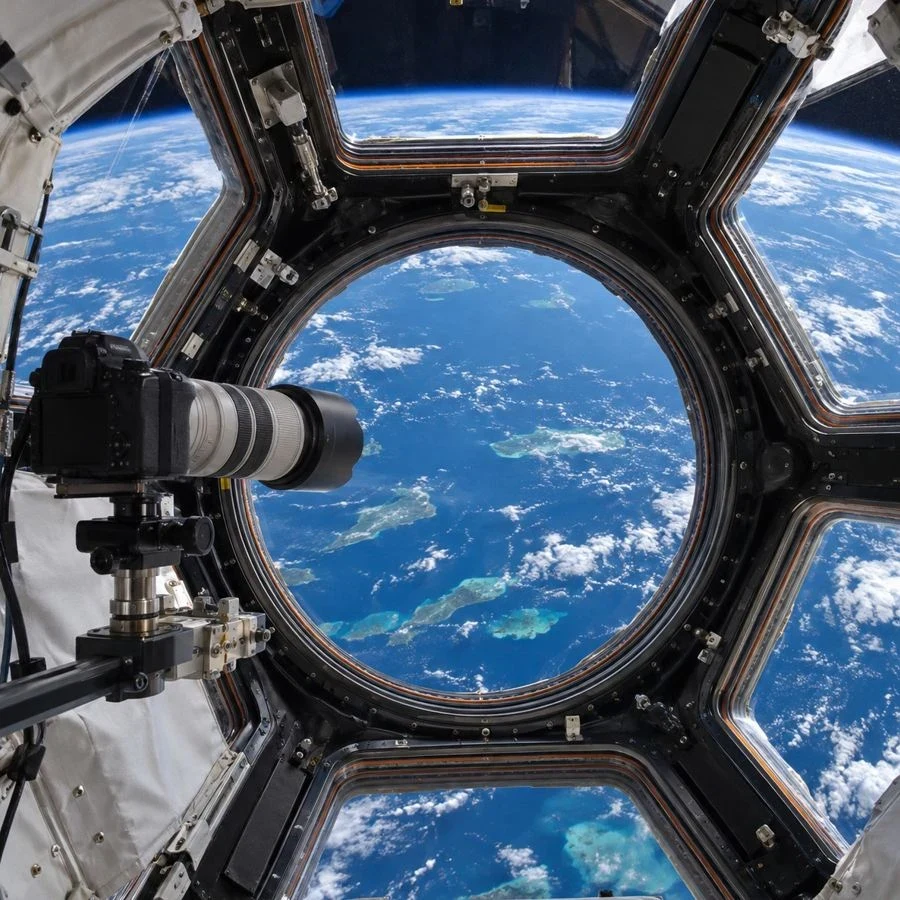
Another reason airplanes rarely appear in ISS photographs is that crews generally aren't trying to capture them. Most Earth observation images focus on landscapes, environmental changes, coastlines, cities, and atmospheric phenomena. Wide-angle photographs cover huge areas, reducing individual aircraft to a few pixels or fewer.
Sometimes a contrail is easier to notice than the airplane producing it. These narrow cloud-like trails form when engine exhaust interacts with sufficiently cold and humid air at high altitude. Under suitable conditions, contrails can extend for many kilometers and remain visible after the aircraft has moved away. Even then, distinguishing them from natural cloud features may require careful examination.
What else can't you see from space
Airplanes aren't the only familiar objects that disappear when viewed from hundreds of kilometers above Earth. Cars, individual people, small buildings, and most trees are far too small to recognize with the naked eye from the ISS. A passenger car only several meters long occupies a tiny angular size at orbital distances, well below what an unaided observer can resolve as a recognizable vehicle.
However, large structures made from many small objects can remain visible. An individual car may be impossible to identify, while an extensive highway network can form a recognizable pattern across a landscape. Likewise, astronauts may distinguish the outline of a city without identifying individual houses, or recognize a forest without seeing separate trees.
Large airports are particularly interesting because their runways can extend for several kilometers. Although a single airplane in flight is difficult to locate, an airport's overall layout may be recognizable in photographs taken from orbit. Large harbors, reservoirs, mining areas, and agricultural fields can also stand out because of their dimensions and contrast with the surrounding environment.
Specialized Earth observation satellites provide a different level of detail from ordinary photographs taken through spacecraft windows. High-resolution commercial imaging systems can collect pictures with ground sample distances of approximately 30 centimeters per pixel. Under suitable conditions, these images can reveal parked aircraft, vehicles, and individual structures.
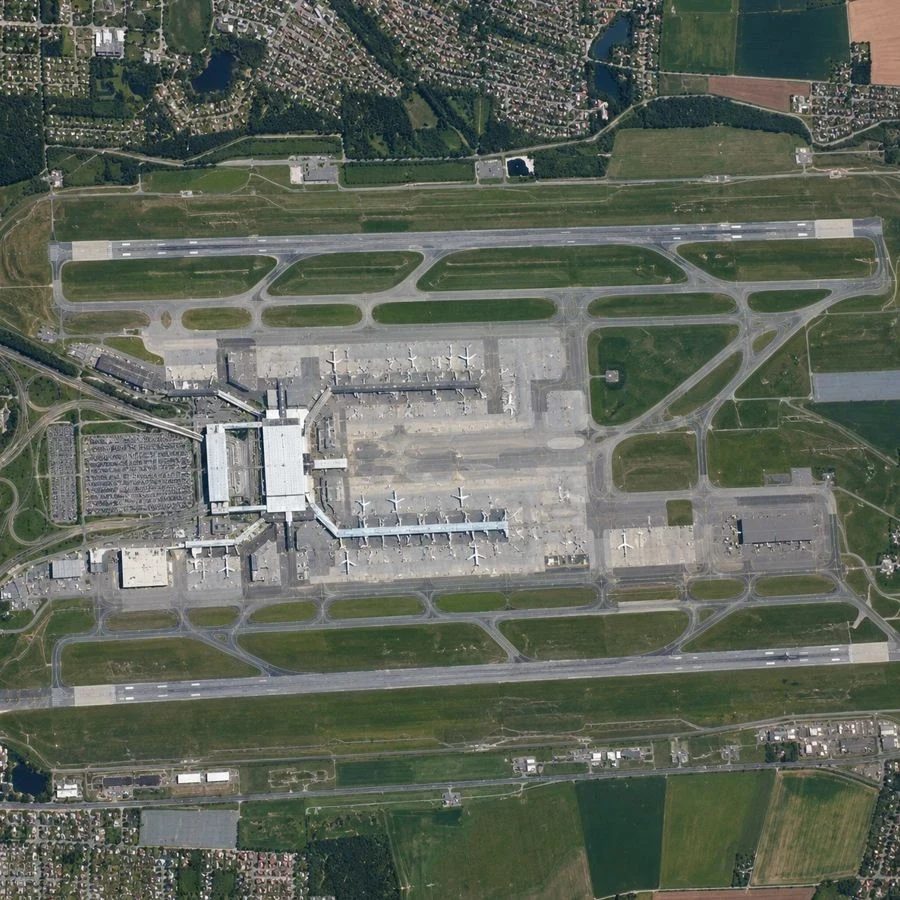
But high spatial resolution doesn't mean satellites continuously monitor every moving object on Earth. Their cameras observe limited areas during particular passes, and clouds, atmospheric conditions, image-processing methods, and the movement of the target all affect the results. A flying aircraft may occasionally appear distorted or blurred in satellite imagery because it moves while the sensor collects information.
The essential distinction is between seeing a general structure, detecting a small object, and recognizing exactly what that object is. These tasks require different levels of image detail, contrast, and optical performance.
How large must an object be to see it from space
There is no single minimum object size that guarantees visibility from orbit. The answer depends on distance, contrast, brightness, viewing conditions, and the equipment used. Nevertheless, basic geometry provides a useful way to understand the scale involved.
A commonly used reference for human visual resolution is approximately one arcminute under good conditions. At a distance of 400 kilometers, that angle corresponds to a physical length of roughly 116 meters. This doesn't mean everything larger than 116 meters will automatically be recognizable or that everything smaller is completely invisible. Detecting a bright point, resolving two details, and identifying an object's shape are different visual tasks.
A 120-meter object might blend into similarly colored surroundings, while a smaller but exceptionally bright feature could stand out. The object's orientation matters too: a long, narrow structure may be easier to notice when it produces a clear contrast against its background.
Camera optics introduce another important distinction. A telephoto lens enlarges distant subjects within the image, but it also narrows the field of view and makes accurately locating moving targets more difficult. Specialized satellites use carefully designed optical systems and imaging sensors to capture much smaller surface features, although their actual resolving ability depends on more than the stated pixel size.
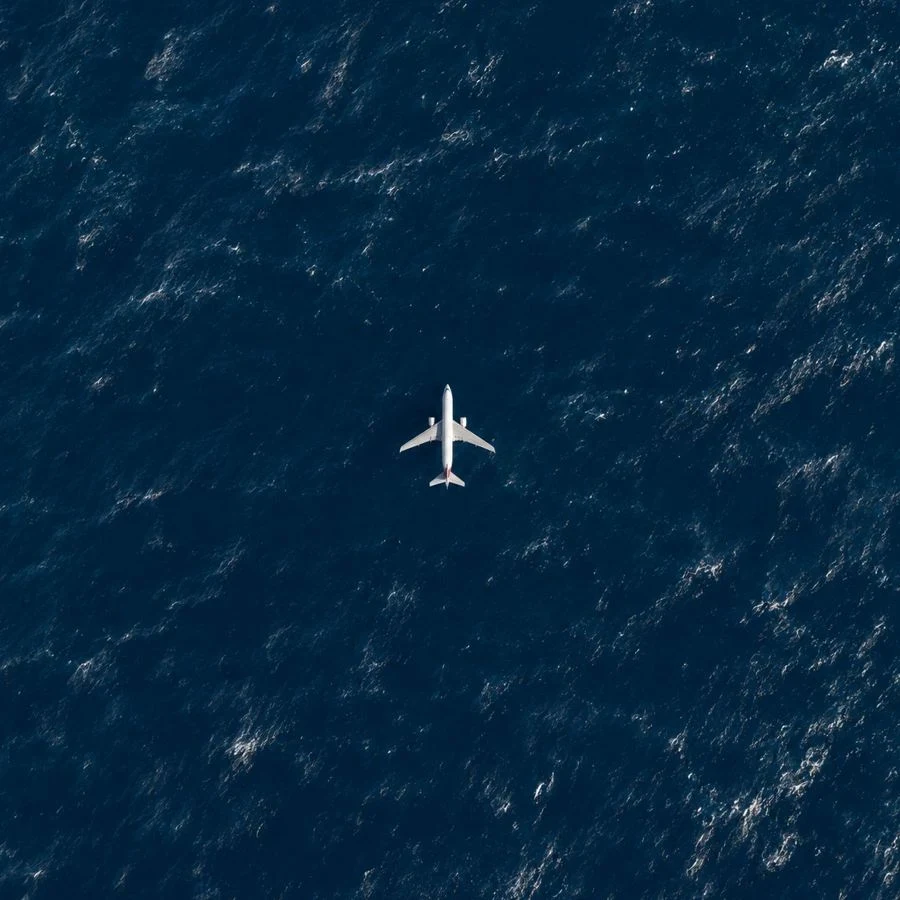
For comparison, a large aircraft with a 60-meter wingspan is difficult to identify with the naked eye from ISS altitude. A runway several kilometers long is much easier to recognize when its shape contrasts with the surrounding terrain. Meanwhile, a specialized satellite camera may capture details of parked aircraft that an astronaut couldn't resolve through a window without magnification.
Ultimately, airplanes don't disappear from space because of some invisible atmospheric boundary. They're simply small, distant, and often difficult to distinguish from Earth's complicated background. With suitable optics and favorable conditions, aircraft can be photographed from orbit, but ordinary space photographs are rarely detailed enough to show them clearly.
Explore the galaxy with WarForGalaxy
Earth looks enormous from an airplane, but from space, even the largest cities become tiny features on a planetary surface. If you enjoy exploring vast environments and thinking on a truly cosmic scale, WarForGalaxy gives you the chance to take command of your own interstellar civilization.
WarForGalaxy is a free cross-platform multiplayer 4X space strategy game where you develop planetary colonies, manage resources, research advanced technologies, and build powerful military fleets. Expand beyond your starting world, strengthen your economy, and compete for influence across distant star systems.
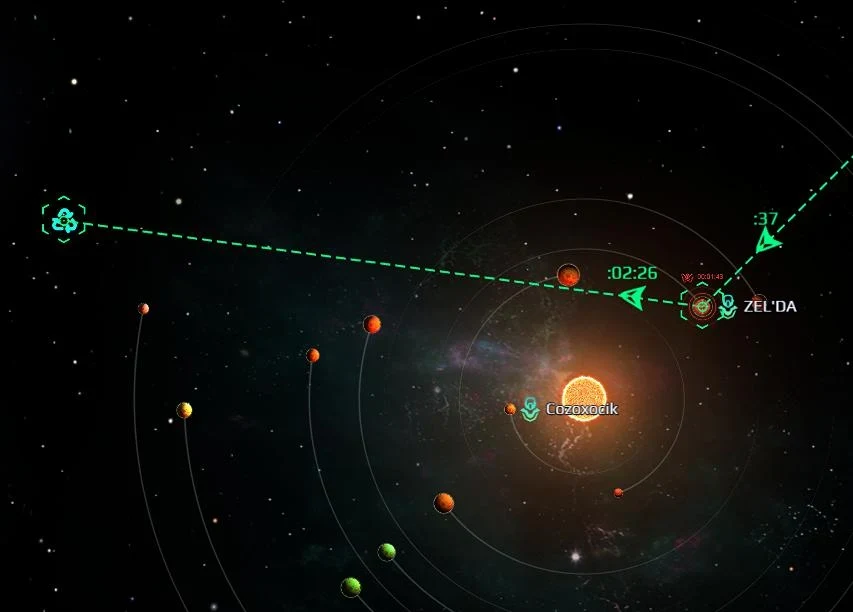
Join alliances with players from around the world, coordinate military operations, and participate in galactic wars. The game also features Hermes, an AI assistant designed to help with strategic analysis and selected routine management tasks.
You can play on computers and smartphones, with browser-based access on PC that doesn't require installing a separate client. Ready to build your empire? Play WarForGalaxy for free and begin your journey across the galaxy.