What does cross-platform mean in gaming
Gaming Articles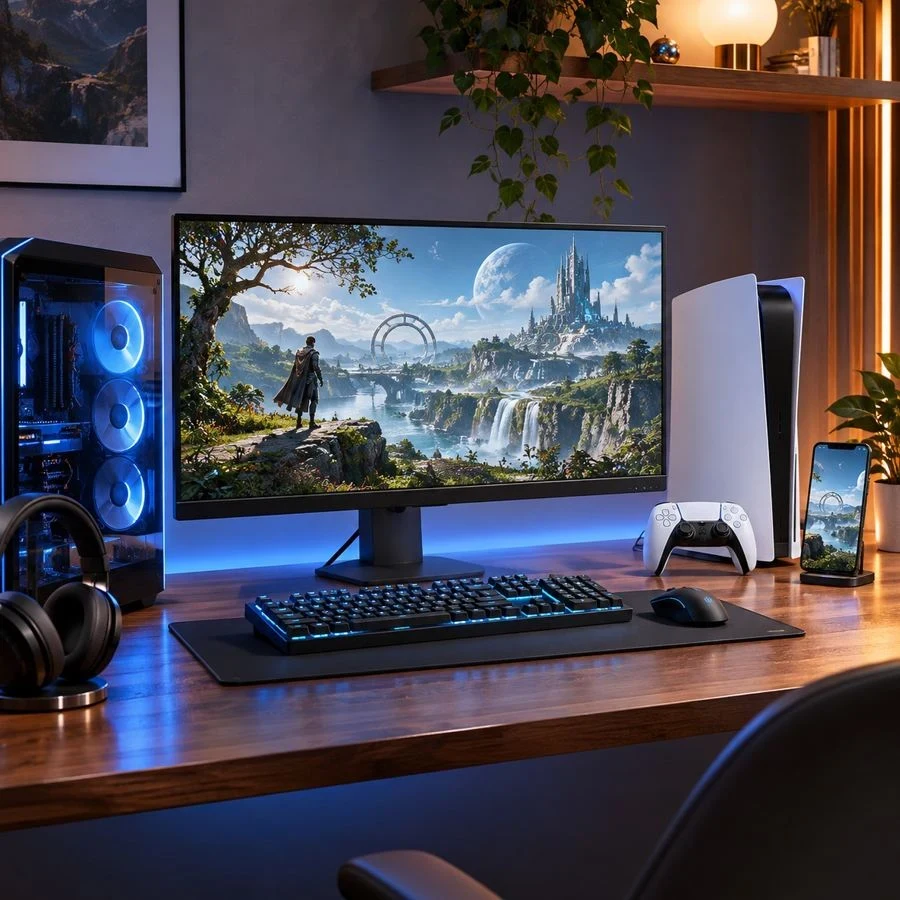
Modern video games are no longer limited to a single type of device. You can explore virtual worlds on a PC, join multiplayer sessions from a console, and sometimes continue your progress on a smartphone. But what does cross-platform mean in gaming, and how does this technology actually work? Understanding the difference between cross-play, multiplatform releases, and shared progression can help you choose games that match your needs. In this article, we'll explore these concepts, examine the advantages and limitations of cross-platform gaming, and discuss where the technology is heading.
What are cross-platform games
A cross-platform game supports interaction or compatibility between different gaming systems, such as computers, consoles, and mobile devices. In multiplayer gaming, the term usually refers to titles that allow people using different platforms to participate in the same online experience. Someone playing on a Windows PC might join a friend using a PlayStation, Xbox, or smartphone without needing identical hardware.
This functionality is commonly called cross-play. It connects users across supported platforms through compatible online services, allowing them to complete cooperative missions, compete in multiplayer matches, or interact within a persistent virtual world. Depending on the game, players might form small teams or participate in activities involving hundreds of other users.
Behind the scenes, cross-play relies on networking systems that keep the experience synchronized. When a player moves, attacks, or interacts with an object, the game communicates that action to a server or another networking host. The result is then shared with connected players, allowing everyone to experience the same events despite using different hardware and operating systems.
However, cross-platform multiplayer isn't always universal. Some games connect PC and console players but exclude smartphones, while others support only certain console generations. Individual modes may also have different restrictions. That's why it's important to verify which versions can actually play together rather than assume compatibility from the game's description.
Another related feature is cross-progression. This allows players to continue developing the same account across multiple devices. For example, someone might play on a computer at home and later use a phone to access their character, equipment, or achievements. Cross-play and cross-progression are separate features, meaning a game can support one without offering the other.
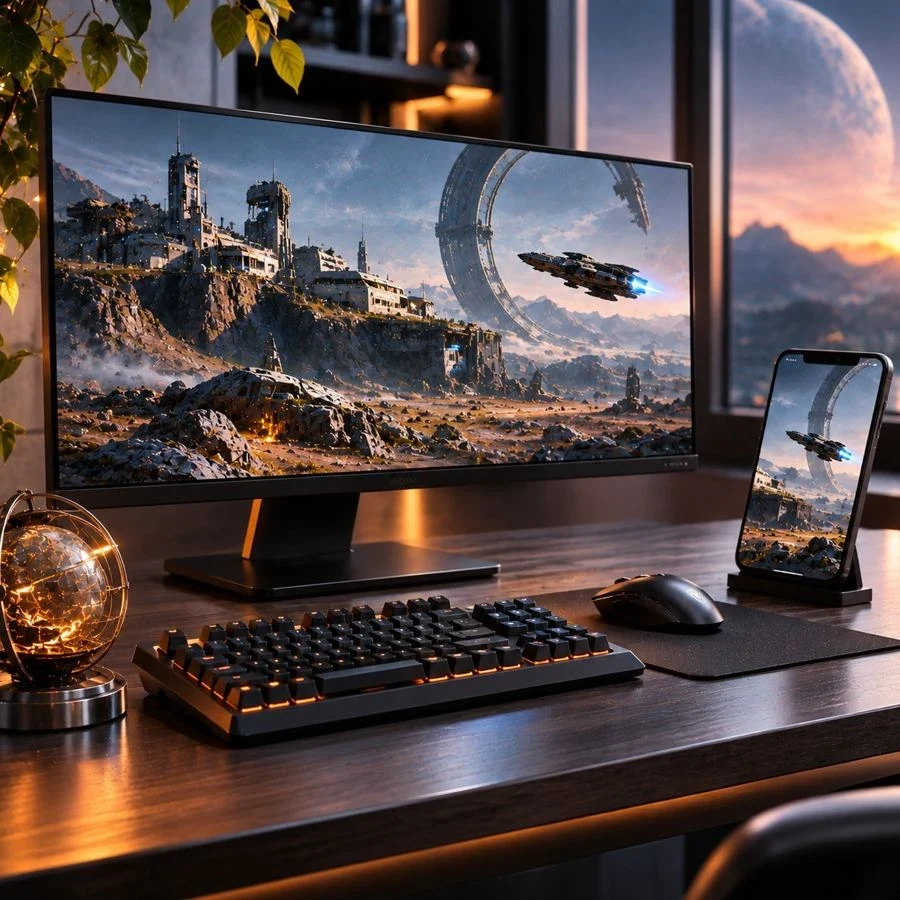
Ultimately, cross-platform gaming means greater freedom in choosing how and where to play, provided the developer supports compatibility between the devices involved.
How is cross-platform different from multiplatform
Cross-platform and multiplatform are often treated as interchangeable terms, but there's an important distinction in multiplayer gaming. A multiplatform game is simply available on more than one system. It might have separate releases for PC, PlayStation, Xbox, and mobile devices without allowing users of those versions to interact.
Cross-platform multiplayer goes further by connecting supported platforms through a shared online experience. If a PC player can join a console friend's party and complete the same mission, the game supports cross-play. A title may therefore be multiplatform without providing cross-platform multiplayer.
Several related terms help explain the differences:
Multiplatform. A game released for multiple gaming systems, regardless of multiplayer compatibility;
Cross-play. The ability to play online with users on other supported platforms;
Cross-progression. The ability to carry account development, unlocked content, and certain statistics between devices;
Cross-save. A feature that transfers or synchronizes saved game data across supported versions.
It's also worth separating cross-platform gaming from cloud gaming. Cloud services run the game on remote hardware and stream the resulting video to a player's device. This can make demanding games accessible on less powerful computers or smartphones, but streaming alone doesn't guarantee that users can play with people on other platforms.
Purchases introduce another complication. Even when a game supports shared accounts and synchronized progress, downloadable content or virtual currency may remain tied to a particular store. Players who frequently switch devices should review these restrictions before buying additional content.
Understanding these distinctions makes it easier to determine what a game actually offers. A title available everywhere isn't necessarily one you can play with everyone.
Advantages and disadvantages of cross-platform gaming
One of the biggest benefits of cross-platform gaming is the freedom to choose your preferred device. Friends no longer need identical consoles or gaming computers to spend time together. This makes cooperative adventures more accessible and reduces the frustration of discovering that your group is divided between incompatible systems.
Cross-play can also create larger multiplayer communities. When players from several platforms share matchmaking pools, there may be more potential teammates and opponents available. This can improve matchmaking opportunities and potentially reduce waiting times, particularly in less populated regions or specialized game modes.
Long-term progression becomes more convenient when cross-platform support is combined with synchronized accounts. Players can manage their characters, develop settlements, or participate in online activities using whichever device is most practical. For strategy fans, this flexibility can be especially valuable because economic development and construction often continue over extended periods.
Developers benefit from maintaining connected communities as well. Shared online events, seasonal activities, and social systems can reach more players without requiring completely isolated multiplayer ecosystems. However, delivering these advantages introduces significant technical challenges.
The most noticeable difficulty involves differences in hardware performance. A high-end PC may support higher frame rates, detailed graphics, and complex effects, while mobile devices have stricter limits on processing power, memory, and battery life. Developers must optimize their games to maintain compatible mechanics without sacrificing usability.
Control methods can create competitive balance concerns. A mouse and keyboard may offer advantages in certain shooters, while controllers provide different strengths depending on the genre. Some games address these differences through input-based matchmaking, aim assistance, or optional cross-play settings. Finding a balance that feels fair across devices remains an ongoing challenge.
Supporting multiple platforms also increases development complexity. Updates must work across different operating systems, hardware configurations, and certification requirements. A delayed patch on one platform can temporarily affect multiplayer compatibility, while security systems must account for different environments.
Online safety is another important consideration. Larger shared communities require reliable moderation, account protection, and anti-cheat systems. Maintaining fair competition while preventing abuse becomes especially challenging when players connect through multiple networks and services.
Despite these limitations, cross-platform technology can significantly improve multiplayer accessibility. Its success depends on thoughtful implementation rather than simply connecting as many devices as possible.
Trends and the future of cross-platform gaming
Cross-platform gaming has become an increasingly important part of modern online entertainment. Developers are building connected ecosystems where accounts, friends lists, and multiplayer features work across different devices. Instead of treating every platform as a separate community, many online games are moving toward shared environments that make it easier for users to stay connected.
Mobile compatibility is one of the most significant developments. Smartphones continue to improve in processing power and graphics capabilities, while modern game engines support more flexible approaches to interface design. This creates opportunities for deeper multiplayer experiences across computers and handheld devices, although developers still need to account for touchscreen controls and varying performance.
Another trend is the growing importance of cross-progression. Players increasingly expect to continue their adventures without losing progress when switching hardware. Shared accounts, cloud saves, and synchronized achievements can make long-running games more convenient, particularly when progression involves collecting equipment or developing a virtual economy.
Cloud infrastructure may also help developers improve online services. Centralized account systems and scalable multiplayer servers can simplify interactions between platforms. Cloud gaming itself remains a separate technology, but it can expand access to games that would otherwise require expensive hardware.
Artificial intelligence may influence future gaming experiences as well. AI assistants can potentially explain complicated mechanics, help players navigate interfaces, and support routine activities. Such tools could be particularly useful in strategy games where managing resources, infrastructure, and multiple territories requires constant attention.
However, completely universal cross-play is unlikely to become automatic across every genre. Competitive balance, platform policies, technical differences, and commercial decisions will continue to shape how developers implement compatibility. Some games may connect all major platforms, while others will benefit from maintaining separate multiplayer environments.
As of 2026, cross-platform functionality is an established feature of many online games rather than an experimental concept. Its future will likely involve better account integration, improved mobile experiences, and more flexible ways for communities to interact across different devices.

FAQ about cross-platform gaming
Cross-platform compatibility can be confusing because networking features, account systems, and platform restrictions vary between games. These frequently asked questions cover practical details that are worth understanding before joining a multiplayer session.
Does cross-play require faster internet
Not necessarily. Cross-play doesn't automatically demand a faster connection than regular online multiplayer. Connection stability, latency, and packet loss generally matter more than raw download speed. A distant server or unstable wireless network can create noticeable delays regardless of whether everyone uses the same platform.
Can cross-play be disabled
Some games allow players to restrict matchmaking to their own platform or a particular group of devices. This can be useful when players prefer competing against others using similar controls. However, the option isn't available everywhere, and disabling cross-play may increase matchmaking times.
Do cross-platform games require a powerful PC
Hardware requirements depend on the individual game, not cross-play itself. Simple browser games may run comfortably on everyday laptops, while demanding 3D titles require more powerful graphics hardware. Always check the game's minimum and recommended system specifications before installation.
Is linking gaming accounts safe
Account linking through official developer services is generally an established method for accessing cross-platform features. Players should still use strong passwords, enable two-factor authentication, and avoid suspicious websites requesting login details. It's also worth checking account unlinking policies before connecting multiple services.
Can cross-platform games work offline
Yes, if the developer includes offline single-player or local gameplay modes. However, cross-play between users on different devices generally requires network connectivity. Offline availability depends on the game's design rather than whether it supports multiple platforms.
Experience cross-platform gaming with WarForGalaxy
WarForGalaxy offers an opportunity to experience cross-platform gaming through a free online 4X strategy set in a vast science-fiction universe. Instead of focusing on short multiplayer matches, the game challenges players to create their own interstellar civilizations, develop planetary colonies, and compete for influence across the galaxy.

Your journey begins with a small settlement that gradually grows into a powerful space empire. You'll construct buildings, gather resources, research technologies, and assemble military fleets to defend your territory or expand into new systems. Economic management and long-term planning are essential because every decision influences your civilization's future.
Multiplayer interaction adds another strategic dimension. You can join alliances, cooperate with commanders from around the world, coordinate military operations, and participate in large-scale space wars. Diplomacy and teamwork can be just as important as military strength, especially when competing for valuable territories.
WarForGalaxy also features Hermes, an AI assistant designed to support empire management. It can help players understand mechanics, analyze strategic situations, and handle selected routine tasks. Some automated functions use special tokens, with a portion available for free, allowing players to decide how much assistance they need.
The game supports computers and mobile devices, making it possible to access the same online universe from different platforms. On PC, WarForGalaxy runs directly in a browser without requiring a separate client download or installation. Mobile access provides additional flexibility for managing your expanding empire.
Want to see how cross-platform gaming can work in a persistent strategy world? Play WarForGalaxy for free, establish your first colony, build powerful alliances, and begin your journey toward galactic domination.