Why doesn't Earth fall in space
Space & Astronomy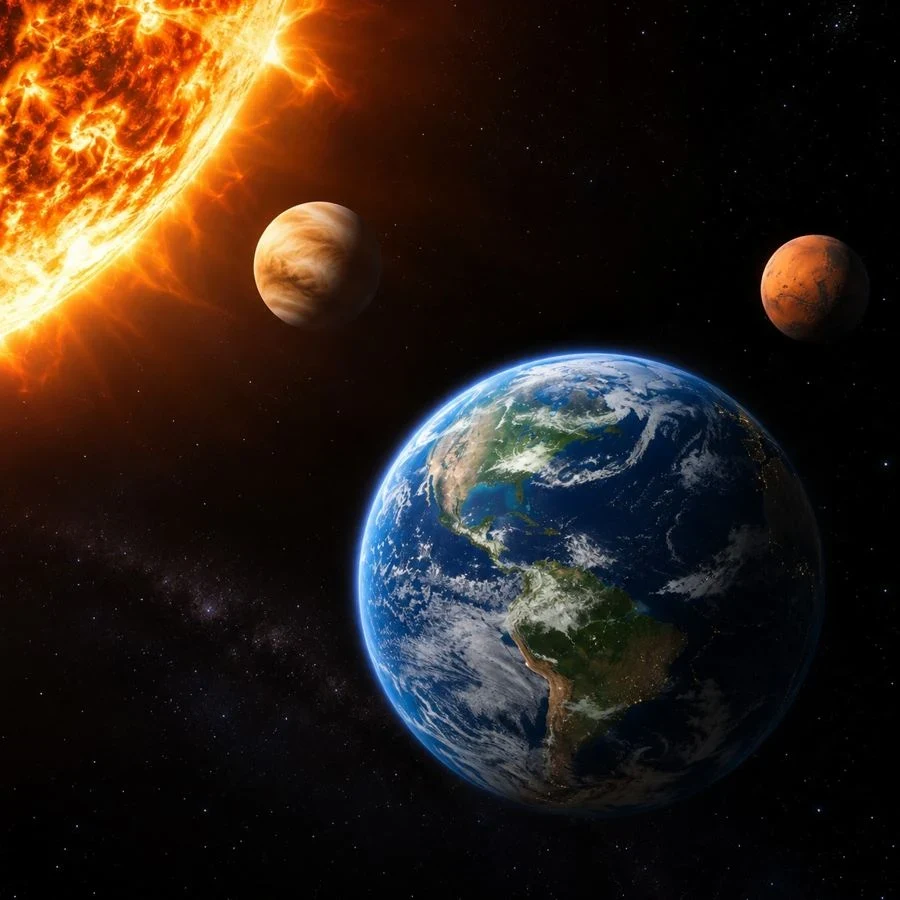
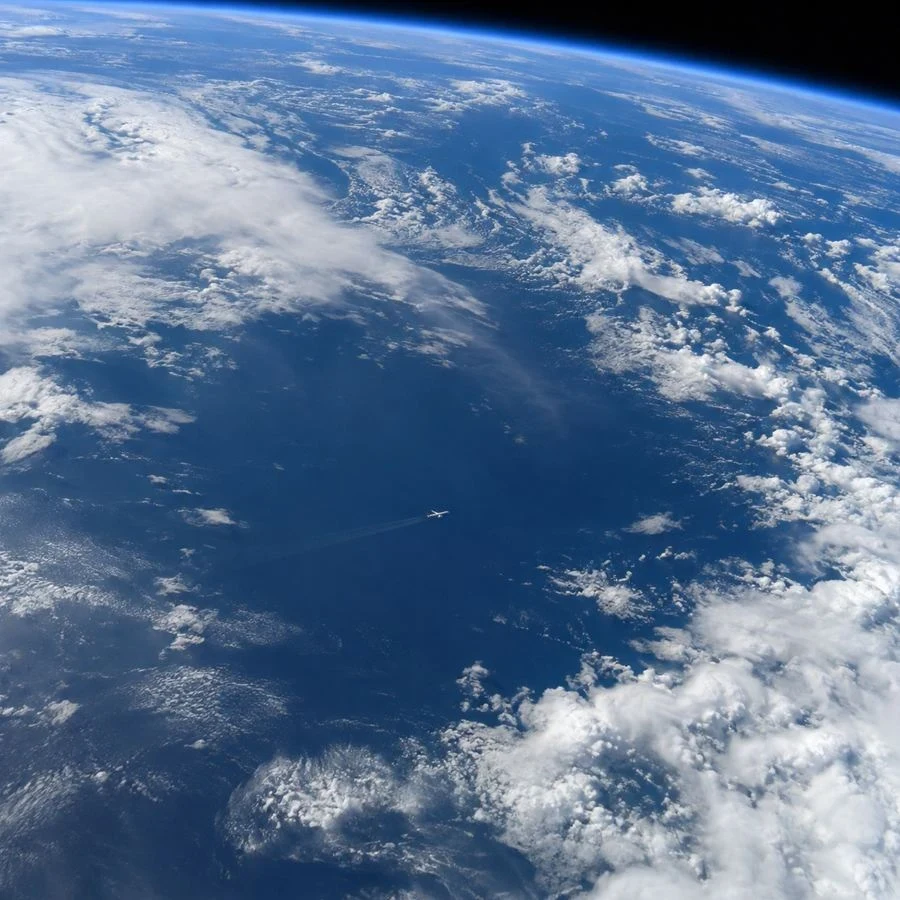
When we look at photographs of Earth from space, our planet seems to float effortlessly in an enormous black void. There's nothing underneath supporting it, no invisible platform, and no walls preventing it from drifting away. So why doesn't Earth fall in space or fly off into the unknown? The answer lies in gravity, orbital motion, and the way celestial bodies interact with one another. In this article, we'll explore whether Earth is actually standing still, how planetary orbits work, why our planet doesn't crash into the Sun, and whether a collision with another planet is possible.
Is Earth standing still or moving
Earth is constantly moving, even when everything around us appears perfectly stationary. Our planet rotates around its axis, travels around the Sun, and moves with the entire Solar System through the Milky Way. These motions happen simultaneously, meaning Earth is never simply hanging motionless in one location. What makes the situation confusing is that we normally observe movement relative to nearby objects, most of which are traveling alongside us.
Earth's rotation produces the familiar cycle of day and night. One complete rotation relative to distant stars takes approximately 23 hours and 56 minutes, while the average solar day lasts 24 hours. At the equator, the surface moves at roughly 1,670 kilometers per hour because of this rotation. Meanwhile, Earth travels around the Sun at an average speed of approximately 29.8 kilometers per second, equivalent to more than 107,000 kilometers per hour. Completing one orbit takes about 365.25 days, giving us the annual cycle used in our calendars.
The Sun is moving too. Along with the planets, moons, and other objects in our Solar System, it orbits the center of the Milky Way over a period lasting hundreds of millions of years. Earth's overall trajectory through the galaxy is therefore more complicated than the familiar circle shown in elementary astronomy diagrams. However, different descriptions of its motion depend on the reference frame being used.
Why don't we feel these enormous speeds? The atmosphere, oceans, buildings, and everything around us generally move with Earth. Constant motion isn't experienced as a continuous push in the same way acceleration is. Although Earth's rotation and orbital path involve acceleration, their everyday effects are usually too subtle to notice directly. This is why the planet can move through space at extraordinary speeds while life on its surface feels relatively stable.
How do planets and stars stay in orbit
An orbit is the path followed by an object moving under the gravitational influence of another body. Earth orbits the Sun, the Moon travels around Earth, and artificial satellites follow trajectories around our planet. These movements aren't controlled by invisible tracks or physical structures. Instead, they result from gravity continuously changing the direction of an object's motion.
Two concepts are essential for understanding orbital movement: gravity and inertia. Gravity attracts objects with mass toward one another, while inertia describes their tendency to maintain their velocity unless acted upon by a force. When a planet moves sideways relative to its star, gravitational attraction continually bends its path. Under suitable conditions, the result is a stable orbit rather than a direct collision or an escape into interstellar space.
Johannes Kepler described the fundamental laws of planetary motion in the early seventeenth century. His first law states that planets follow elliptical orbits, with the Sun located at one focus of each ellipse. These paths aren't necessarily perfect circles, although Earth's orbit is close to circular. Because the distance between a planet and its star changes along an elliptical orbit, its orbital speed changes too. Planets move faster when they're closer to the Sun and slower when they're farther away.
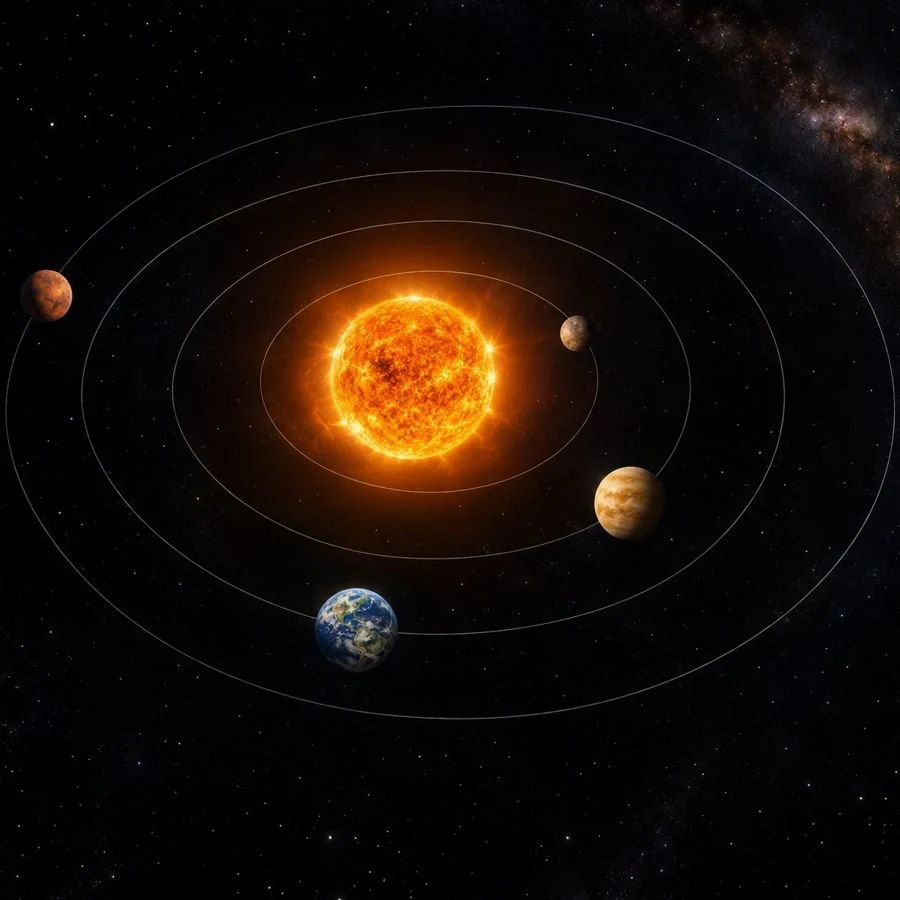
Stars also participate in orbital systems. Binary stars revolve around their common center of mass, while stars within galaxies move under the combined gravitational influence of enormous amounts of matter. Even Earth and the Sun technically orbit a shared center of mass, although the Sun's much greater mass places this point very close to its center.
The important thing to remember is that orbital motion depends on a balance between an object's existing velocity and the gravitational forces shaping its trajectory. Change the velocity significantly, and the orbit may change as well. A planet could enter a more elongated path, move closer to its star, or eventually escape the system if it gained sufficient energy.
What does Earth's movement through space look like
Most illustrations of the Solar System show colored planets moving along neat circular paths. These diagrams are useful for understanding orbital relationships, but they're rarely drawn to scale. In reality, the planets are extremely small compared with the enormous distances separating them, and their trajectories aren't visible lines drawn across space.
Imagine observing the Solar System from a position high above Earth's orbital plane. Over one year, our planet would trace a nearly circular ellipse around the Sun. Seen from the side, the same movement could appear as a planet shifting back and forth across the observer's field of view. The apparent shape of the motion changes with perspective, even though the physical trajectory remains the same.
From Earth's surface, we experience a very different view. The Sun appears to travel across the sky each day because our planet rotates around its axis. Over the course of a year, the Sun's apparent position relative to distant stars also changes as Earth follows its orbital path. These observations once made it difficult to distinguish the movement of Earth from the apparent movement of celestial objects.
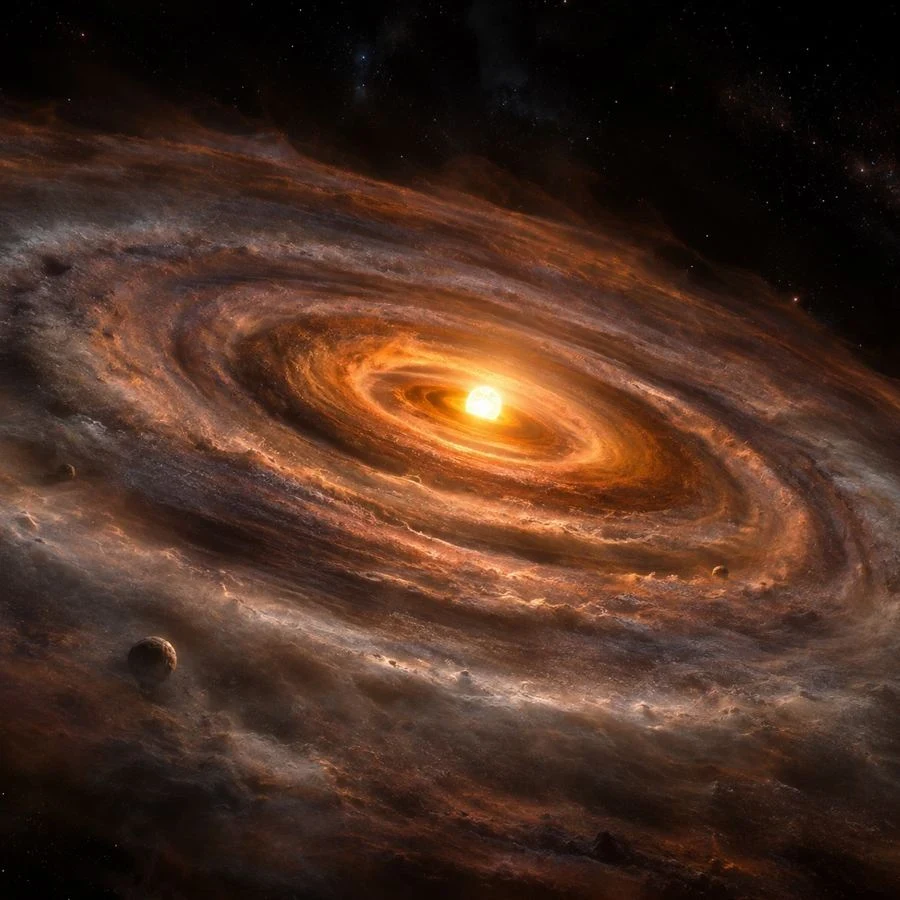
Some astronomical animations show the Sun traveling through the galaxy while the planets follow complex spiral-like trajectories. Such visualizations can be useful when a particular reference frame is clearly defined, but they shouldn't replace the simpler and more practical description of planets orbiting the Sun. Different coordinate systems produce different-looking paths without changing the underlying physics.
In actual space photography, planets don't leave glowing trails behind them. The orbital lines seen in educational graphics and strategy game interfaces are visual aids rather than physical objects. Astronomers reconstruct planetary trajectories using precise observations, gravitational calculations, and computer models that account for interactions between multiple celestial bodies.
Why doesn't Earth fall into the Sun
The Sun contains approximately 99.8% of the Solar System's total mass, making its gravitational influence overwhelmingly important for planetary motion. It constantly attracts Earth, but that doesn't mean our planet must travel directly toward the solar surface. Earth's considerable sideways velocity prevents this from happening.
One of the simplest explanations comes from a thought experiment associated with Isaac Newton. Imagine firing a cannonball horizontally from a very high mountain. Gravity pulls the projectile downward, but its forward motion carries it across the landscape. If the cannonball could move fast enough without being slowed by air resistance or striking obstacles, Earth's surface would curve away beneath it as it fell. Instead of hitting the ground, the projectile would continue traveling around the planet.
Earth follows the same basic principle on a much larger scale. Solar gravity continuously accelerates our planet toward the Sun, while its orbital velocity carries it sideways. In simple terms, Earth is always falling toward the Sun but continually missing it. That's why the planet neither crashes into the star nor flies away into deep space.
The average distance between Earth and the Sun is approximately 149.6 million kilometers. Because Earth's orbit is slightly elliptical, this distance changes throughout the year. Around early January, Earth reaches its closest point to the Sun, approximately 147.1 million kilometers away. Around early July, the distance increases to about 152.1 million kilometers. These relatively small variations don't cause the seasons, which result primarily from the tilt of Earth's rotational axis.
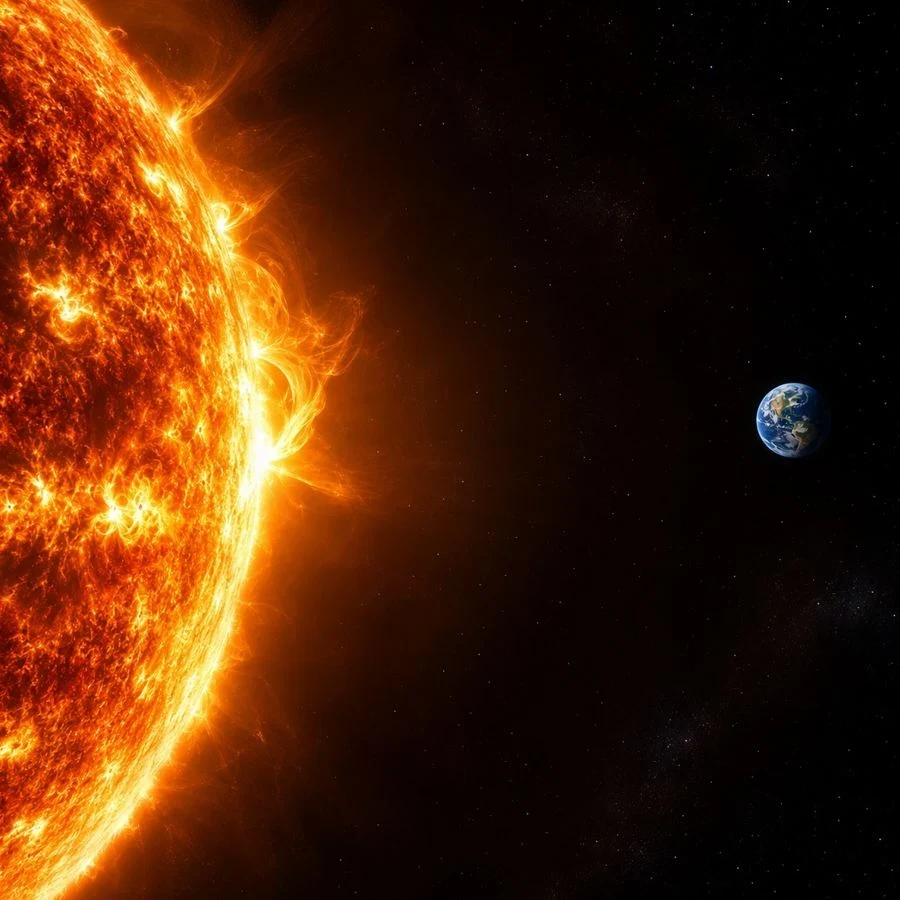
What would happen if Earth's orbital velocity suddenly disappeared? In a simplified scenario, the planet would begin falling much more directly toward the Sun. On the other hand, if the Sun's gravitational influence vanished, Earth would continue traveling approximately along the direction of its existing velocity instead of maintaining its present orbit.
Fortunately, neither scenario describes what is happening today. Space contains too little material to create the kind of substantial drag that quickly slows objects traveling through Earth's atmosphere. Our planet isn't gradually braking toward an inevitable collision with the Sun. Its orbit remains stable over ordinary human timescales because of the laws of celestial mechanics.
Could Earth collide with another planet
The Solar System contains eight planets constantly moving under the gravitational influence of the Sun and one another. Although these interactions slightly alter their orbital paths, they don't mean that Earth is in immediate danger of colliding with a neighboring world. The present planetary orbits are arranged in a way that prevents normal orbital motion from bringing the major planets into direct contact.
Venus travels closer to the Sun than Earth, while Mars follows an orbit farther away. Their distances from our planet change continually, but none of these worlds simply moves along a straight line toward Earth. Astronomers can calculate planetary positions with remarkable accuracy over relatively short astronomical timescales, allowing spacecraft to navigate between planets and scientists to predict their future movements.
However, orbital predictions become more complicated over billions of years. Multiple gravitational interactions can produce chaotic dynamics, meaning tiny differences in initial conditions may eventually lead to substantially different outcomes. This doesn't mean planetary movement becomes random, but it does limit how confidently scientists can predict every detail of the distant future.
Mercury is particularly interesting because its orbit can become unstable under certain extremely long-term conditions. Numerical simulations published in 2009 showed that approximately 1% of modeled Solar System trajectories experienced a large increase in Mercury's orbital eccentricity within five billion years. Some rare scenarios led to broader instability among the inner planets, including possible collisions involving Earth.
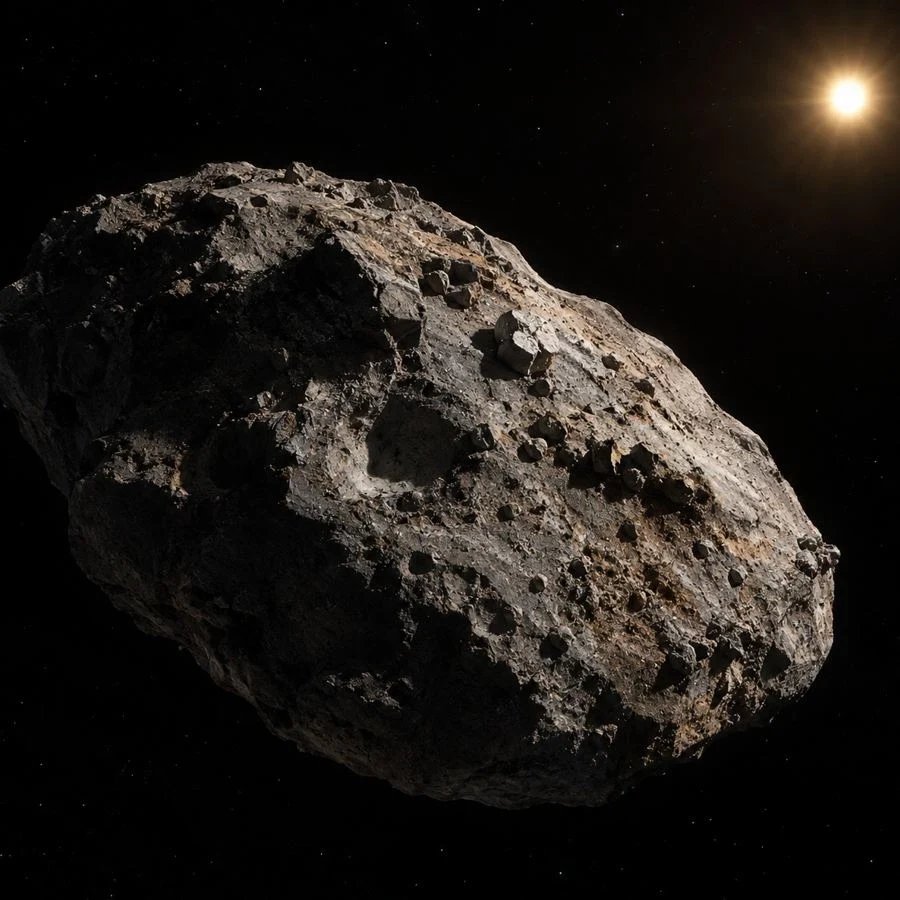
These are theoretical long-term possibilities, not predictions of an approaching disaster. For the foreseeable future, collisions with large asteroids or comets represent a more practical category of impact risk than collisions between planets. Scientists monitor near-Earth objects, refine their orbital trajectories, and assess whether any might approach our planet dangerously.
Even when two orbital paths intersect, a collision isn't guaranteed. Both objects must occupy the same region of space at almost exactly the same time. This distinction is essential for understanding how a Solar System filled with moving objects can remain stable for extraordinarily long periods.
Earth therefore doesn't need an invisible support to remain in space. It is continuously moving under the influence of solar gravity, following an orbital path that has remained broadly stable for billions of years. Our planet isn't simply floating without direction: it's participating in an enormous, constantly evolving gravitational system.
Explore the galaxy with WarForGalaxy
The movement of planets and stars reveals how complex the universe can be. If you enjoy exploring planetary systems and making decisions that shape entire civilizations, WarForGalaxy gives you the opportunity to build your own interstellar empire.
WarForGalaxy is a free cross-platform multiplayer 4X space strategy game focused on planetary development, technological research, resource management, and galactic warfare. Start with a small colony, construct essential infrastructure, strengthen your economy, and assemble military fleets capable of defending your territory or supporting further expansion.
The galaxy is populated by players from around the world, creating opportunities for diplomacy, alliances, and large-scale conflicts. You can cooperate with other commanders, coordinate military operations, and compete for control of valuable planets. The game also features Hermes, an AI assistant designed to support strategic analysis and selected routine empire-management tasks.
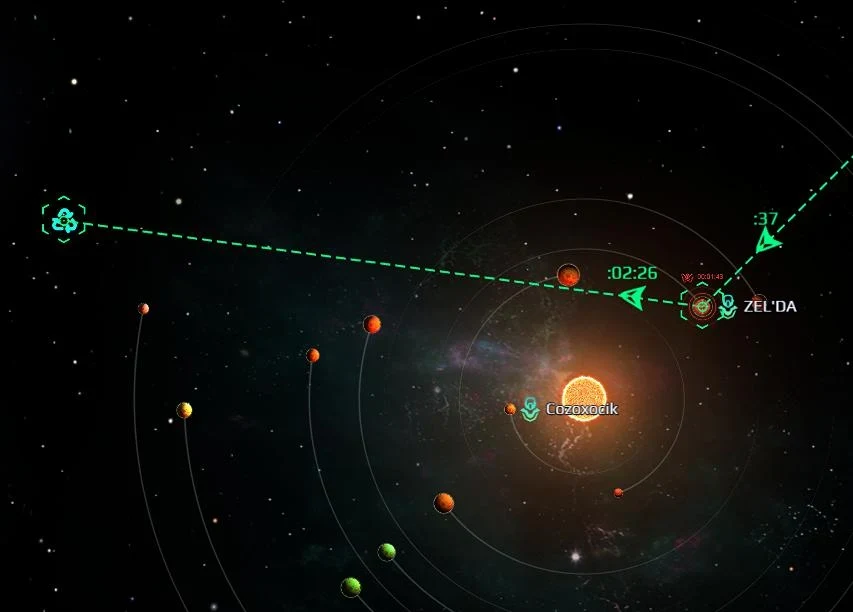
WarForGalaxy is available on computers and smartphones, allowing you to develop your civilization across different devices. On PC, you can play directly in a browser without downloading a separate client.
Ready to establish your own galactic power? Play WarForGalaxy for free, explore new planets, find allies, and lead your civilization toward interstellar domination.