Why doesn't Earth's atmosphere escape into space
Space & Astronomy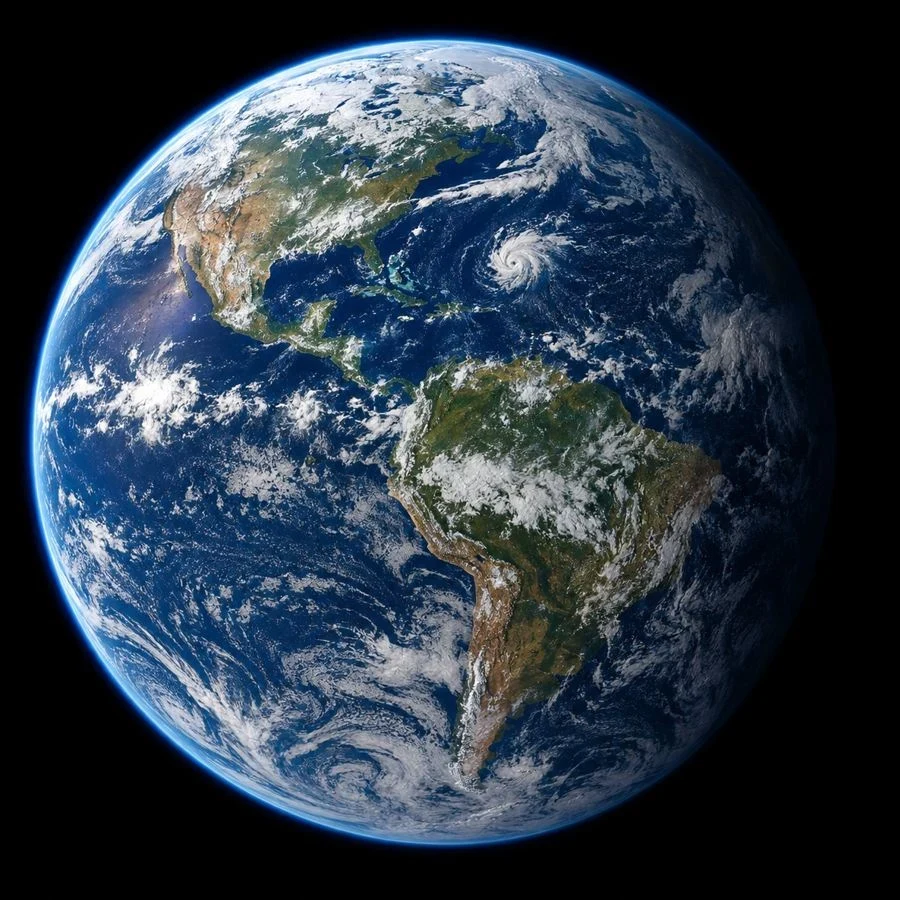
Space is almost empty, and there's no solid barrier separating it from Earth's atmosphere. So why doesn't all our air escape into space? At first glance, it seems logical that gases should gradually spread outward until nothing is left around the planet. Yet Earth has maintained a substantial atmosphere for billions of years, even though small amounts of atmospheric material constantly escape. The explanation involves gravity, molecular motion, solar radiation, and the planet's long geological history. In this article, we'll explore what keeps our atmosphere in place, how space weather affects it, whether Earth could eventually lose its air, and why other planets have developed such different environments.
What keeps air on Earth
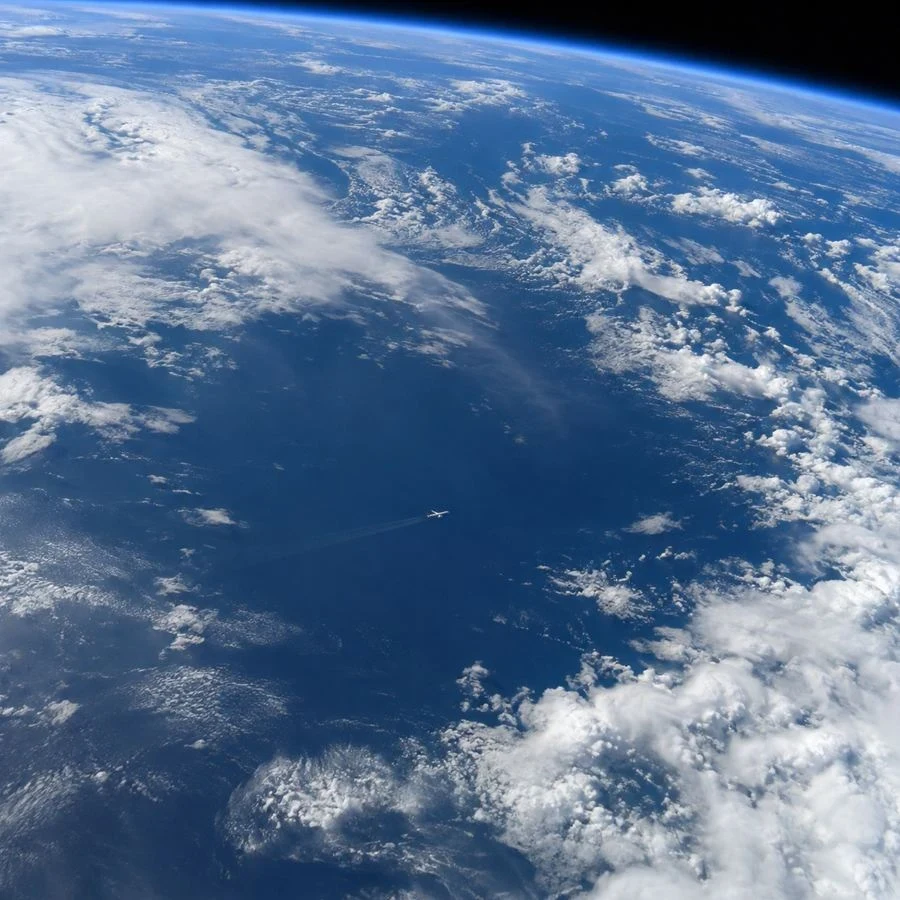
The main reason Earth's atmosphere stays around the planet is gravity. The same force that keeps people, oceans, and buildings on the ground also attracts the molecules making up the air. Our atmosphere consists primarily of nitrogen and oxygen, whose molecules constantly move, collide, and spread through the available space. However, Earth's gravitational pull keeps most of these particles concentrated near the surface instead of allowing them to escape freely into the surrounding vacuum. The result is a stable atmospheric envelope that doesn't require an invisible barrier or a protective dome to remain around our planet.
This interaction between gravity and molecular motion creates atmospheric pressure. At sea level, the average pressure is approximately 101.3 kilopascals, produced by the weight of the atmosphere above us. As altitude increases,
there is less atmospheric mass overhead, so pressure and density gradually decrease. That's why breathing becomes more difficult on high mountains, while at much greater altitudes the air becomes too thin to support human life without specialized equipment. However, the atmosphere doesn't end at a perfectly defined boundary. The Kármán line, approximately 100 kilometers above Earth's surface, is commonly used as a practical boundary of space, but it isn't a physical wall. Atmospheric particles remain present far above that altitude, although they become extremely widely separated.
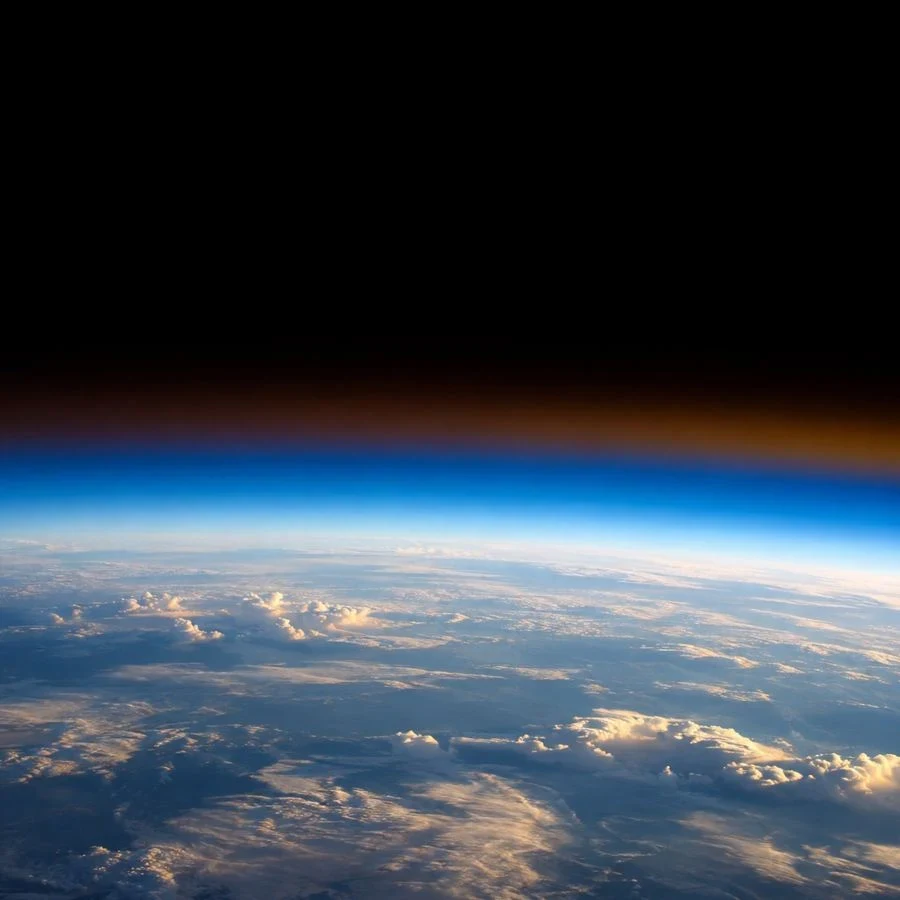
An important question remains: if air molecules constantly move, why can't they simply fly away? The answer involves escape velocity and the energy required to overcome Earth's gravity. Near the surface, an object needs a speed of approximately 11.2 kilometers per second to escape Earth's gravitational field without additional propulsion, ignoring atmospheric resistance. Ordinary nitrogen and oxygen molecules move much more slowly at typical atmospheric temperatures, which is why the overwhelming majority remain gravitationally bound to the planet. Some particles in the upper atmosphere can gain enough energy to escape, but this process doesn't threaten the atmosphere as a whole. Earth's gravity, combined with the temperature and motion of atmospheric gases, maintains the conditions that allow our planet to retain its air.
How do space weather and climate affect the atmosphere
Although gravity keeps most atmospheric gases near Earth, the atmosphere isn't a completely closed system. Its upper layers constantly interact with sunlight, energetic particles, and the solar wind, which can gradually remove small amounts of material. Ultraviolet radiation from the Sun heats the upper atmosphere and can break certain molecules into smaller particles. Lightweight atoms, particularly hydrogen, may gain enough energy to escape Earth's gravitational pull through a process known as thermal escape. Other mechanisms involve electrically charged particles interacting with magnetic fields and surrounding plasma. Under certain conditions, atmospheric ions can travel outward along magnetic field structures and eventually escape into space. These processes have operated throughout Earth's history and are important for understanding how planetary atmospheres evolve.
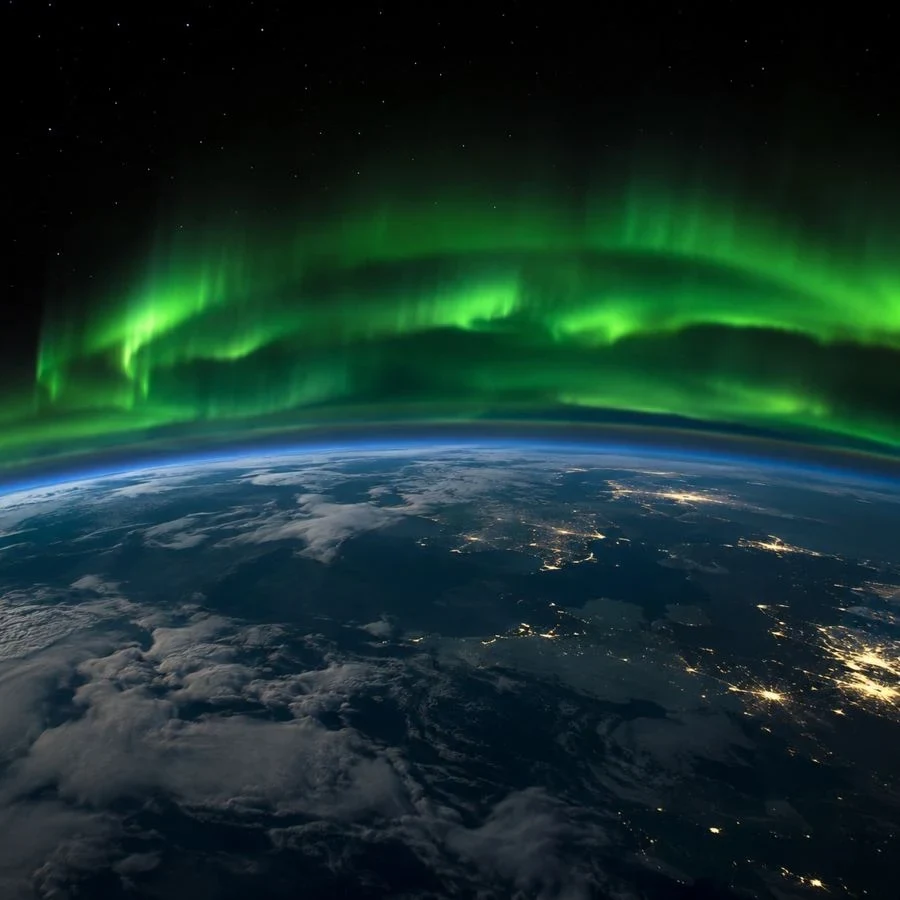
Earth's magnetic field provides significant protection against the solar wind, a continuous stream of charged particles released by the Sun. The magnetosphere redirects much of this flow and changes how it interacts with the upper atmosphere, reducing some forms of direct particle bombardment. However, it isn't a perfectly sealed shield, and atmospheric material can still escape through several mechanisms, particularly in polar regions. Solar storms can temporarily change conditions in the upper atmosphere by increasing energy input, causing certain atmospheric layers to heat up and expand. This can increase gas density at satellite altitudes, producing additional drag on spacecraft and occasionally requiring orbital adjustments. Nevertheless, these events don't mean that Earth's atmosphere is suddenly disappearing or that solar activity could rapidly remove all breathable air.
Climate change affects the atmosphere through different physical processes. Rising concentrations of greenhouse gases influence Earth's energy balance, surface temperatures, and weather patterns, but they don't cause the entire atmosphere to overcome gravity and disperse into space. Interestingly, some regions of the upper atmosphere can respond differently from the surface: increasing carbon dioxide can contribute to cooling in parts of the thermosphere through infrared radiation. This demonstrates why atmospheric behavior depends strongly on altitude and why warming near the ground doesn't necessarily produce the same temperature changes higher above Earth. Our planet continually exchanges energy and small quantities of matter with its surroundings, but these processes don't threaten the existence of its atmosphere on human timescales.
Is losing Earth's atmosphere a real threat
Earth gradually loses atmospheric particles, but there's no scientific evidence that our planet is approaching a sudden or complete loss of its air. The atmosphere has an estimated mass of approximately 5.15 quintillion kilograms, an enormous reservoir compared with present-day escape rates. Under current conditions, known atmospheric escape mechanisms operate far too slowly to remove such a large amount of gas within any foreseeable period of human history. However, planetary atmospheres aren't necessarily permanent over billions of years, and studying how they change helps scientists understand the long-term evolution of Earth and other worlds.
Mars provides a particularly interesting comparison. Geological evidence suggests that the Red Planet once possessed a thicker atmosphere and environmental conditions that allowed liquid water to exist on its surface.
Today, Mars is a cold, dry world with extremely low atmospheric pressure. NASA's MAVEN mission has investigated how solar radiation and the solar wind contributed to atmospheric loss over billions of years. Earth differs from Mars in several important respects: our planet is more massive, has stronger gravity, and possesses a global magnetic field. Its atmosphere also interacts with oceans, living organisms, and geological processes that influence the supply, transformation, and removal of gases. Together, these characteristics help explain why Earth's atmospheric history has been so different.
Certain extraordinary events could significantly affect Earth's atmosphere. An extremely powerful asteroid impact, for example, might eject some atmospheric material into space, while major changes in solar radiation could alter atmospheric chemistry and escape rates. Over hundreds of millions or billions of years, the Sun's increasing luminosity will also influence Earth's climate and the long-term stability of its environment. However, these distant possibilities shouldn't be confused with the challenges facing humanity today. Air pollution, rising greenhouse gas concentrations, and climate change are much more immediate concerns because they already affect ecosystems, human health, and living conditions. Protecting the quality and stability of Earth's atmosphere is therefore far more important than preparing for the fictional scenario of all its air suddenly escaping into space.
What would happen if all Earth's air disappeared
If Earth's atmosphere vanished completely, the planet would become almost unrecognizable. The most immediate consequences would be the disappearance of breathable air and atmospheric pressure, making survival outdoors impossible without pressurized life-support equipment. Surface temperatures would also behave very differently because there would be no atmospheric circulation to redistribute heat through winds and weather systems. Sunlit regions could become extremely hot, while areas in darkness would lose energy through thermal radiation. The precise temperature differences would depend on the properties of the surface, but conditions would be far more extreme than those experienced across most of Earth today.
Water would face equally dramatic changes. Without sufficient external pressure, liquid water exposed at the surface would become unstable, causing rapid boiling and evaporation, while the resulting cooling could make some of it freeze. Earth's oceans wouldn't simply disappear in a single instant, but their physical behavior would change fundamentally. The loss of atmospheric protection would also expose the surface to much stronger ultraviolet radiation and allow many small meteoroids to reach the ground without burning up in dense atmospheric layers. Clouds, rain, wind, and ordinary weather would cease to exist, while the familiar blue sky would be replaced by the darkness of space. Fortunately, this remains a hypothetical scenario rather than a realistic prediction for Earth's near future, but it demonstrates how essential our atmosphere is for maintaining the conditions that support life.
Why don't other planets have air
Not every planet has an atmosphere similar to Earth's, but saying that other planets have no air can be misleading. Some celestial bodies possess extremely thin gas envelopes, while others are surrounded by dense atmospheres that would be completely unsuitable for human breathing.
The differences depend on a combination of planetary mass, temperature, atmospheric composition, distance from the Sun, and geological history. Gravity is particularly important because it determines how strongly a planet can retain gases, but it isn't the only factor involved. Solar radiation, stellar wind, and the processes that supply or remove atmospheric material also influence the environment a planet develops over time.
Mercury has almost no substantial atmosphere because its relatively small mass and proximity to the Sun make retaining a dense gas envelope difficult. Instead, it possesses an extremely thin exosphere containing atoms released from the surface through several physical processes. Mars retains a more noticeable atmosphere, but its surface pressure is less than one percent of Earth's, and carbon dioxide makes up most of its gases. Although winds and dust storms occur there, humans couldn't breathe without specialized life-support equipment. The Martian environment reflects the planet's smaller mass, its long history of atmospheric escape, and changes in the conditions that once allowed liquid water to exist on its surface.
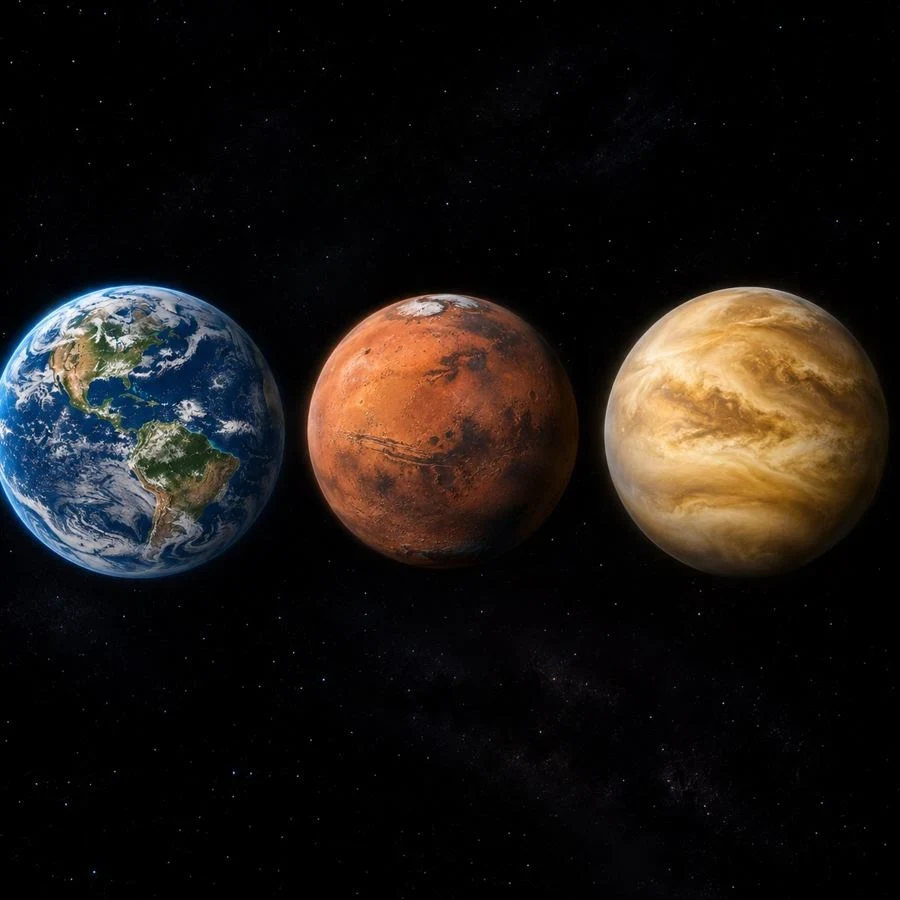
Venus demonstrates the opposite extreme. Its size and mass are comparable to Earth's, yet its atmosphere is extraordinarily dense and consists mainly of carbon dioxide. Surface pressure exceeds Earth's sea-level pressure by more than 90 times, while temperatures reach approximately 465°C because of the intense greenhouse effect. Interestingly, Venus doesn't possess an Earth-like internally generated global magnetic field, showing that a strong planetary magnetic field isn't the only requirement for retaining a substantial atmosphere. Gas giants such as Jupiter and Saturn represent another category entirely. Their enormous gravity allows them to hold extensive envelopes dominated by hydrogen and helium, and their atmospheres extend into deep layers of matter rather than ending at a conventional solid surface.
Ultimately, whether a planet retains an atmosphere depends on its entire evolutionary history rather than one isolated characteristic. Its mass determines the strength of gravity, temperature influences molecular motion, and the surrounding stellar environment affects the gradual loss of gases. Geological activity and chemical processes may also supply new atmospheric material or change its composition. Earth's breathable atmosphere is therefore the result of a particularly favorable combination of conditions. Understanding why other worlds developed differently helps scientists investigate planetary evolution and identify environments where life might potentially exist.
Explore distant planets with WarForGalaxy
What does it take to develop an entire planet into a thriving civilization? In real astronomy, scientists investigate the physical conditions that make worlds habitable. In WarForGalaxy, you can take control of your own interstellar empire and decide how its future unfolds. This free online multiplayer 4X space strategy game focuses on exploring planets, developing colonies, managing resources, and competing for influence across the galaxy. Your journey begins with a small settlement that can gradually become the center of a powerful civilization as you construct infrastructure, research technologies, and expand into new territories.
Strategic planning plays an essential role in every stage of development. You'll need to strengthen your economy, manage production, and assemble military fleets capable of defending your colonies or supporting further expansion. At the same time, WarForGalaxy offers opportunities to interact with real players from around the world.
You can join alliances, coordinate military operations, establish diplomatic relationships, and participate in large-scale space wars. Cooperation with reliable commanders can be just as important as maintaining a powerful fleet, especially when valuable planets and strategic territories are at stake.
The game also features Hermes, an AI assistant designed to help players analyze strategic situations and manage selected routine tasks. This support allows you to concentrate on long-term planning, technological development, and cooperation with your allies instead of spending all your time on repetitive activities. WarForGalaxy is cross-platform and accessible on computers and smartphones. On PC, it runs directly in a web browser without requiring a separate download or installation, making it easy to begin building your empire.
Ready to create your own civilization among the stars? Play WarForGalaxy for free, establish your first colony, explore distant planets, form powerful alliances, and compete for control of the galaxy.