Why is it cold in space?
Space & Astronomy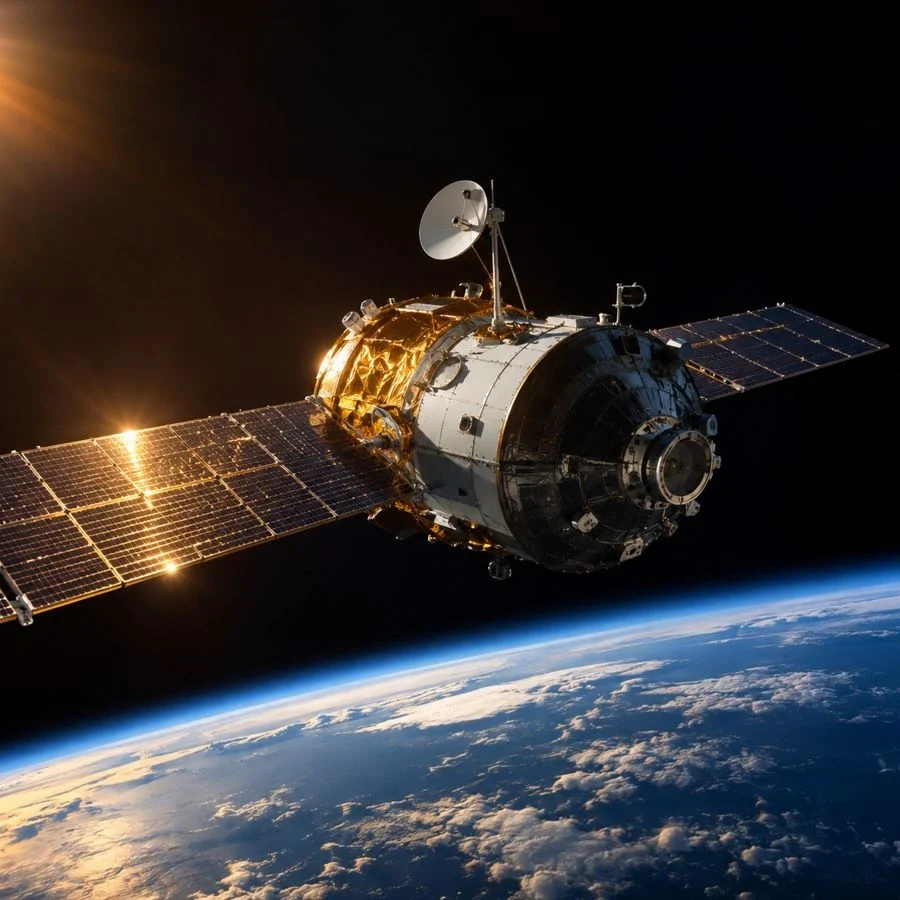
The Sun is powerful enough to warm Earth's surface from millions of kilometers away, yet outer space is often described as one of the coldest environments in the universe. That sounds contradictory, especially when you consider how hot objects can become under direct sunlight. In reality, a vacuum behaves very differently from the freezing air we experience during winter. A spacecraft can overheat on one side while its other side loses energy into darkness. So why is it cold in space, and how do astronauts survive these extreme conditions? Let's explore the science of space temperature, solar radiation, and the technology that keeps people comfortable in orbit.
What is the temperature in space
You've probably heard that space has a temperature of approximately −270°C (−454°F). This figure is scientifically meaningful, but it doesn't describe every object or location in the universe. It refers to the cosmic microwave background, the faint radiation left over from the early universe. Its average temperature is approximately 2.725 kelvins, equivalent to −270.4°C.
The vacuum itself doesn't have a single temperature in the everyday sense. Temperature is normally associated with the thermal state of matter, and deep space contains extremely little of it. That's why imagining the universe as an enormous freezer filled with freezing air gives the wrong impression.
Instead, scientists consider the temperature of a specific object, such as a satellite, asteroid, planetary surface, or cloud of gas. A spacecraft panel exposed to sunlight can become surprisingly hot, while a similar panel facing away from the Sun may cool significantly. Both can be surrounded by almost exactly the same vacuum.
The difference comes from how much energy each surface absorbs and releases. Materials, orientation, internal equipment, and nearby celestial bodies all influence the final temperature. Close to a star, objects may receive intense radiation, while equipment traveling through the distant Solar System encounters much weaker sunlight.
Therefore, asking how cold outer space is doesn't have one universal answer. The cosmic microwave background provides a reference for extremely cold radiation conditions, but the actual temperature of a physical object depends on its environment and energy balance.
Why is space so cold
To understand why space is considered cold, it helps to examine how heat travels. On Earth, a warm radiator heats the surrounding air, and a cold wind removes energy from exposed skin. These familiar processes depend on matter transferring energy between locations.
Physics describes three main methods of heat transfer: conduction, convection, and radiation. Conduction transfers energy through contact between materials, while convection involves moving liquids or gases. Radiation is different because electromagnetic waves can transfer energy even through a vacuum.
In open space, there's practically no surrounding air to transport heat through convection. A hot spacecraft can't simply cool down by releasing warmth into a cosmic breeze. Similarly, an exposed object doesn't instantly freeze just because there's no atmosphere around it.
Instead, spacecraft exchange energy mainly through radiation. Any object above absolute zero emits thermal radiation, gradually losing energy to its surroundings. If it absorbs less energy than it emits, its temperature decreases. If it receives more than it releases, it warms up.
This explains why a vacuum can be both an extremely cold environment and a useful thermal insulator. Vacuum flasks use empty space between their walls to reduce heat transfer through gases. Spacecraft employ multilayer insulation that limits unwanted radiative heat exchange.
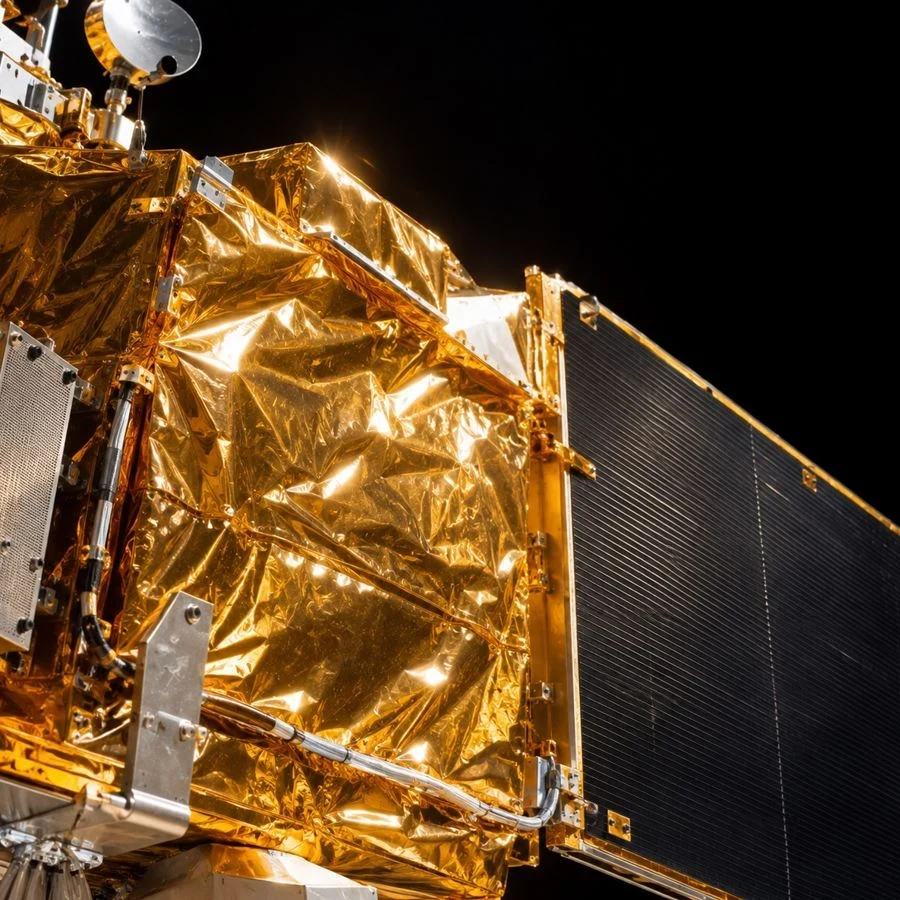
The real engineering challenge is maintaining balance. Sensitive electronics generate heat during operation, while external surfaces continuously exchange energy with their surroundings. Without carefully designed thermal systems, a spacecraft can become dangerously hot or cold depending on the situation.
What about the hot Sun
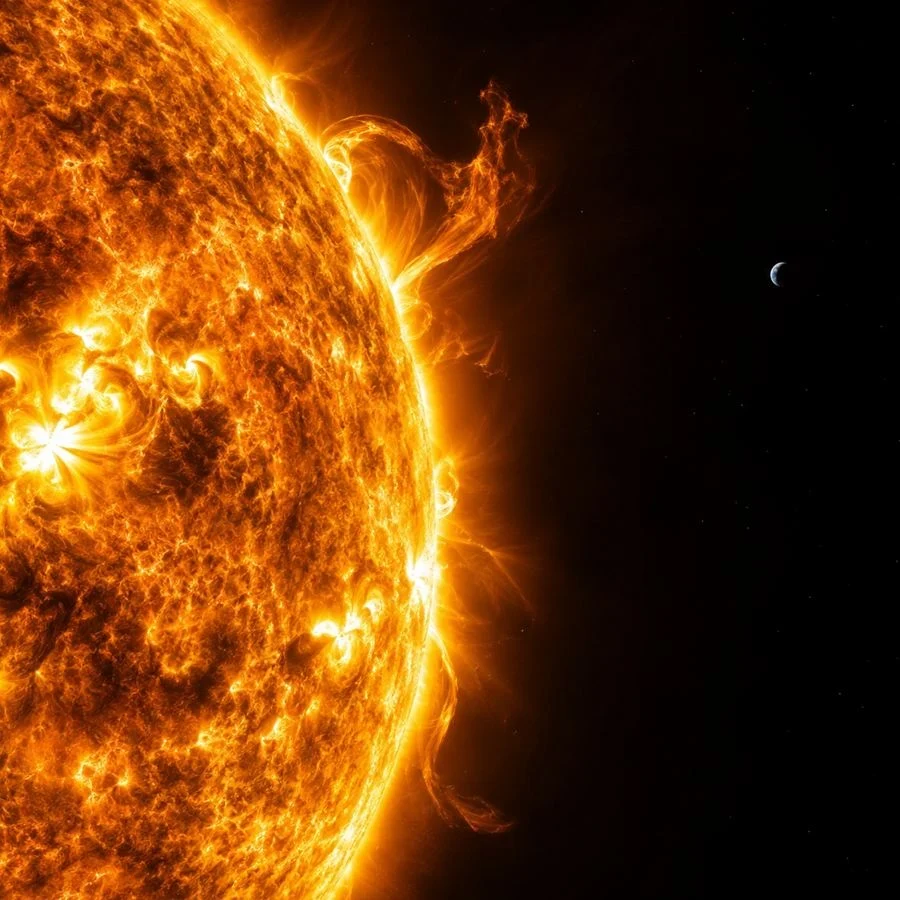
The Sun's visible surface has a temperature of approximately 5,500°C, and its radiation reaches Earth after traveling through about 150 million kilometers of space. If the Sun is so hot, why doesn't it warm the entire vacuum along the way?
The answer is that sunlight isn't a stream of hot air. The Sun releases electromagnetic radiation, including visible light and infrared energy, which can travel freely through empty space. When this radiation reaches an object, some of its energy is absorbed and converted into heat.
Near Earth's orbit, direct sunlight delivers approximately 1,361 watts of energy per square meter to a surface facing the Sun. That's a substantial amount of power, especially when there's no atmosphere or wind to redistribute the resulting heat.
However, not every object absorbs sunlight equally. A highly reflective surface can reject much of the incoming radiation, while a dark, absorbent surface may heat up more quickly. The final temperature also depends on how efficiently the material emits its own infrared radiation.
Consider a satellite panel facing the Sun. It absorbs solar energy and gradually becomes warmer. When the spacecraft enters Earth's shadow, direct sunlight disappears, but the panel continues radiating heat. Its temperature can then decrease considerably.
This is why darkness in space often accompanies extremely cold surfaces. The absence of sunlight removes an important energy source, but it doesn't create an instant freezing effect. How quickly the object cools depends on its materials, mass, surface area, and internal heat production.
How does temperature change when moving away from Earth?
Leaving Earth's atmosphere doesn't mean passing through a fixed sequence of colder and colder temperatures. The situation is more complicated because altitude, sunlight, atmospheric density, and the surrounding environment all affect thermal conditions.
For example, parts of Earth's upper atmosphere can have extremely high measured temperatures because individual gas particles possess considerable kinetic energy. However, the gas is so thin that it cannot transfer heat to a spacecraft in the same way as dense air near the ground. A high particle temperature doesn't necessarily mean an object would feel intensely hot.
Once a spacecraft reaches orbit, its temperature largely depends on incoming radiation and the energy generated by its equipment. Near Earth, direct sunlight is only part of the picture. Our planet also reflects solar radiation and emits infrared energy, both of which influence orbiting objects.
As a spacecraft travels farther from the Sun, the intensity of sunlight decreases. This follows the inverse-square law: at twice Earth's distance from the Sun, the same surface receives approximately one-quarter as much direct solar power. At three times that distance, it receives roughly one-ninth.
This matters for missions exploring the outer Solar System. Solar panels become less productive farther from the Sun, and maintaining suitable equipment temperatures requires increasingly careful energy management. Some deep-space missions use radioisotope power systems, which also produce heat that can help protect onboard instruments.
Distance from Earth alone doesn't determine temperature. A spacecraft traveling toward the Sun encounters stronger radiation, while one heading toward the outer planets generally receives less. The thermal environment is shaped by the mission's location, orientation, and available power systems.
Do astronauts feel cold inside and outside the ISS
The International Space Station operates in low Earth orbit, where external surfaces experience major temperature changes. The station completes an orbit approximately every 90 minutes, repeatedly moving between sunlight and periods of Earth's shadow.
These transitions produce dramatically different thermal conditions. Sunlit spacecraft surfaces can become extremely hot, while shaded components may cool to temperatures far below freezing. The precise values depend on the materials, orientation, and whether the surface is exposed to radiation from Earth.
Inside the station, however, astronauts live in a controlled environment. The pressurized modules contain breathable air, and temperature management systems maintain conditions broadly comparable to those inside a comfortable building. Crew members can work, exercise, and sleep without wearing specialized cold-weather equipment.
Maintaining this environment requires more than heaters. Astronauts, computers, scientific instruments, and electrical systems continually generate heat. Without effective cooling, excess warmth could become a serious problem even though the surrounding space is extremely cold.
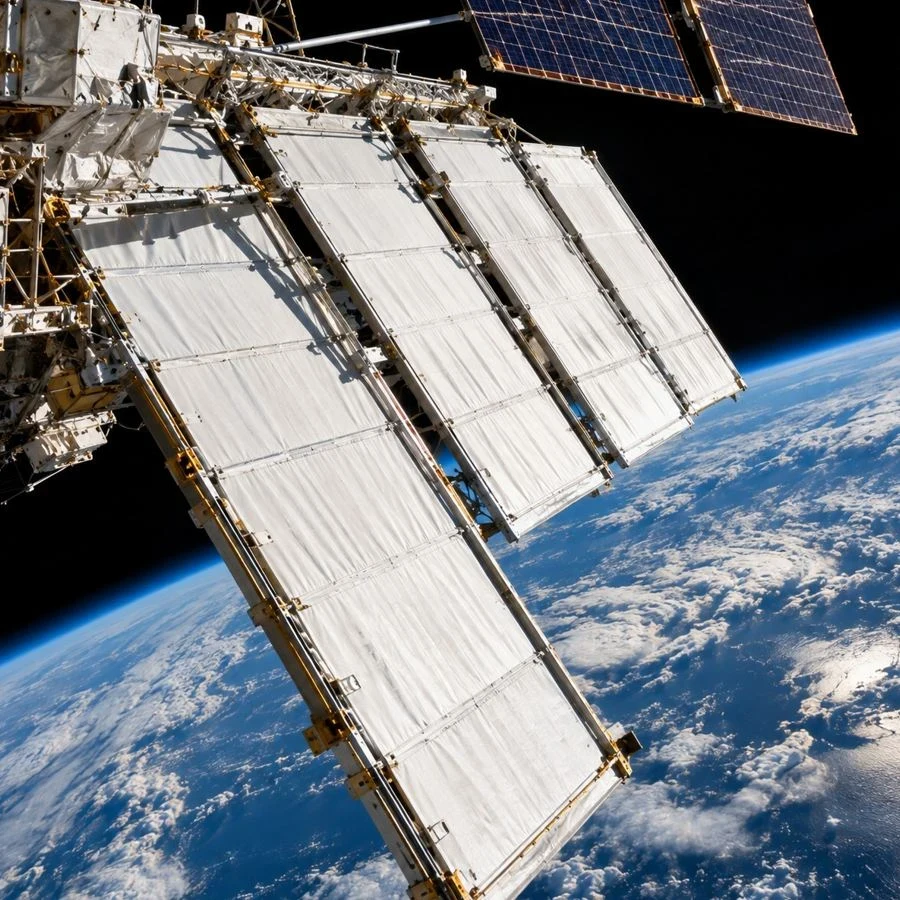
The station uses an active thermal control system to collect and redistribute heat. Water-based cooling loops operate inside habitable modules, while external systems transport excess energy to radiator panels that release it into space.
Outside the ISS, astronauts performing spacewalks face a much harsher environment. Direct sunlight can heat exposed equipment, while shaded surfaces may lose substantial amounts of energy. Yet astronauts don't experience these external temperatures directly because their spacesuits provide insulation and active temperature regulation.
The real danger isn't simply being cold. It's losing control over the body's temperature in an environment where ordinary heat transfer no longer works as it does on Earth.
How do astronauts stay warm in spacesuits
A spacesuit is much more than protective clothing. It's a miniature life-support system designed to maintain pressure, provide oxygen, manage moisture, and regulate temperature while its wearer works in a vacuum.
One of its most important components is multilayer thermal insulation. Different materials help limit unwanted heat transfer, while the reflective outer surface reduces solar heating. The familiar white appearance of many spacewalking suits serves a practical purpose by helping prevent excessive absorption of sunlight.
Astronauts also wear a liquid cooling and ventilation garment beneath the pressure suit. This specialized undergarment contains a network of thin tubes through which temperature-controlled water circulates. The system absorbs excess body heat and helps keep the wearer comfortable during physically demanding activities.
Interestingly, staying cool can be just as important as staying warm. Working inside a pressurized suit requires effort, and the human body continuously produces heat. Without effective cooling, an astronaut could overheat despite being surrounded by the vacuum of space.
The portable life-support system helps maintain suitable conditions by controlling airflow and transferring unwanted heat away from the astronaut. Certain spacesuit cooling systems use the evaporation or sublimation of water to reject heat into the vacuum.
Thermal insulation works in both directions. It limits the amount of solar energy entering the suit while also reducing heat loss when the astronaut moves into shadow. Depending on the design, heating elements and adjustable temperature controls can provide additional protection.
Modern space exploration therefore relies on precise thermal engineering rather than simply dressing astronauts in thicker clothing. By balancing insulation, cooling, and internal heat production, spacesuits make it possible to work safely in an environment where direct sunlight and darkness create extreme temperature differences.
Explore distant planets with WarForGalaxy
Real space exploration requires sophisticated engineering, but building an interstellar civilization can be much more accessible in a strategy game. WarForGalaxy invites you to create your own galactic empire, explore distant planets, and compete for influence in a universe filled with other players.
WarForGalaxy is a free online multiplayer 4X space strategy focused on exploration, expansion, resource management, and interstellar warfare. Your journey begins with a small planetary colony that gradually develops into a powerful civilization. By constructing infrastructure, researching technologies, and building military fleets, you establish the foundation for future expansion.
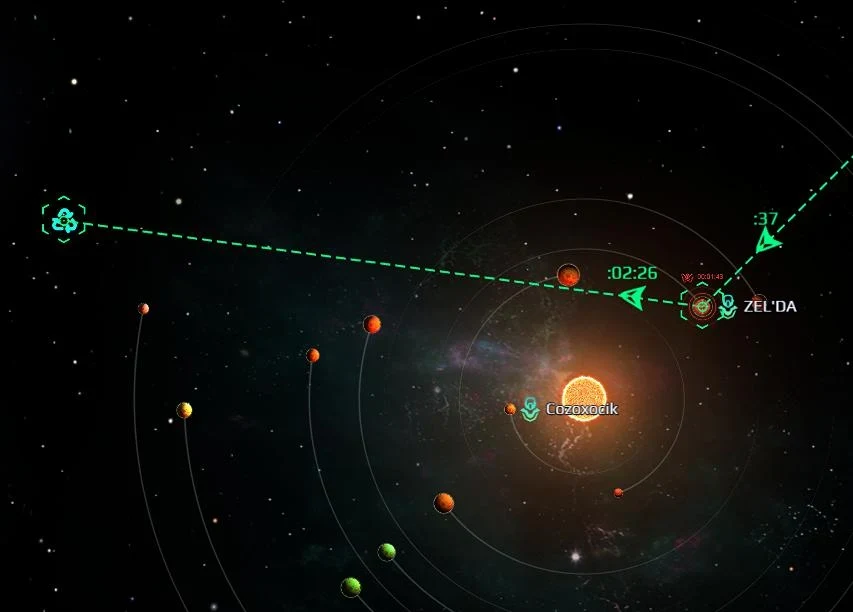
The galaxy is populated by players from around the world. You can form alliances, coordinate operations, defend valuable territories, and participate in large-scale space wars. Every decision matters, whether you're investing in economic development, preparing your fleet, or negotiating with potential allies.
The game also features Hermes, an AI assistant designed to help with strategic analysis and routine empire-management tasks. This additional support makes it easier to manage a developing civilization while concentrating on important decisions.
WarForGalaxy is cross-platform and accessible on computers and mobile devices. On PC, you can play directly in your browser without downloading or installing a separate game client.
Ready to build your own space empire? Play WarForGalaxy for free, develop your first planet, find reliable allies, and begin your journey toward galactic domination.