Why is there no air or oxygen in space
Space & Astronomy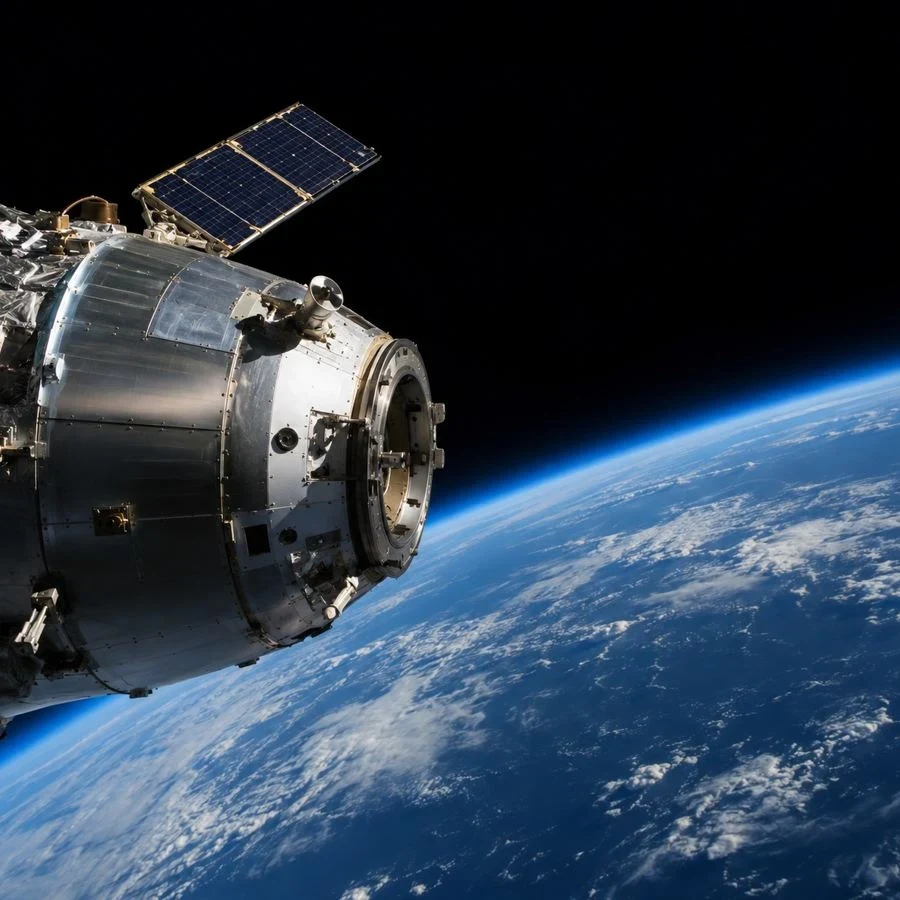
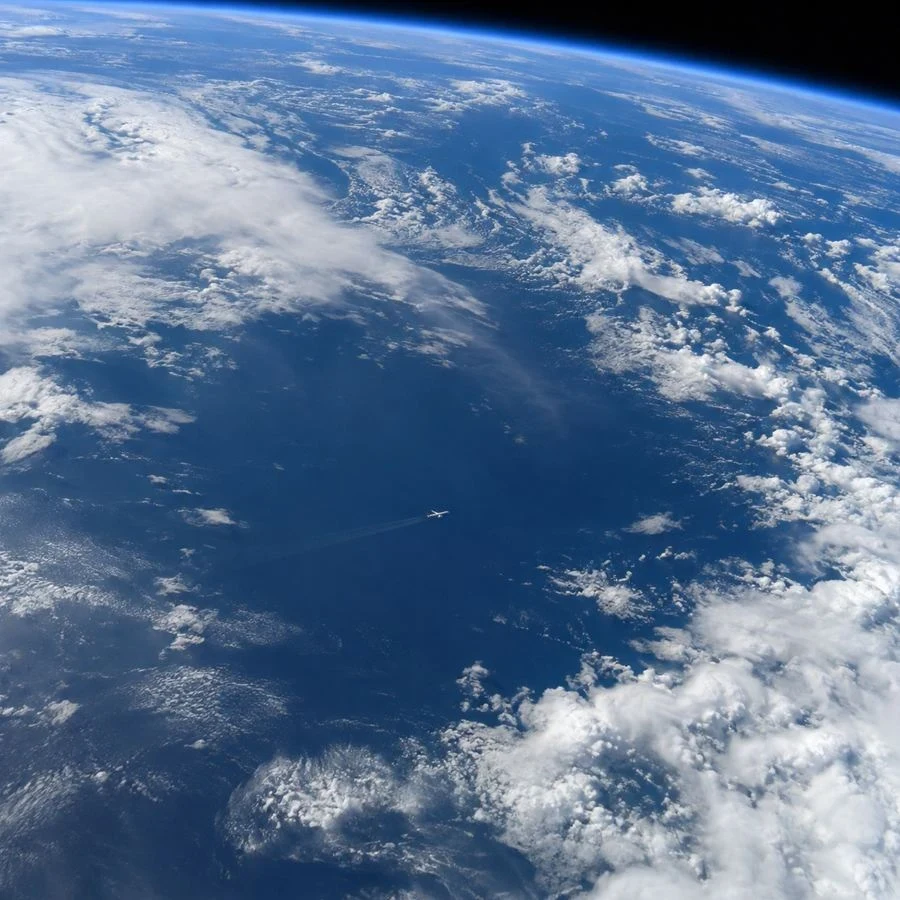
On Earth, breathing is so natural that we rarely think about the air surrounding us. But beyond our planet's atmosphere, the conditions change dramatically. Astronauts cannot simply open a spacecraft hatch and take a breath, even though oxygen exists throughout the universe in different forms. So why is there no air or oxygen in space in quantities suitable for breathing? The answer involves gravity, atmospheric pressure, and the extremely low density of matter in the cosmic vacuum. In this article, we'll explore what actually fills outer space, what happens to the human body without air, how astronauts survive, and how the International Space Station produces its own oxygen.
What is actually in outer space
Outer space is often described as completely empty, but that's not entirely accurate. Even the enormous distances between planets contain individual atoms, charged particles, tiny grains of dust, and electromagnetic radiation. The difference is density: these particles are so widely separated that the environment bears almost no resemblance to the atmosphere surrounding Earth.
Near Earth's surface, every cubic centimeter of air contains roughly 25 quintillion molecules under ordinary conditions. In interplanetary space near Earth's orbit, the solar wind typically contains only a few particles per cubic centimeter. This extraordinary difference explains why space is considered a vacuum, even though it isn't absolutely devoid of matter.
The solar wind is a continuous stream of charged particles released by the Sun, consisting mainly of protons and electrons. It travels throughout the Solar System and interacts with planetary magnetic fields, sometimes producing phenomena such as auroras. Space also contains neutral gas atoms, microscopic dust, and radiation ranging from visible sunlight to X-rays and radio waves. None of these components forms a dense, breathable atmosphere.
Earth's air consists of approximately 78% nitrogen and 21% oxygen, with small amounts of argon, carbon dioxide, and other gases. More importantly, the atmosphere provides enough pressure for oxygen to enter the lungs and pass into the bloodstream. Having oxygen molecules somewhere nearby isn't sufficient for breathing; they must be available at an appropriate partial pressure.
So why doesn't ordinary air spread evenly throughout the entire universe? Gravity plays a major role. Earth's gravitational attraction helps retain its atmosphere, while the pressure of the gas decreases with increasing altitude. Far from planets, gas may be extremely dispersed unless other gravitational or physical processes concentrate it.
Not every region of space has the same density. Gas clouds between stars can contain more matter than the surrounding interstellar medium, and the atmospheres of planets such as Venus or Mars have their own distinctive compositions. However, even relatively dense interstellar clouds are generally far too thin to support human respiration.
The lack of a substantial atmosphere also explains why ordinary sound cannot travel through the vacuum between spacecraft. Sound requires a material medium, while sunlight and radio communication use electromagnetic waves that can propagate through empty space.
Therefore, it's more accurate to say that outer space lacks breathable air than to claim oxygen doesn't exist there at all. Oxygen is common in stars, planetary materials, water, and many cosmic compounds. What space lacks is the combination of gas density, composition, and pressure needed to support unprotected human life.
What happens to a human without air and oxygen
Exposure to the vacuum of space is immediately life-threatening. The danger comes not only from the absence of oxygen but also from the extremely low external pressure. Human bodies evolved to function under Earth's atmospheric conditions, and a sudden loss of pressure disrupts several essential processes.
Without breathable oxygen, the brain quickly becomes deprived of the supply needed to remain conscious. In a severe vacuum exposure, a person may lose consciousness in roughly 10–15 seconds, although the timing depends on the circumstances. This doesn't mean those seconds are safe or that survival can be guaranteed if pressure is restored quickly.
One common misconception comes from science-fiction movies, where people exposed to space instantly freeze or explode. Neither scenario accurately describes the immediate effects of a vacuum. The body doesn't burst apart because skin and connective tissues help contain internal pressure. Blood inside intact vessels also doesn't instantly boil, although moisture on exposed surfaces can begin vaporizing under very low pressure.
Gases inside the lungs and other body cavities create an additional hazard. As external pressure falls, trapped gases expand, potentially damaging delicate tissues. Holding one's breath during rapid decompression can make lung injury more likely. Severe exposure can also cause tissue swelling and other physiological complications.
Freezing isn't instantaneous either. On Earth, cold air or water can remove heat rapidly through contact and convection. In the vacuum of space, heat transfer occurs primarily through radiation, so the body doesn't lose all its warmth within seconds. Nevertheless, temperature control is only one of many functions required to survive outside a spacecraft.
Solar ultraviolet radiation and other forms of space radiation present further risks during unprotected exposure. Their effects depend on the radiation environment and duration, but they add to the dangers of oxygen deprivation and decompression.
There have been documented accidents involving extremely low pressure during space equipment testing. In one incident during the 1960s, a test subject lost consciousness after a spacesuit pressure failure and survived following rapid repressurization. Such cases demonstrate that brief vacuum exposure isn't necessarily instantly fatal, but it remains a critical medical emergency.
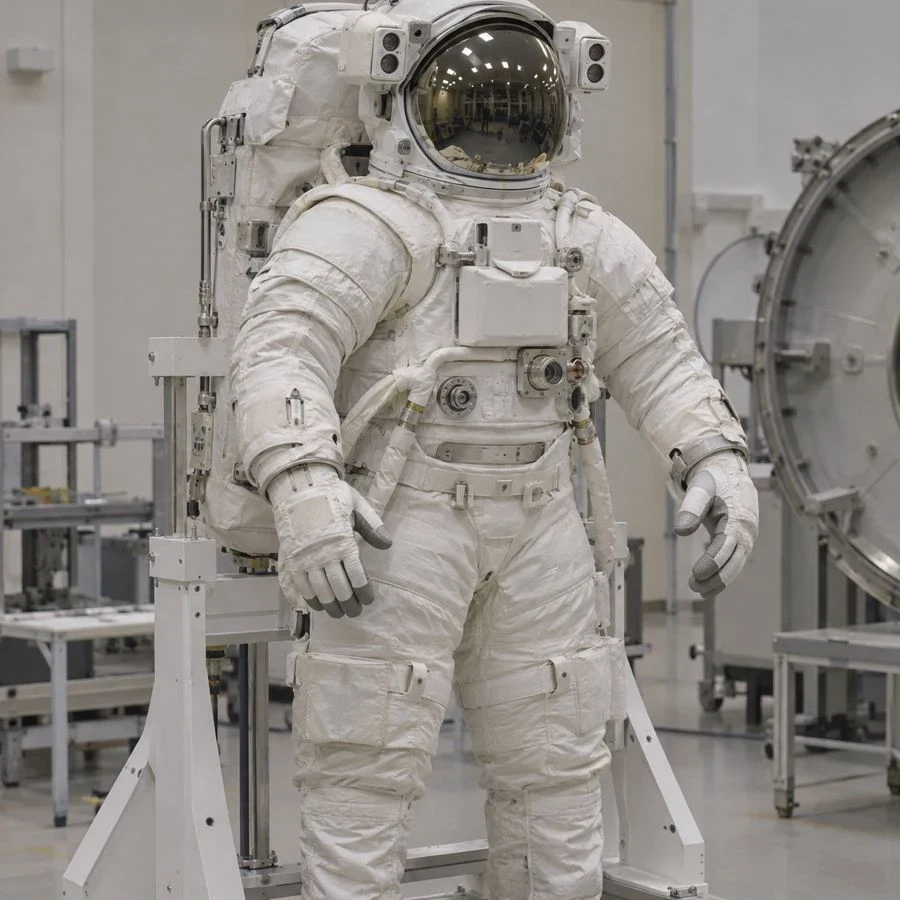
The essential lesson is that surviving in space requires more than an oxygen tank. A person needs a controlled environment with sufficient pressure, suitable breathing gas, carbon dioxide removal, and protection from environmental hazards. Without these systems, the vacuum becomes dangerous almost immediately.
What do astronauts breathe in space
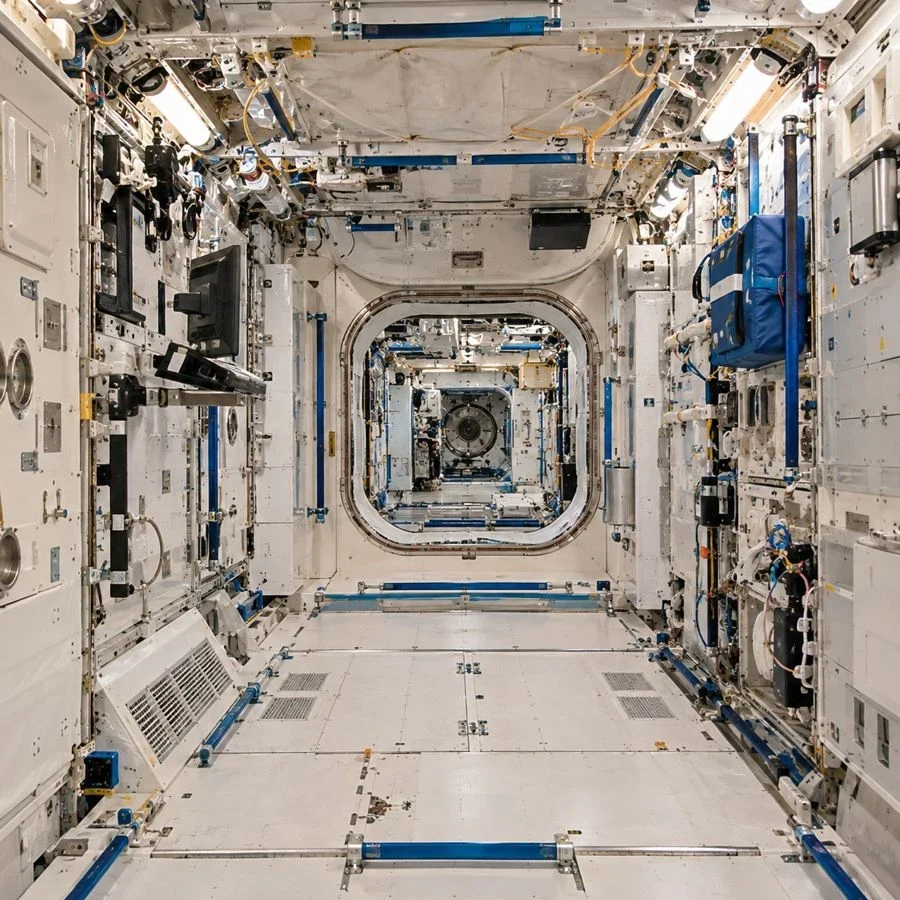
Astronauts aboard the International Space Station breathe an artificially maintained atmosphere designed to resemble conditions on Earth. The station's pressurized modules contain a mixture primarily of nitrogen and oxygen at approximately normal atmospheric pressure. This allows crew members to work, sleep, exercise, and carry out experiments without wearing spacesuits inside the living areas.
Maintaining the atmosphere requires sophisticated life-support engineering. Equipment continuously monitors oxygen concentration, carbon dioxide levels, cabin pressure, humidity, and contaminants. Ventilation fans circulate air throughout the station, an especially important task in microgravity, where natural convection doesn't function as it does on Earth.
Why not simply fill the station with pure oxygen? At Earth-like pressure, a pure oxygen atmosphere would greatly increase fire hazards. Oxygen partial pressure also matters more for respiration than oxygen percentage alone. A carefully controlled gas mixture offers a practical balance between human requirements and spacecraft safety.
Spacesuits operate differently. During spacewalks, astronauts rely on a sealed environment supplied by their portable life-support equipment. Many operational suits use oxygen at a lower total pressure than the station's cabin atmosphere. This arrangement requires careful preparation to reduce the risk of decompression sickness.
The suit's backpack is effectively a compact survival system. It supplies oxygen, regulates pressure, circulates breathing gas, removes exhaled carbon dioxide, and helps control body temperature. Without continuous gas circulation, carbon dioxide could accumulate around the astronaut's face, even if plenty of oxygen remained available.
These systems are essential because astronauts cannot replenish their breathing supply from the surrounding vacuum. Every breath depends on equipment that recreates the necessary conditions for human life.
How is oxygen generated on the ISS
The International Space Station cannot rely exclusively on oxygen delivered from Earth. Maintaining a permanent crew requires technologies that replenish breathing supplies and recycle valuable resources. One of the most important processes is electrolysis, which produces oxygen by splitting water molecules using electricity.
The chemical reaction is straightforward:
2H₂O → 2H₂ + O₂
Water enters an oxygen generation system, where electrical energy separates it into hydrogen and oxygen. The oxygen can then be supplied to the station's atmosphere, while the hydrogen is handled separately. This allows the crew to generate breathing oxygen without constantly consuming stored oxygen cylinders.
The American Oxygen Generation System and the Russian Elektron equipment use water electrolysis to support life aboard the station. Their engineering designs differ, but both rely on the same fundamental chemical principle.
Water recovery is another essential part of this process. The ISS collects moisture condensed from cabin air and processes wastewater, including urine, through specialized purification equipment. Recovered water can be used for drinking and other station operations, including oxygen production. Recycling dramatically reduces the quantity of supplies that must be launched from Earth.
Engineers also use the Sabatier reaction to recover some resources from carbon dioxide. Hydrogen can react with captured CO₂ to produce water and methane. The recovered water can return to the recycling system, while methane is typically vented in the conventional ISS process. This improves resource efficiency, although the station still requires resupply and maintenance.
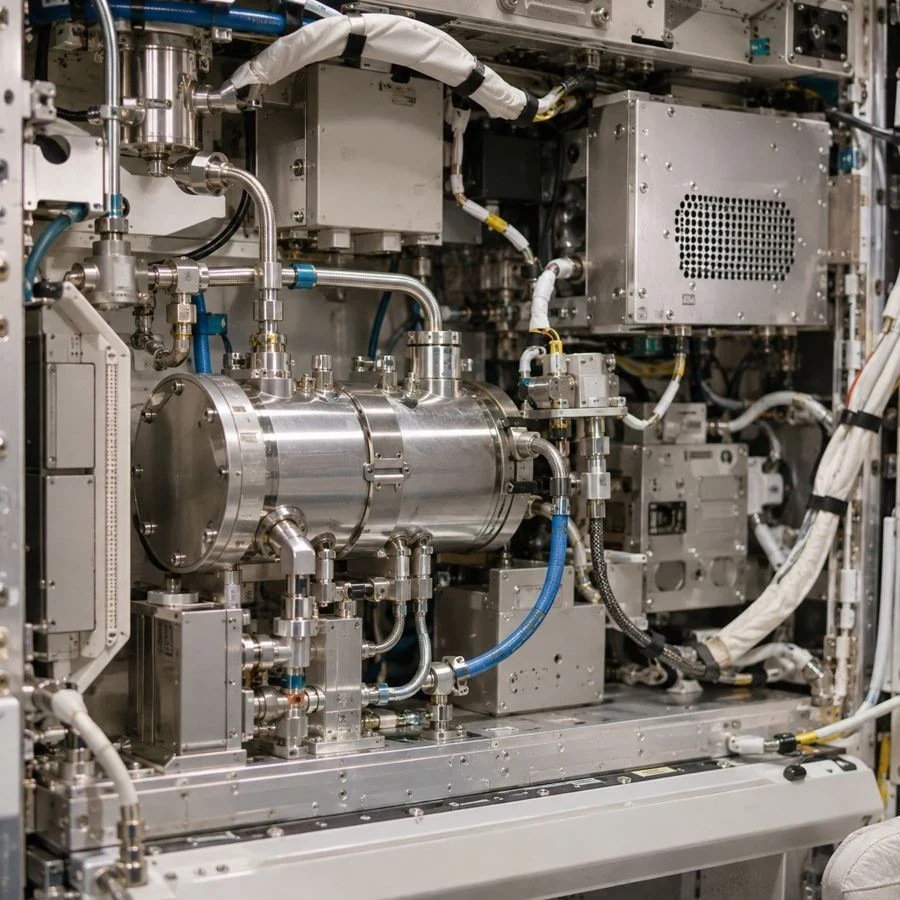
Generating oxygen is only half the challenge. Astronauts continuously exhale carbon dioxide, which must be removed before it reaches dangerous concentrations. Air revitalization equipment uses specialized materials and filtration systems to capture CO₂ and other contaminants. Sensors help maintain a stable atmosphere throughout the pressurized modules.
The ISS also has backup oxygen supplies and emergency procedures because life-support reliability is critical. A fault in one component must not immediately leave the crew without a breathable environment.
These technologies are particularly important for future missions to the Moon and Mars, where regular deliveries from Earth become much more difficult. Engineers are developing increasingly efficient systems capable of recycling more water, recovering more oxygen, and operating with fewer replacement parts.
NASA has already demonstrated another promising approach on Mars. The MOXIE experiment aboard the Perseverance rover successfully extracted oxygen from the planet's carbon dioxide-rich atmosphere. Although the small experiment wasn't designed to support a human crew, it showed that future explorers could potentially produce useful resources directly from the Martian environment.
Ultimately, astronauts don't breathe air collected from the vacuum surrounding their spacecraft. Their oxygen is supplied and partly regenerated through carefully engineered systems. By combining pressurized habitats, water recycling, gas purification, and oxygen generation, space agencies make it possible for humans to live and work far beyond Earth's naturally breathable atmosphere.
Explore and conquer distant worlds in WarForGalaxy
Surviving beyond Earth requires technology, resources, and careful planning. If you enjoy exploring distant planets and turning a small settlement into a powerful civilization, WarForGalaxy brings those challenges into an exciting interstellar strategy experience.
WarForGalaxy is a free cross-platform multiplayer 4X space strategy game where you can explore new worlds, establish colonies, manage resources, research technologies, and build powerful military fleets. Develop your economy, strengthen planetary defenses, and expand your influence across the galaxy.
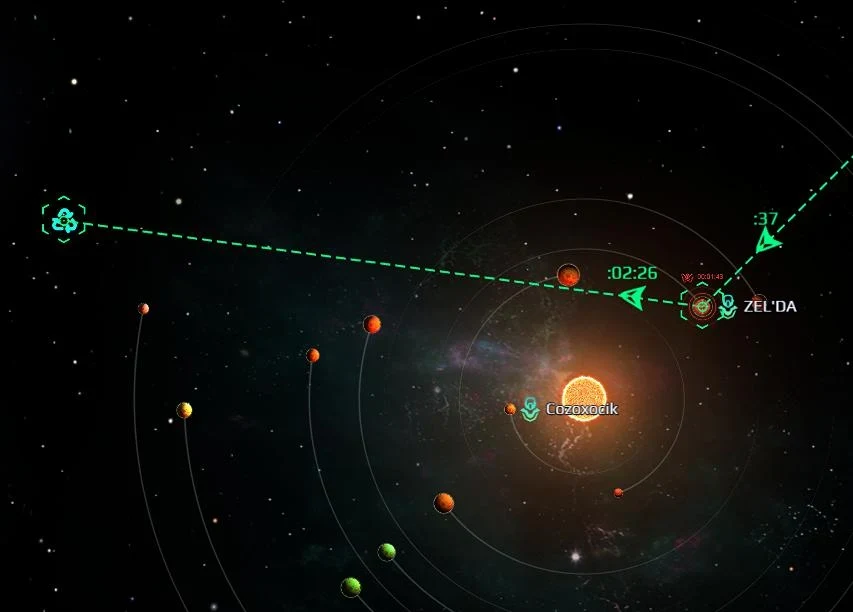
You'll compete and cooperate with players from around the world, forming alliances, coordinating military campaigns, and fighting for control of valuable planetary systems. The game also features Hermes, an AI assistant designed to support strategic decisions and selected routine empire-management tasks.
WarForGalaxy can be played on computers and smartphones, with browser-based access on PC that doesn't require a separate client installation.
Ready to establish your own interstellar empire? Play WarForGalaxy for free, develop your first colony, assemble your fleet, and begin your journey toward galactic domination.