Why is there no sound in space
Space & Astronomy
In sci-fi movies and video games, enormous starships roar past the camera, laser weapons fire with sharp bursts, and exploding spacecraft produce thunderous blasts. Real outer space, however, is almost completely silent. Even a massive collision between celestial objects wouldn't produce an ordinary sound that could travel through the surrounding vacuum to a distant observer. So why is there no sound in space when the universe is filled with movement and powerful events? Let's explore how sound works, why it cannot travel through empty space, what astronauts actually hear, and why filmmakers choose to ignore this rule.
What is sound
Sound is a mechanical vibration that travels through a material such as air, water, or metal. When you speak, your vocal cords vibrate and create tiny pressure changes in the surrounding air. These disturbances travel outward as sound waves until they reach someone's ears, where they cause the eardrums to vibrate. The brain then interprets those signals as speech, music, or background noise.
Almost anything that vibrates can produce sound. A guitar string, running engine, loudspeaker, or falling object transfers energy to nearby particles and creates a wave. Different vibrations produce different sounds, which is why a deep engine rumble doesn't resemble a high-pitched whistle.
One important characteristic is frequency, measured in hertz (Hz). It determines how high or low a sound appears. Human hearing typically covers frequencies from approximately 20 to 20,000 Hz, although this range varies with age and individual hearing ability. Vibrations below this range are called infrasound, while those above it are ultrasound.
Sound also has an intensity that influences how loud it seems. A quiet conversation creates relatively small pressure variations, while a powerful explosion produces much stronger disturbances. In both cases, the underlying principle remains the same: energy must travel through matter.
Unlike a spacecraft flying through the galaxy, the particles carrying a sound wave don't travel all the way from its source to the listener. Instead, they oscillate around their normal positions and pass the disturbance to neighboring particles. Without a suitable material to transfer those vibrations, the wave cannot continue.
How does sound travel
Sound can propagate through gases, liquids, and solids, but its speed depends on the properties of the medium. In ordinary air at approximately 20°C, it travels at about 343 meters per second. In water, the speed is roughly 1,500 meters per second, while certain metals transmit vibrations at several thousand meters per second.
A familiar example is a thunderstorm. You see lightning almost immediately, but the thunder arrives later. This happens because light travels dramatically faster than sound. The greater the distance to the lightning strike, the longer the delay between the flash and the rumble.
Solid materials can also carry vibrations. If someone operates heavy machinery on the other side of a wall, you might hear a low-frequency hum transmitted through the building's structure. Sometimes these vibrations travel through floors and pipes more effectively than ordinary airborne noise.
Temperature influences the process as well. Sound generally travels faster through warmer air because its physical properties change. Obstacles also affect how waves behave: they can reflect from hard surfaces, lose energy when absorbed by soft materials, or bend around barriers. Reflected sound creates echoes, while sound-absorbing materials help make rooms quieter.

This brings us to the most important condition. A mechanical wave needs matter capable of transmitting it. Remove that medium, and there is no ordinary way for sound to move from one location to another. An ideal vacuum, containing no particles, cannot carry conventional sound waves.
Is there sound in space
The familiar statement that there is no sound in space is essentially correct when we're talking about the near-vacuum between planets. Outer space isn't perfectly empty: it contains scattered atoms, charged particles, and small amounts of dust and gas. However, the material is so sparse that ordinary audible sound cannot propagate across typical interplanetary distances.
Imagine two spacecraft floating relatively close together. If one activates its engines, the crew of the other ship won't hear the familiar rocket roar through the surrounding vacuum. They might see the engine firing, but the sound cannot simply cross the empty gap.
The same principle applies to explosions. A destroyed spacecraft could produce a bright flash, flying debris, and expanding gases, but a distant observer wouldn't hear a cinematic boom transmitted through the vacuum. If debris physically struck another vehicle, the impact could create vibrations inside that vehicle. The resulting sound would be transmitted through its structure and internal atmosphere rather than through open space.
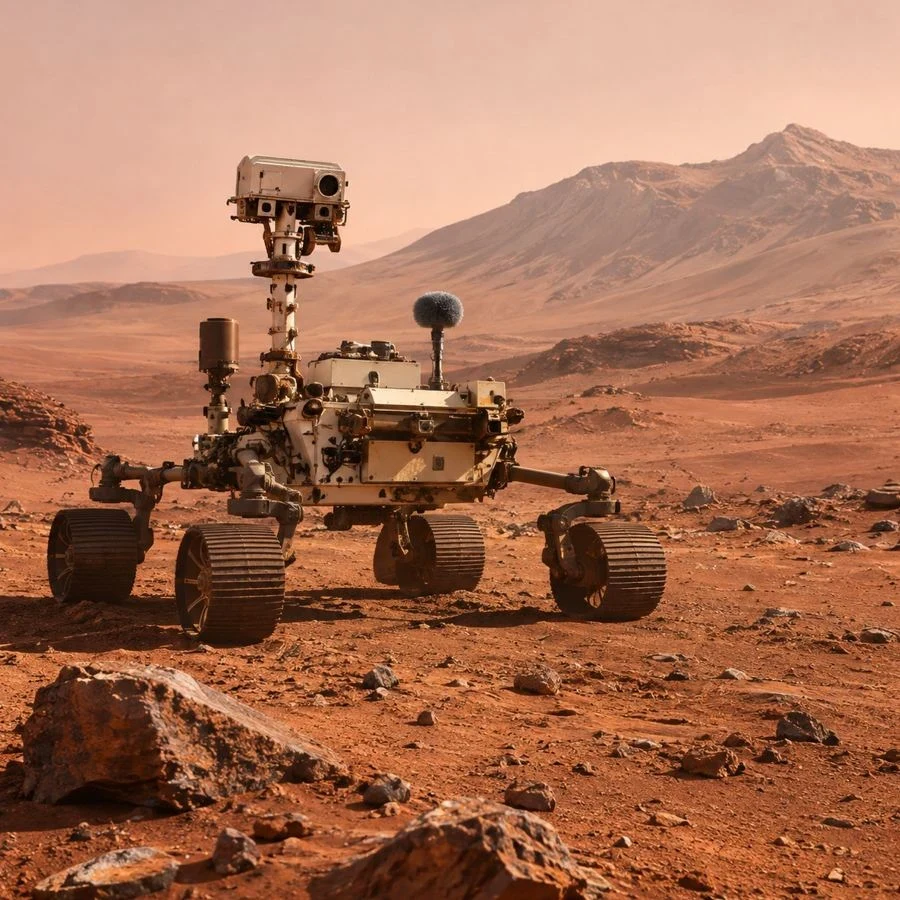
However, the universe isn't silent everywhere. Planetary atmospheres contain gases that can carry sound, even when their properties differ from those of Earth's atmosphere. Mars provides a fascinating example. NASA's Perseverance rover has recorded wind, mechanical noises, and other sounds on the Red Planet.
Because the Martian atmosphere is thin, cold, and composed mainly of carbon dioxide, sound behaves differently there. Low-frequency sounds travel at approximately 240 meters per second, noticeably slower than on Earth. Higher-frequency noises also weaken more rapidly, making the Martian environment unusually quiet.
Sound-like pressure waves can even occur in enormous clouds of hot gas surrounding galaxy clusters. The important factor isn't whether something is located beyond Earth, but whether enough material exists to support the propagation of mechanical disturbances.
What are cosmic sounds, then?
You may have encountered recordings described as the sounds of black holes, planets, or distant galaxies. Some resemble eerie drones, mysterious pulses, or electronic effects from a sci-fi soundtrack. These recordings are fascinating, but not all of them represent ordinary acoustic sound traveling through space.
Space agencies frequently use a technique called sonification, which converts scientific measurements into audible signals. Data collected from electromagnetic radiation, magnetic fields, or other physical phenomena can be translated into sound so that people can recognize patterns that aren't obvious in visual graphs.
A particularly interesting example involves the Perseus galaxy cluster. Astronomers discovered pressure waves traveling through hot gas surrounding the cluster's central black hole. These were genuine mechanical disturbances, but their frequencies were far below the range of human hearing.
NASA made the signals audible by shifting them upward by approximately 57–58 octaves. The resulting recording allows listeners to experience a phenomenon that would otherwise remain impossible for human ears to detect directly.
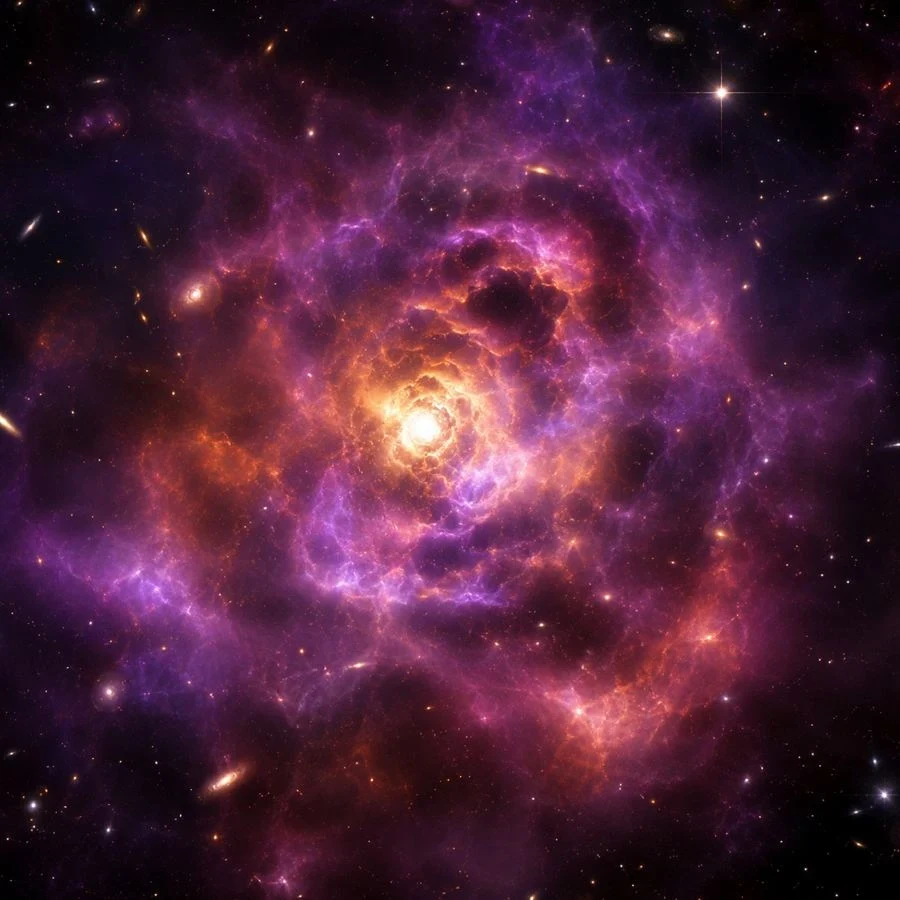
This distinction matters: some cosmic recordings are transformed scientific data, while others are recordings of real pressure waves adjusted for playback. Neither means that an unprotected microphone could capture ordinary explosions across the vacuum of deep space.
Can astronauts hear sounds inside their spacesuits?\
Yes. Although the surrounding environment is almost silent, a spacesuit isn't an empty vacuum. It contains pressurized breathing gas, which allows sound waves to travel within the helmet. Astronauts can hear their own breathing, speech, ventilation systems, and certain equipment noises.
Modern spacesuits are complex life-support systems. Fans circulate breathing gas, pumps help regulate cooling, and other components maintain a safe environment. Some of these mechanisms generate audible vibrations, meaning the inside of a spacesuit can actually be surprisingly noisy.
Communication with other astronauts works differently from ordinary face-to-face conversation. Spacesuits use microphones, speakers, and radio systems to transmit speech. A microphone converts the astronaut's voice into an electronic signal, which can then be transmitted using electromagnetic radio waves.
Unlike mechanical sound, radio waves can travel through a vacuum. When the signal reaches another astronaut, their communication equipment converts it back into an audible voice. This makes normal conversation possible during spacewalks, even though the astronauts cannot hear each other directly through empty space.
Inside a pressurized spacecraft or space station, the situation is much more familiar. Air fills the cabin, so crew members can speak and hear one another without relying on radio communication when they're nearby.
An astronaut might also notice vibrations transmitted through equipment or physical contact with a spacecraft. If a tool strikes a connected metal surface, the resulting vibration can travel through the structure and become audible. Once again, the sound reaches the listener through matter rather than through the surrounding vacuum.
Why do space explosions make noise in movies
If outer space is nearly silent, why do science-fiction films and games feature roaring spacecraft engines, laser blasts, and enormous explosions? The main reason is storytelling. Sound designers use audio effects to create excitement, communicate danger, and make fictional action easier to follow.
Imagine a huge space battle with dozens of ships firing weapons at one another. Without sound effects, viewers would see flashes and explosions but hear little beyond the soundtrack and communication systems. Although this might be scientifically accurate, it could feel unusual to audiences accustomed to hearing the impact of every major event.
Sound also helps establish scale. A deep engine rumble makes a capital ship feel powerful, while sharp weapon effects emphasize speed and aggression. Explosions provide immediate feedback about successful attacks, allowing viewers and players to understand the action without closely examining every visual detail.
Video games have an additional reason to use sound: gameplay feedback. Audio cues warn players about incoming attacks, indicate weapon cooldowns, and signal damage to spacecraft systems. Removing those effects might make certain games harder to play, particularly during fast-paced battles.
Some science-fiction productions take a more realistic approach by reducing or eliminating external sounds during scenes set in a vacuum. They may still use music, radio chatter, and vibrations heard from inside a spacecraft to maintain tension without suggesting that ordinary sound travels through empty space.
Ultimately, the loud explosions of fictional space battles are a creative choice rather than a scientific claim. Real space may be quiet, but sound effects help transform distant stars and futuristic technology into memorable entertainment.
Explore the galaxy with WarForGalaxy
Space may be silent in reality, but that doesn't make interstellar adventures any less exciting. If you enjoy discovering distant planets, commanding powerful fleets, and making decisions that shape entire civilizations, WarForGalaxy gives you a chance to build your own galactic empire.
WarForGalaxy is a free online multiplayer 4X strategy game focused on exploration, expansion, resource management, and space warfare. Your journey begins with a developing planetary colony that can gradually grow into a powerful civilization. By constructing infrastructure, researching technologies, and assembling military fleets, you create the foundation for long-term expansion.
The galaxy is populated by real players from around the world, making diplomacy and cooperation essential parts of the experience. You can establish alliances, coordinate attacks, defend valuable planets, and participate in large-scale interstellar wars. Whether you prefer economic development or aggressive conquest, your strategic decisions influence your empire's future.
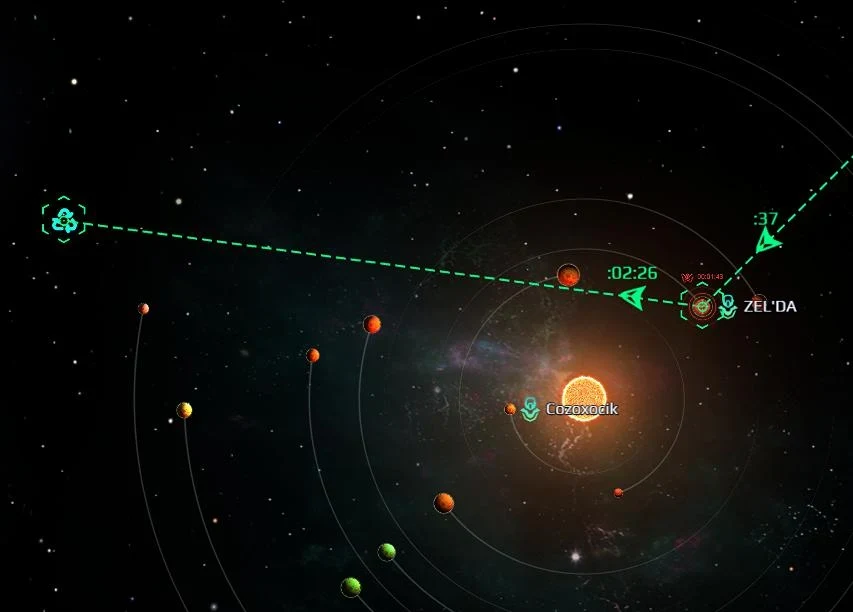
The game also features Hermes, an AI assistant designed to help with empire management and selected routine tasks. This additional support lets commanders spend more time analyzing opportunities, planning operations, and working with their allies.
WarForGalaxy is cross-platform and accessible on computers and mobile devices. On PC, you can play directly in your browser without downloading or installing a separate client, making it easy to begin your first campaign.
Ready to command your own civilization? Play WarForGalaxy for free and start exploring new planets, building alliances, and fighting for your place among the stars.